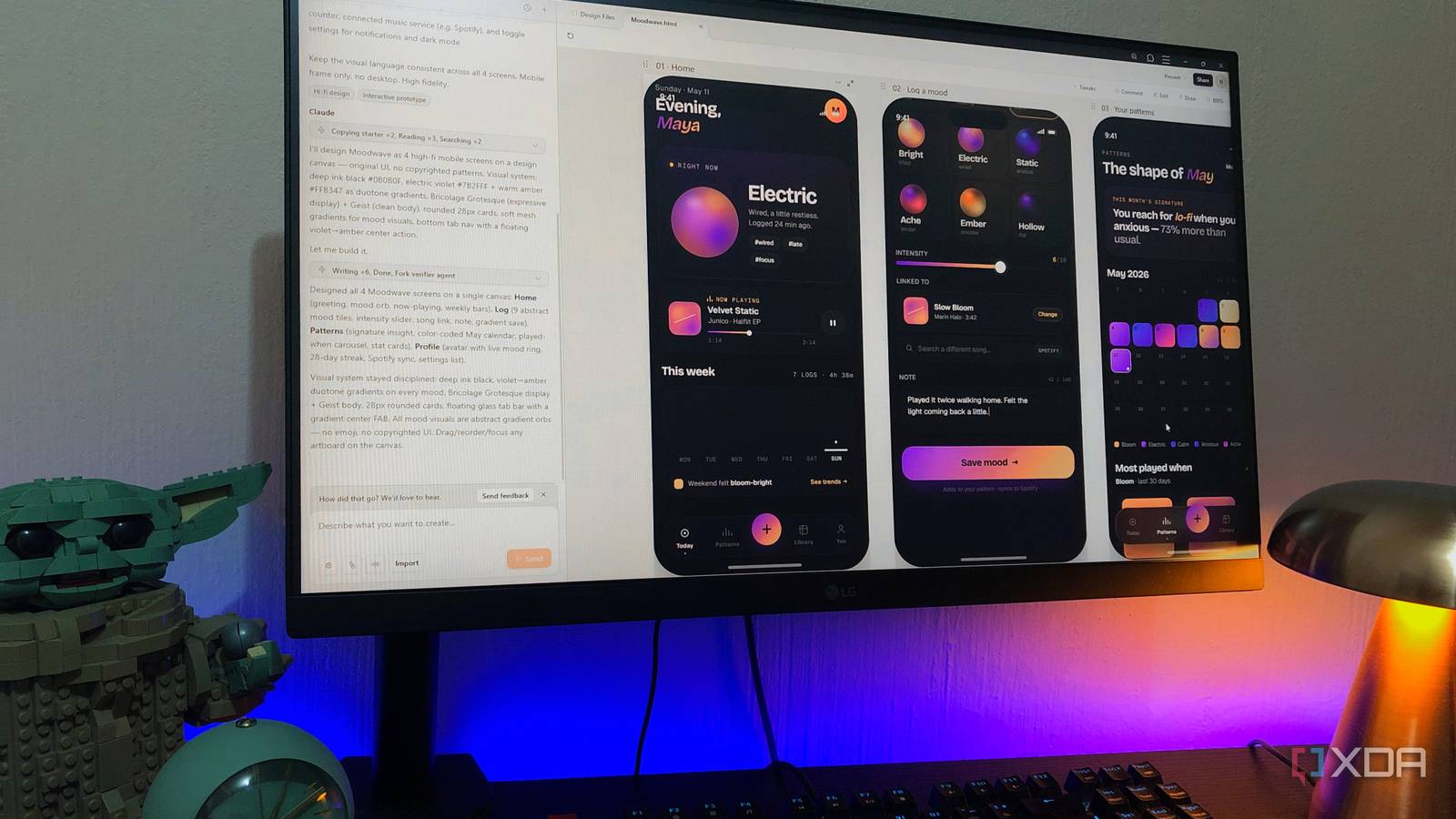
An XDA Developers columnist reports using Claude as a conversational collaborator to change his creative process. Instead of beginning in a design tool, the author says he now starts with dialogue, using the assistant to surface ideas, reframe problems, and iteratively refine concepts. The article describes the shift as moving from execution-first to exploration-first: Claude became a space for reflection and decision-making rather than only a productivity accelerator. Editorial analysis: Companies and creators experimenting with large language models increasingly treat them as brainstorming partners, not just automation tools; this piece illustrates that pattern in a design context.
What happened
The XDA Developers author reports that using Claude transformed his individual creative workflow from starting inside a design tool to beginning with a conversation. The article describes the assistant helping to generate and reframe ideas, clarify goals, and narrow options before visual design work began. The author credits the change with producing better design directions and reducing unconfident iteration.
Technical details
Editorial analysis - technical context: Treating a large language model as a creative partner relies on conversational prompting, iterative refinement, and structured reflection. Practitioners use sequences of prompts to surface multiple conceptual directions, request constraints or tradeoffs, and convert loosely formed ideas into design briefs or feature lists that downstream tools can consume. This pattern does not require model fine-tuning; it emphasizes prompt engineering, context management, and chaining short interactions into a broader exploration.
Context and significance
Editorial analysis: The article exemplifies a broader shift where designers and product teams use generative models for upstream problem framing rather than only for downstream content generation. For practitioners, that changes emphasis from raw throughput toward question design, context curation, and conversational scaffolding that preserves ideation rationale. Teams that adopt this approach often need to document prompt histories, version intermediate outputs, and integrate model-driven artifacts into existing design systems.
What to watch
- •adoption of workflow patterns that log conversation context as part of design artifacts
- •tooling that converts conversational outputs into structured briefs or tickets
- •research on prompt templates that help models generate distinct, bounded creative options
Editorial analysis: Observers should look for tool integrations and process changes that make model conversations first-class design inputs, since those will determine whether conversational workflows scale beyond single users.
Scoring Rationale #
Practical for designers and product teams, the story highlights a useful workflow pattern rather than a technical breakthrough. It is notable for practitioners experimenting with LLM-driven ideation but not industry-shaking.
Practice interview problems based on real data
1,500+ SQL & Python problems across 15 industry datasets — the exact type of data you work with.