FLASH
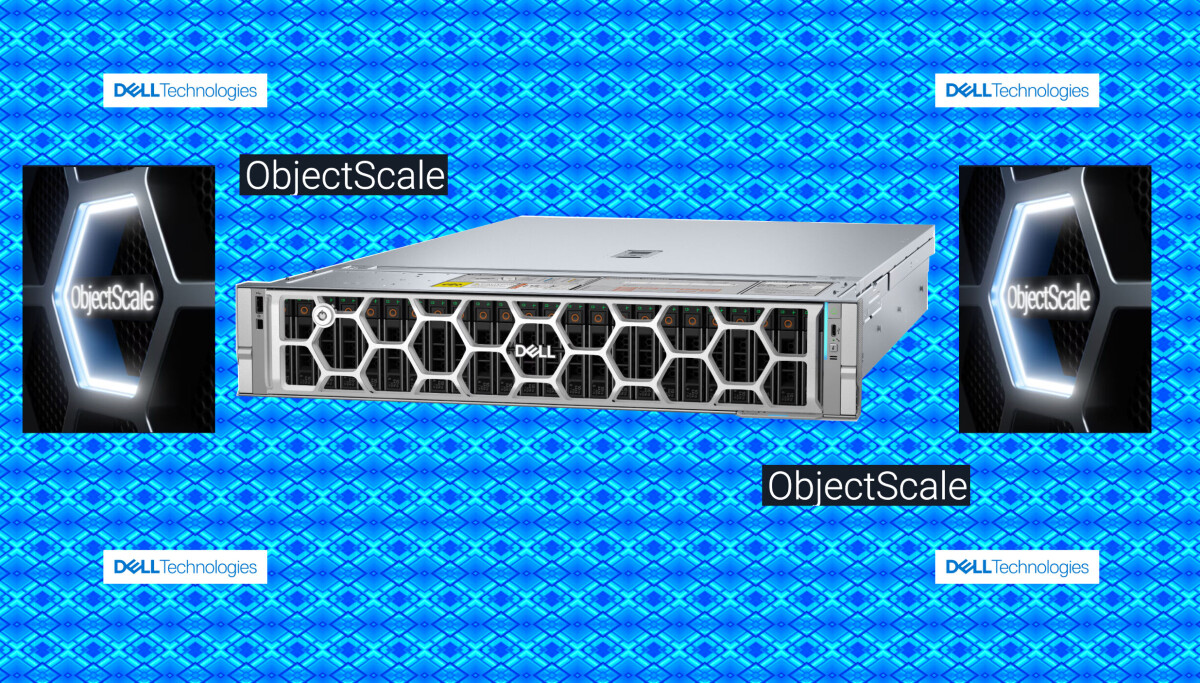
Dell’s ObjectScale is the world’s first object storage to support Kioxia’s high-capacity LC9 245.76 TB NVMe SSDs with almost 10PB raw in a 2 RU chassis.
The LC9 drives use Kioxia’s BiCS8 218-layer 3D NAND, with a PCIe gen 5 interconnect, organized in QLC (4bits/cell) format with 2 Tb dies. These 32 dies are stacked to produce 8 TB of capacity. Dell began using Kioxia’s LC9s in its PowerEdge servers a year ago. The software-defined ObjectScale config, running on a PowerEdge R7725 server, supports 40 of these SSDs in a 2 RU system; 9.83PB of raw capacity, providing scope for a 19.66 PB rack fitted with 20 of these storage servers.
With AI unstructured data storage demand rising, particularly for fast access SSDs despite their cost, then having extremely high-capacity storage shelves cuts down on rack space, cabling, and power draw.
A Dell blog by Director of Product Management Anahad Dhillon says this, “In practical terms, … can translate into better economics, simpler operations and a more scalable foundation for AI …”
Dell is not alone in having 2 RU servers support 40 SSDs;
An HPE
Alletra Storage server 4120supports up to 48 drives.Supermicro’s 2U SBBserver can have 48 dual-port NVMe SSDs.Lenovo’s
ThinkSystem SR650 V2can support up to 40 SSDs. In order to match Dell’s object storage density they would have to source object storage software. HPE has its own but doesn’t explicitly support Kioxia's LC9 drives. Lenovo has access, we understand to NetApp's StorageGRID, but that would need to support the LC9 drives. Supermicro would need to use third-party object storage, for example, from Cloudian, MinIO or Scality. No doubt they'll all get around to supporting LC9-class SSDs and the requisite object storage, but Dell is first out of the gate here.
The PowerScale-ObjectScale config is being targeted towards AI factories and large-scale analytics, content repositories, cyber resilience and cloud-native data platforms.