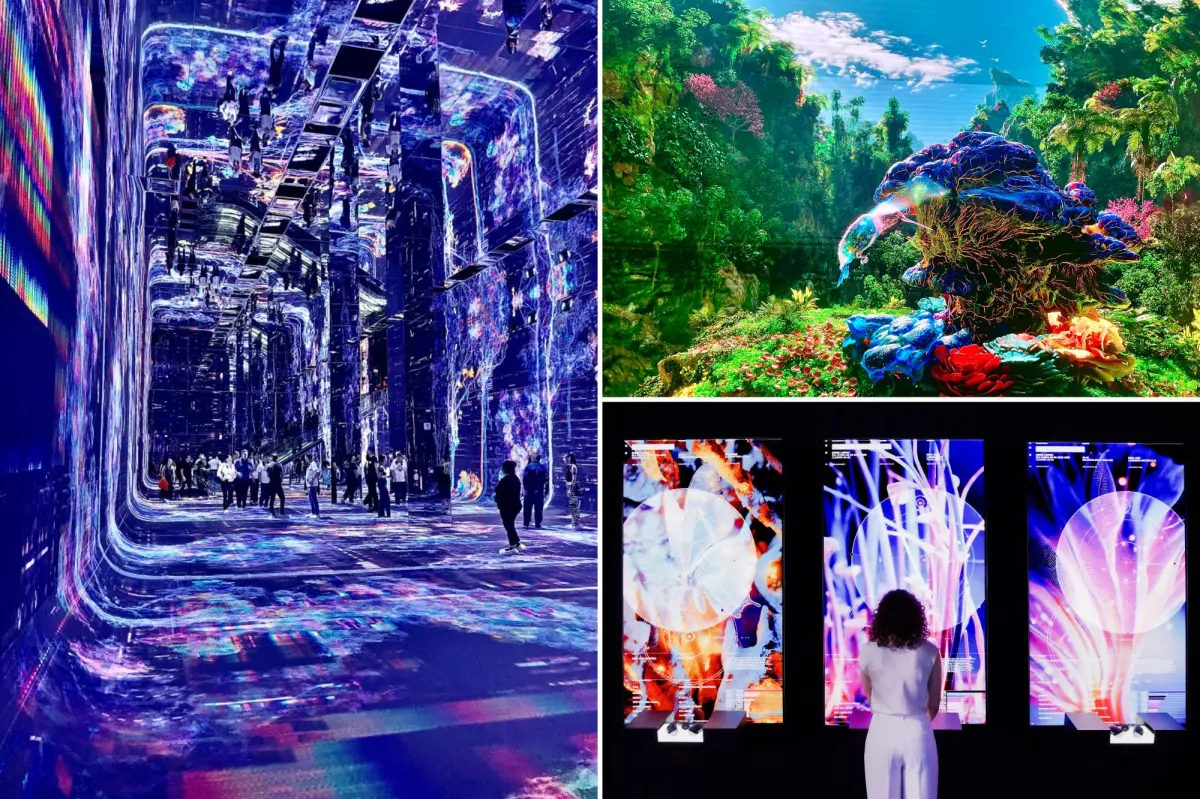
Dataland, billed as the world's first museum of AI arts, opens in downtown Los Angeles on June 20, according to multiple outlets. The project is co-founded by media artist Refik Anadol and Efsun Erkılıç, and Google says it is powering the site with Google Cloud and supporting an artist residency, per a Google blog post. Reported technical elements include a generative system called the Large Nature Model trained on millions of nature images (Los Angeles Times; Smithsonian), biometric wristbands and a scent ring developed with L'Oreal Luxe (The Art Newspaper), and collaborations with institutions including the Smithsonian and the Getty (The Art Newspaper; Smithsonian). Coverage highlights immersive visuals, soundscapes, and sustainability and ethics questions about datasets and energy use (Smithsonian; Los Angeles Times). Ticket prices were reported at $49 to $79 by the New York Post.
What happened
Dataland, described in press coverage as the world's first museum dedicated to AI-generated art, opens in downtown Los Angeles with a large, multisensory inaugural show called "Machine Dreams: Rainforest," according to reporting by the Los Angeles Times and The Art Newspaper. The project is co-founded by media artist Refik Anadol and Efsun Erkilic, per The Art Newspaper and Google. Google states on its company blog that Google Cloud powers the site and that an artist residency is supported by Google Arts & Culture. The museum's technical footprint and size are reported differently across outlets: The Art Newspaper and the Los Angeles Times report 25,000 square feet, while Smithsonian Magazine reports 35,000 square feet with 10,000 reserved for technology. The New York Post reported ticket prices ranging from $49 to $79.
Technical details (reported)
Multiple outlets describe a generative system called the Large Nature Model that was trained on millions of images of nature to drive the rainforest-themed installation (Los Angeles Times; Smithsonian). The Art Newspaper reports the site uses over half a billion pixels for immersive rooms, and describes a visitor "technology pack" including wristbands that track heartbeats and a scent ring providing a rotation of 12 scents designed with L'Oreal Luxe. The Los Angeles Times reports partnerships with academic and cultural organizations and notes the museum claims lower-carbon operations while converting images, audio, and environmental readings into evolving artworks.
Technical context
Immersive AI exhibitions like Dataland bundle several engineering challenges that differ from single-image generation. These include real-time sensor ingestion and feedback loops for biometric data, large-scale model serving for continuous generative outputs, synchronized multisensory actuators for scent and sound, and substantial content pipelines for high-resolution video textures. Deployments that mix live biodata with generative media typically require robust latency controls, safety filtering to remove personally identifiable signals, and orchestration across GPU-backed inference, real-time streaming, and building automation systems. These are general observations about similar projects and are not claims about Dataland's internal operations.
Context and significance
The opening sits at the intersection of art, cloud platforms, and public-facing AI experiences. Coverage emphasizes both spectacle and controversy: Smithsonian and other outlets foreground debate over dataset provenance, attribution to source material, and sustainability of large-scale generative installations. An Artnet News review provides critical perspective on the visitor experience alongside the enthusiasm in other coverage. For machine-learning teams, the story highlights growing demand for models trained on curated, domain-specific datasets and for tooling that supports explainability and provenance tracking when outputs are shown to the public.
What to watch
Observers should track published documentation around the Large Nature Model training data and licensing statements from Anadol's studio and partners; follow-up reporting on the museum's energy and carbon accounting claims; and any public-facing APIs or residency outputs announced by Google Arts & Culture or Refik Anadol's studio.
"As an artist pioneering this field for ten years, I felt that we should have a kind of responsibility," Refik Anadol told The Art Newspaper, framing the project as a "laboratory of imagination," per that outlet.
Scoring Rationale #
Dataland is a notable public-facing AI deployment combining generative models, real-time biometrics, and multisensory hardware at scale, with high-profile cloud partnerships and significant press coverage. It matters for practitioners building experiential AI and for public perception of AI art, but is not a frontier-model release or core-research milestone, placing it at the low end of 'Notable'.
Practice with real Ad Tech data
90 SQL & Python problems · 15 industry datasets
[Active Search Campaigns by BudgetEasy](https://letsdatascience.com/problems/sql/active-search-campaigns-by-budget)

[High CPC Clicks & Poor Landing PagesMedium](https://letsdatascience.com/problems/sql/high-cpc-clicks-poor-landing-page)

[Campaign ROAS by Attribution ModelHard](https://letsdatascience.com/problems/sql/campaign-roas-by-attribution-model)
250 free problems · No credit card