cd /news/ai-infrastructure/dapustor-s-kv-cache-nvme-ssd-offload… · home › topics › ai-infrastructure › article
[ARTICLE · art-158066] src=blocksandfiles.com ↗ pub= topic=ai-infrastructure verified=true sentiment=· neutral

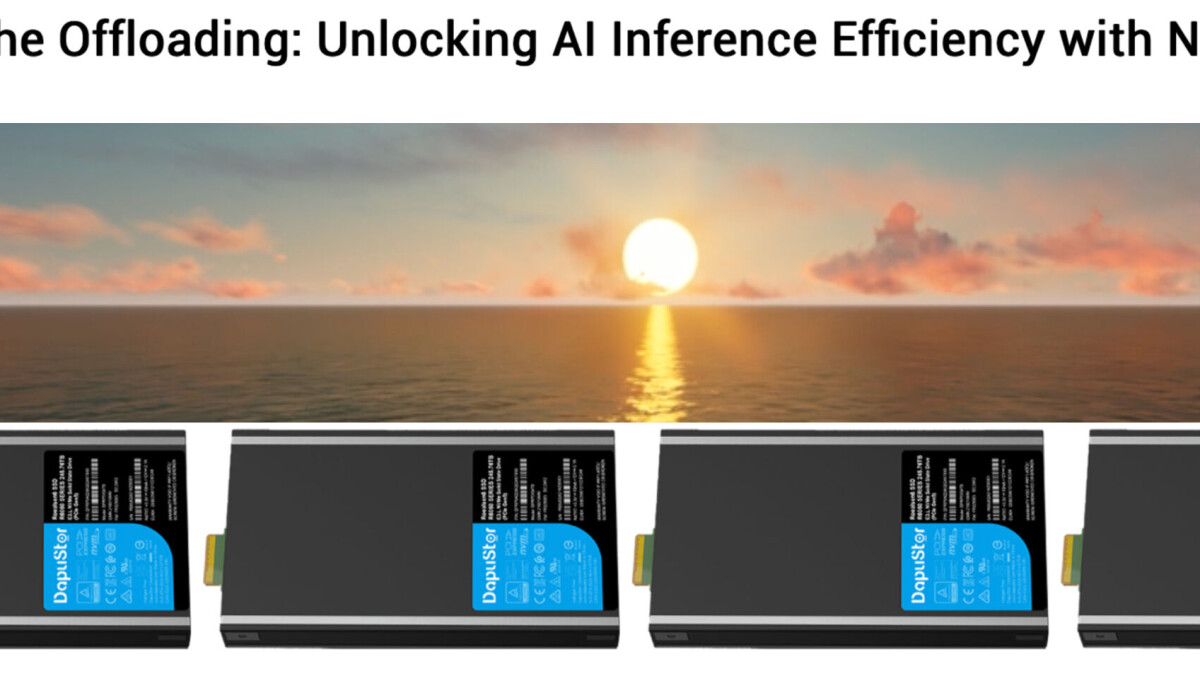
DapuStor's KV Cache NVMe SSD offload explainer

DapuStor published a 5-page explainer document showing how tiering evicted KV cache contents to NVMe SSDs can solve the recomputation delay problem in LLM inference, which is limited first by GPU HBM capacity and then by tiered caching through x86 host DRAM to internal and external NVMe SSDs. The document describes how vLLM and LMCache pack KV cache data from multiple tokens for transfer, letting external storage generate flash-friendly sequential large-block I/O patterns that improve bandwidth utilization on NVMe SSDs, illustrated with diagrams and Python code examples. DapuStor notes PCIe Gen5 NVMe SSD capacities reaching 245 TB, with more expected next year, leaving scope for petabyte-level external KV cache storage.

by read1 min views1 publishedOct 26, 2026
DapuStor's KV Cache NVMe SSD offload explainer
Image: Blocksandfiles (auto-discovered)

AI inferencing is memory-limited, bottlenecked by KV Cache capacity limits dictated by a GPU's high-bandwidth memory (HBM) amount and then by the tiered KV caching scheme via the x86 hosts DRAM, through to internal and external NVMe SSDs. We have discussed KV cache news and developments many times and DapuStor has put together a 5-page explainer document that shows how tiering evicted KV cache contents to NVMe SSDs can solve the recomputation delay problem.

The document says off large KV Cache datasets to a more cost-effective external storage tier is emerging as a practical approach for scaling inference clusters. It neatly explains how KV Cache works in LLM inference and discusses how NVMe SSDs can help build a cost-efficient storage layer for AI infrastructure.

The document discusses the mechanisms used by vLLM and LMCache to make SSD-based KV Cache more effective. These are explained with text, diagrams and a couple of Python code examples. For example;

It says "Both vLLM and LMCache support packing KV Cache data from multiple tokens for transfer, improving memory efficiency and I/O efficiency."

The point here is that "External storage systems can use these larger chunks to generate flash-friendly, sequential large-block I/O patterns, improving bandwidth utilization on NVMe SSDs."

With PCIe gen5 NVMe SSDs having capacities rise to 245 TB, and hopefully beyond that next year, there is a lot of scope for building petabyte-level external storage KV caches with good bandwidth and high capacity. Our version of DapuStor's paper, generalized to all NVMe SSDs, can be downloaded here.

── more in #ai-infrastructure 4 stories · sorted by recency
── more on @dapustor 3 stories trending now
sponsored brought to you by zahid.host 4,200+ EU-deployed projects
reading about agents? ship yours in a single git push.

Run your AI side-project on zahid.host

EU-based hosting, git-push deploys, automatic HTTPS, no cold starts. Free tier with a custom domain — perfect for shipping the agent you just read about.

$git push zahid main
→ Live at https://your-agent.zahid.host ✓
Get free account → Pricing
from €0/mo · no card required
LIVE [news/dapustor-s-kv-cache-…] indexed:0 read:1min 2026-10-26 · —