Source:
The RegisterDarkbloom distributed inference network promises to put underutilized Apple kit to work
Eigen Labs, a five-year-old tech biz based in Seattle, Washington, estimates that owners of Apple Silicon hardware can earn $120 to $200 per month on average by selling idle
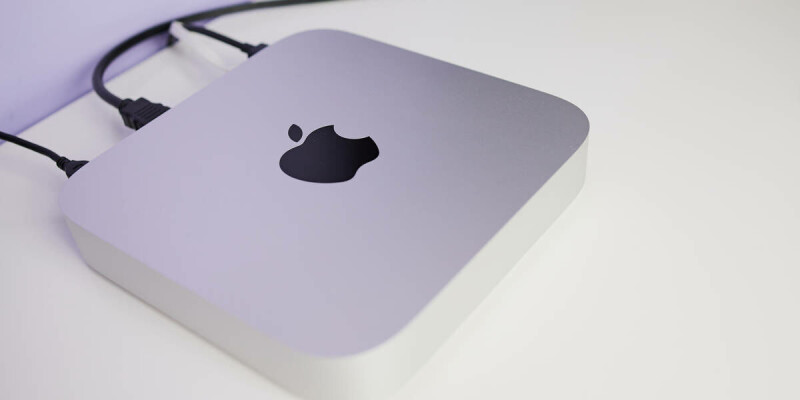
computepower for AIinference. Gajesh Naik, an engineer at Eigen Labs, said on Friday that the Darkbloom project, a distributed network of Apple Silicon devices, has become a paid inference provider on OpenRouter and invited Mac owners to add their machines to the Darkbloom network. "We have fulfilled on track close at 4.5B tokens served and $102K ARR," Naik said in a social media post. "We are [an] open network of Mac machines (250 online right now). On average, people are earning $120-200 per month per machine. If you have a Mac and it's idle most times: put it on darkbloom.dev." Mac mini machines, still scarce in the wake of the OpenClaw buying frenzy and in the run-up to the anticipated M5/M6 refresh, are probably best suited for the job. But an M1 MacBook Pro and any other Apple Silicon-equipped macOS device, as detailed in the hardware requirements document, can probably contribute something. Would-be machine rentiers can enlist a personally owned device – sorry, no cloud-provider rental arbitrage, per the terms of service – by installing the Darkbloom software. The code aims to overcome the privacy risk of running AI inference – prompts and responses – on someone else's hardware. "The inference engine runs directly inside a single hardened Swift process – no subprocess, no local server, no inter-process communication – using mlx-swift-lm on the Apple Silicon GPU," Naik explains in a technical paper [PDF] detailing the Darkbloom architecture. "The macOS kernel blocks all external access to this process’s memory: debuggers are denied at the system call level (PT_DENY_ATTACH), memory-reading APIs are blocked by Hardened Runtime, and these protections cannot be disabled without rebooting, which terminates the process and erases its data." Essentially, an inference consumer sends a request over HTTPS via anOpenAI-compatible API to a server running a Go-based coordinator in a Confidential VM (AMD SEV-SNP) that routes the request to an inference provider – someone running an Apple Silicon Mac with the Darkbloom Swift CLI. The provider connects outbound over WebSocket, avoiding the need for port forwarding or firewall changes, decrypts the inference job within a Secure Enclave, and runs the inference on the Apple Silicon GPU using MLX, Apple'smachine learningframework. The plaintext is exposed only within the coordinator's hardware-encrypted CVM memory, is never logged or retained, and is immediately re-encrypted for the selected provider, the documentation claims. The privacy model and threat scenario are similar, in other words, to Apple's Private Cloud Compute, but in the context of a distributed network. Darkbloom began as an experiment in April and now has more than 900 providers (not all of which are active at any given time) that have served more than 42 million inference requests. The network previously served up inference capacity for free through OpenRouter, but now has become a paid provider. The top earning model at the moment, per Darkbloom's own stats, is Qwen 3.6 35B A3B, at $399 per month of usage, followed by GPT-OSS 20B, at $52 per month of usage, and Gemma 4 26B, at $27 per month of usage. Usage isn't necessarily continuous, so top earners at the moment are averaging $26/day, $19/day, and $15/day, respectively. The biz estimates network participants can earn anywhere from $192 to $4,983 per year, which includes estimated average electricity costs of almost $2 per month (not to mention fan noise where applicable). Whatever the payout, that's money going toward people running openweightmodels on personal computers and not frontier labs with data center debt that are struggling to attract customers to premium models. ®Get AI news in your inbox Daily digest of what matters in AI.