The public will once again be able to access Anthropic’s powerful Fable 5 model, the AI giant said Tuesday, weeks after the Commerce Department required the company to disable the model over potential security risks.
Access will be restored to customers beginning Wednesday, Anthropic said.
Fable 5, part of Anthropic’s Claude family of AI systems, was forced offline June 12 alongside its sibling Mythos 5 model after senior administration officials said that the models posed severe cybersecurity risks and that Anthropic’s leadership did not sufficiently recognize their concerns.
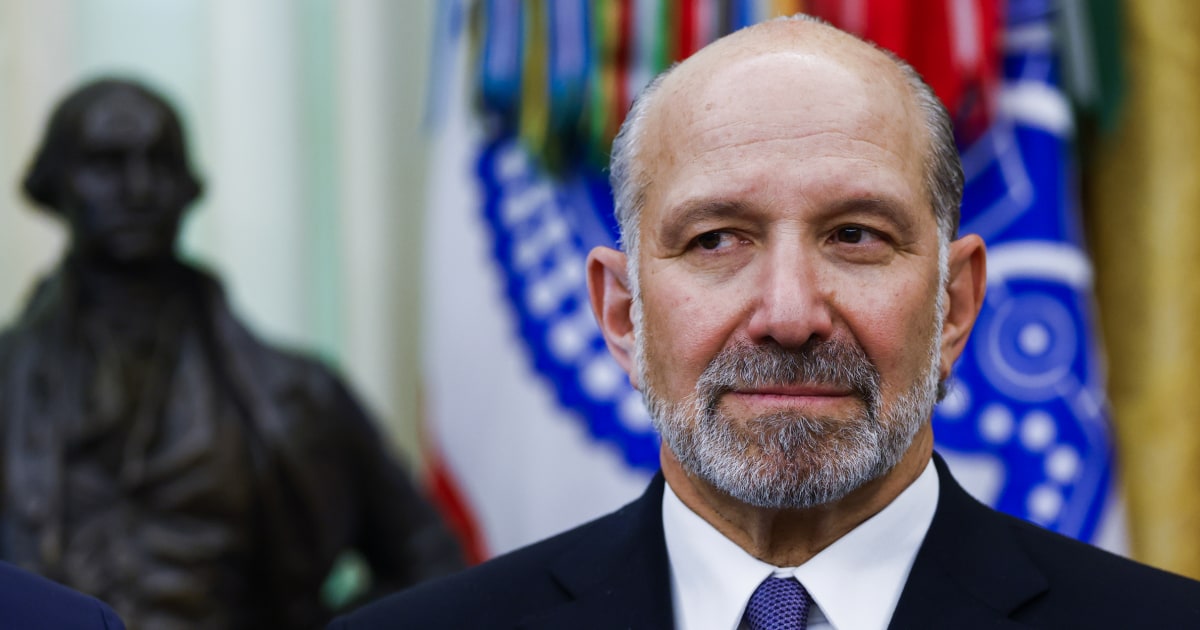
Commerce Secretary Howard Lutnick sent a letter Tuesday informing Anthropic co-founder Tom Brown of the decision, citing Anthropic’s close coordination and cooperation with government officials to address risks associated with its models.
In the letter, seen by NBC News, Lutnick said that Anthropic agreed to continue collaborating “on protocols and standards and releases for Mythos, Fable, and future models” and “to inform the U.S. government of any malicious activity.”
Writing on X Tuesday evening, Anthropic thanked its users for their patience and said it would soon share a further update.
Lutnick confirmed that the ban on Fable 5 would be lifted in a separate post on X.
“Over the past two weeks, we have worked closely with Anthropic to analyze and approve Fable 5 to ensure alignment across the US Government and strengthen America’s leadership in AI,” he wrote.
The move to allow Fable 5 back online represents the latest step in the federal government’s fast-evolving approach to regulating AI capabilities.
On June 9, Anthropic debuted Fable 5 and Mythos 5, the most powerful systems it has ever publicly released. Both were built on the same technological foundation, but only Fable 5 was made available to the general public.
Fable 5 included guardrails that prevented the AI system from assisting with a wide range of cybersecurity- and biology-related tasks. The company said those measures were in place because of bad actors who use powerful AI systems for malicious cyber- and biology purposes.
However, senior administration officials became worried that users might be able to circumvent Fable 5’s guardrails — though experts disagreed over the severity of the risk.
Citing a potential risk to national security, Lutnick told Anthropic he would enact export controls preventing any foreign national from accessing the model. To comply with the order, Anthropic was forced to take both models offline June 12.
Anthropic then dispatched a team of its top scientists to Washington D.C. to hammer out a solution with government officials.
After two weeks of negotiations, Lutnick announced Friday that Mythos 5 would be allowed back online to around 100 trusted organizations that work on cybersecurity and infrastructure efforts. Lutnick cited Anthropic’s cooperation with the government as a key reason for the detente.
In the weeks since Fable 5 and Mythos 5 were forced out of commission, industry leaders and experts became increasingly worried that the ad-hoc ban would threaten America’s AI lead against China.
Sam Altman, the CEO of Anthropic competitor OpenAI, labelled the government’s desire for AI companies to launch their models in phases, with direct government approval for which organizations can access the most powerful systems, as “bad news.”
President Donald Trump signed an executive order targeting the cybersecurity impacts of advanced AI models at the beginning of June. The order aimed to create a voluntary mechanism for AI companies to give the government early access to their most advanced systems, allowing officials to vet the models for security risks before their public release.