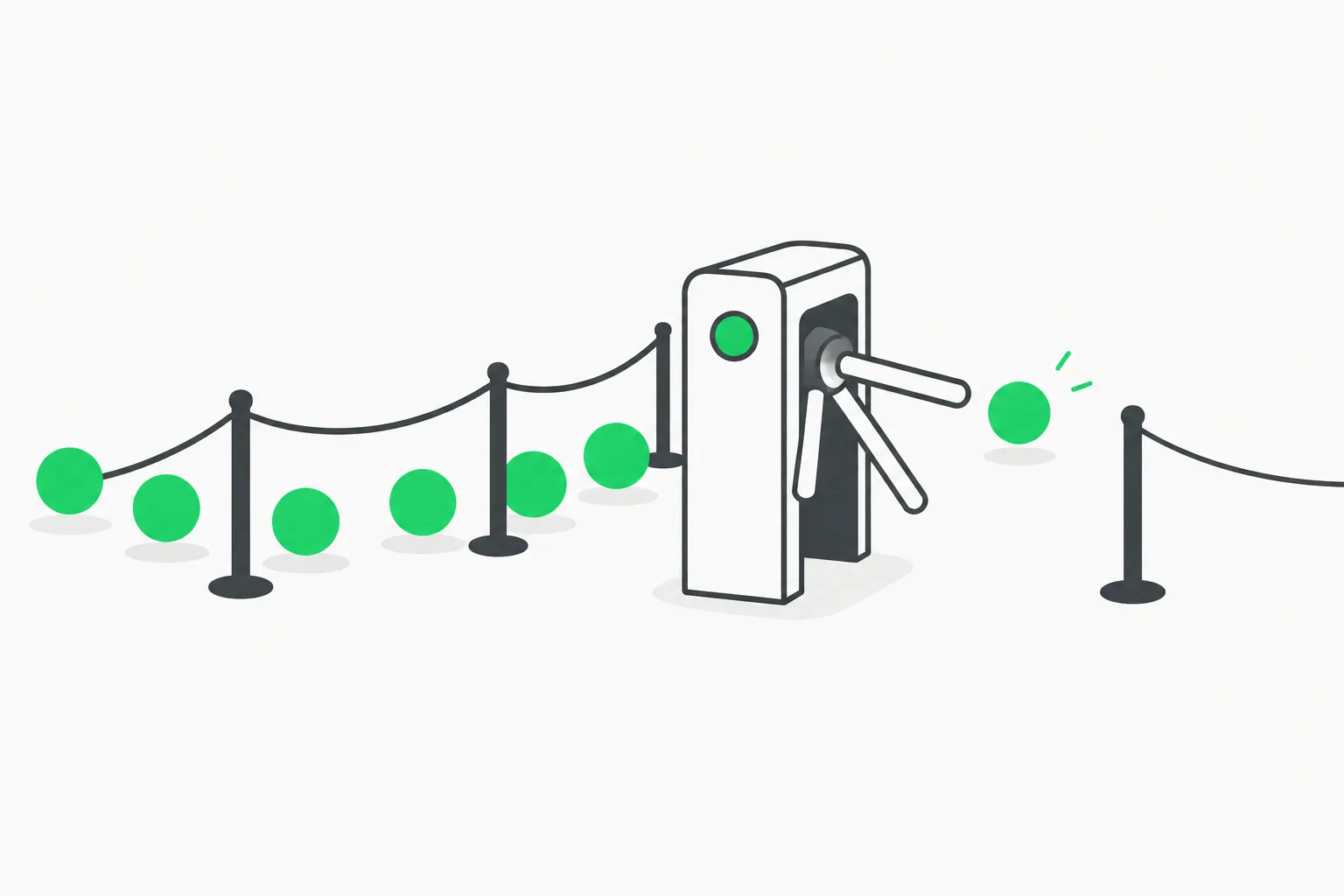
Coinbase says an AI scam-prevention stack stopped about $4.7 million — roughly 91% of customer sends — during a fake Tesla livestream that used a deepfake of Elon Musk, in a November 17, 2026 Consumer Protection Tuesday post. Hundreds of authenticated customers tried to send money in about two hours. No accounts were hacked; users approved each transfer.
For builders, the lesson is **intent-blind fraud**: classical defenses catch **unauthorized** sends. Giveaway scams exploit **authorized** sends. Coinbase's answer is **in-flow agent friction** — **detection**, a **scam harness**, and **confidence scoring** — not a static banner.

## TL;DR: what Coinbase says happened
| Fact | Source |
|---|---|
| Fake **YouTube livestream** mimicked Tesla's broadcast | [Coinbase blog](https://www.coinbase.com/blog/consumer-protection-tuesday-how-we-leveraged-ai-to-stop-a-popular-tesla-scam?ref=explainx) |
| Deepfake Elon Musk , wallet addresses,QR code | Same | | 500,000+ viewers on the fraudulent stream | Same | | Hundreds of Coinbase customers attempted sends | Same | | ~91% blocked,$4.7M not leaving accounts | Same | | No humans in the loop for the intervention chain | Same | | Tied in timing to Tesla flying car demo narrative | Same |
Coinbase does not publish how much escaped the controls. Outlets derived ~9% slips from the 91% figure. explainx.ai treats the residual amount as unverified until Coinbase names it. Crypto Briefing also covered the incident and the 500,000-viewer stream, and noted Coinbase's effectiveness claim is the company's own and not independently verified.
Why authenticated fraud breaks old playbooks #
Anomaly detection lens isolating one risky transfer among normal sends
Most fraud stacks score stolen sessions, new devices, or velocity anomalies. Coinbase stresses a harder case: the customer wanted the trade.
Our systems can see risk signals in real time. They can't see intent.
That line from the November 17 post is the architectural pivot. When KYC-passing users chase 2x crypto from a livestream QR, rules that only ask "was this login legit?" fail.
explainx.ai tracked the same pattern in celebrity likeness enforcement and wired mundane-app deepfake funnels. Video trust collapses faster than password hygiene improves.
The three-part stack Coinbase describes #
Coinbase breaks the defense into detection, intervention, and reply confidence:
- Detection — Machine learning models scoreoutbound sends forgiveaway patterns ,brand impersonation , andnewly created wallet addresses . Goal: flagdanger , not blame the customer.
- Intervention — Ascam-prevention agent withtools for context runs ashort conversation : name the pattern, explain mechanics, ask questions that expose contradictions.
- Confidence scoring — Each agent reply gets ascore before display , so the system adds friction when uncertain.
Coinbase says the agent ran start to finish without human operators for this incident. That is agent harness design for money, not a chatbot FAQ.
Compare with Coinbase Agent Controls (November 11, 2026), which caps MCP trading on servers. Scam intervention sits on the withdrawal path for retail sends.
Novel scam shape vs trained patterns #
Coinbase's notable claim: the agent had never seen deepfake giveaways tied to live product launches in training. It still flagged:
-
Multiply-your-money promises
-
Hours-left urgency tied to a livestream ending
-
Irreversible on-chain transfer That is generalization from scam topology, similar to how Revolut used Codex on fincrime stories describe pattern classes rather than memorized IOC lists.
For harness builders, the takeaway is shape-based features on metadata (wallet age, brand tokens, amount spikes) plus a dialogue policy when scores cross threshold — not only static regex on addresses.
Deepfakes and the economics of relaunch #
Coinbase argues deepfakes collapsed production cost:
Before, staging a scam like this took a crew, a studio, and weeks. Now it takes a livestream slot and a model.
That shifts defender investment toward AI-assisted labeling and faster model retraining. Coinbase lists AI-driven research, agents reviewing risky sends across scam types, and labeling new cases within hours.
Builders outside crypto can copy the feedback loop: every flagged send becomes training signal with human review on edge cases — the same flywheel payment firms want on agent spend.
What developers are saying #
The Hacker News thread on Coinbase's disclosure (syndicated from finance outlets) split on 91% vs the 9% gap, with commenters asking whether friction UI blocked sends or hard holds. explainx.ai could not verify hold mechanics beyond Coinbase's blog text.
Security readers on other forums echoed Coinbase's user education list: nobody doubles your crypto, QR codes in video are untrusted, verify off-platform. explainx.ai did not tie those threads to specific HN usernames.
How to protect yourself #
Coinbase's November 17 checklist:
- Nobody legitimate doubles your crypto for asend-first promotion.
- Do not send toaddresses or QR codes shown insidelivestreams or DMs .
- If a send is flagged ,**** and read the warning; call someone you trust.
- Verify on official sites , not on-stream links.
- Report through Coinbase Support if targeted.
For deepfake video specifically, pair that list with explainx.ai's deepfake bait-and-switch reporting and treat event-aligned scams as expected during real keynotes. Teams shipping wallet apps should assume authorized fraud is in scope for 2027 roadmaps, not an edge case.
If you run agent-assisted payouts, add confidence-gated dialogue and a runtime block before irreversible sends. AgentBeam is explainx.ai's agent security platform for stopping dangerous tool actions in harnesses.
Building your own intervention harness #
If you run fintech, remittance, or in-app purchases, Coinbase's pattern suggests:
| Layer | Implementation hint |
|---|---|
| Detection | Realtime scoring on amount, counterparty age, campaign keywords |
| Harness | Stateful agent withread-only tools intorisk DB andmerchant registry |
| Confidence | Block auto-send of agent text below threshold;escalate to human |
| Metrics | Track save rate ,false positive anger , andtime-to-retrain per scam family |
Do not copy crypto-specific rules blindly into ACH or card rails — regulation differs — but in-session dialogue beats email tomorrow.
Pair with Microsoft Agent 365 spend analytics thinking: measure intervention cost vs loss avoided.
How the scam piggybacked a real Tesla moment #
Coinbase anchors the fraud to the narrative window around Tesla's flying car demonstration — the Roadster clip with brief hover using SpaceX cold-gas thrusters that dominated feeds in mid-October 2026. Scammers cloned the visual frame of a legitimate broadcast: similar lower-thirds, event timing, and CEO face time.
That piggyback pattern is older than deepfakes — charity fraud during disasters uses the same attention arbitrage. What changed is synthetic video cost. Coinbase's Consumer Protection series exists because retail crypto concentrates irreversible transfers where chargebacks do not exist.
explainx.ai's SpaceXSI Grok bots accounting thread shows how Musk-linked brands attract automation and impersonation at once. Scammers do not need insider access; they need timing.
For risk engineers, map official event calendars to elevated monitoring windows the way banks staff fraud desks on Black Friday.
What developers are saying on Hacker News #
Coinbase's disclosure hit finance and security forums the same day. Readers split into three camps:
- Skeptics of the 91% figure — asking how many usersabandoned vs werehard-stopped , and whethersoft warnings count as blocks.
- Defenders of in-app friction — arguingslow-down UI is the only fix whencredentials are real .
- Deepfake fatalists — claimingvideo verification is dead; countered by others sayingoff-platform confirmation still works.
explainx.ai did not find a front-page Hacker News thread dedicated to this exact blog post on November 18, so we are not attributing quotes to HN usernames here. The themes match moderated finance Twitter and The Block's write-up of the same Coinbase primary.
When a high-traction HN thread appears, add a "What developers are saying" update with item links.
Comparison to traditional bank wire holds #
ACH and wire fraud teams use callback verification for new payees. Coinbase's agent is the crypto-native analog: session-bound chat instead of phone trees.
Differences worth modeling:
| Bank pattern | Coinbase pattern |
|---|---|
| Dual control on treasury wires | Single-user mobile confirm |
| Cooling-off period for new beneficiaries | Realtime chain settlement |
| Known fraud typologies in playbooks | ML generalization to unseen deepfake formats |
If you build on-ramp tooling, do not assume KYC equals trust on outbound crypto. Session trust and payout trust are different scores.
Regulatory and industry context #
US consumer protection agencies have pushed FTC rules on impersonation and social media scams, while FinCEN expects SAR filing on suspicious chains. Coinbase's post emphasizes compliance program pieces — KYC, sanctions screening, law enforcement partnerships — before the AI section.
That ordering matters for B2B readers: AI intervention sits atop licensed exchange duties, not instead of them. AI vulnerability patch rush coverage shows Congress watching AI-enabled fraud this fall; deepfake giveaways are exhibit A for 2027 hearings.
Limits and open questions #
Coinbase's post is primary for dollar figures and architecture labels, but leaves gaps:
- Exact scam date andprosecution status
- Which ML models power detection
- Customer experience when users override warnings
- Residual loss amount
Treat secondary crypto press math on ~$460K escaped as derived, not Coinbase-confirmed.
Related reading #
Figures and architecture labels follow Coinbase's November 17, 2026 blog unless noted as outlet-derived.