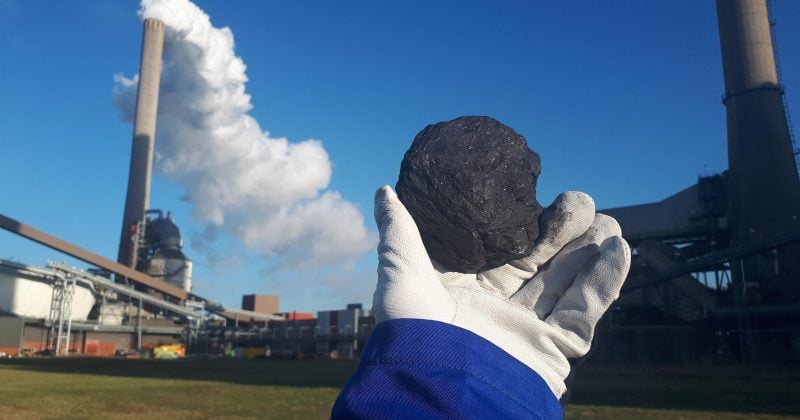
Photo: Adrem68 / Wikimedia Commons / CC BY-SA 4.0 (https://creativecommons.org/licenses/by-sa/4.0) Data centers are consuming so much electricity that utilities are keeping coal plants alive instead of retiring them, raising hard questions about crypto mining's energy future
The dirtiest fuel in the energy mix is staging an unlikely comeback, and artificial intelligence is the reason. US utilities are not only delaying the retirement of coal-fired power plants but actively fighting to keep them running, as data center electricity demand threatens to overwhelm the nation’s grid.
Power sector CO2 emissions in the US rose 4% in 2025, roughly double the 2% increase seen economy-wide. The culprit: a 13% jump in coal generation, driven largely by the insatiable appetite of AI data centers that now consume approximately 4.4% of total national electricity.
The numbers behind the power grab #
US data centers chewed through roughly 176 terawatt-hours of electricity in 2023. That figure is projected to balloon to somewhere between 345 and 580 TWh by 2028 to 2030. For context, the upper end of that range is roughly equivalent to the entire annual electricity consumption of France.
The energy mix feeding these facilities tells its own story. In 2024, natural gas supplied more than 40% of US data center electricity. Renewables followed at around 24%, nuclear at about 20%, and coal at approximately 15%.
That 15% coal share might seem modest, but it represents a meaningful reversal of a decade-long decline. Utilities have postponed retirements of at least 15 coal plants across the country. The Department of Energy issued emergency orders in 2025 to retain more than 17 gigawatts of coal capacity online, essentially telling plants that were supposed to shut down to keep the lights on instead.
Southern Company CEO captured the prevailing sentiment among utility executives with a blunt assessment.
“We will extend coal plants as long as we can.”
Why crypto miners should be paying attention #
Data centers and crypto mining operations compete for the same pool of cheap, abundant electricity. When AI companies start bidding up the price of power, locking in long-term supply contracts, and even acquiring entire power plants, the ripple effects hit every energy-intensive industry.
Bitcoin miners have already experienced this squeeze firsthand. Several large-scale mining operations have pivoted to AI hosting or high-performance computing precisely because the economics of electricity allocation now favor AI workloads. When a hyperscaler like Microsoft or Amazon Web Services can pay more per megawatt-hour than a mining farm, the mining farm loses access.
Every gigawatt of coal capacity that stays online to serve an AI data center is a gigawatt that gets priced into a tighter, more competitive electricity market. Miners operating in regions with heavy data center buildout should expect higher power costs, tighter grid constraints, and more regulatory scrutiny around energy consumption.
The green narrative meets reality #
When data centers and crypto mines share the same grid, rising coal generation gets attributed to the entire demand pool, not just the specific customer that triggered the capacity retention. Regulators and ESG-focused investors do not typically make fine distinctions about which electrons came from which source.
For investors navigating this landscape, the key variable to watch is the total cost of electricity in data-center-heavy regions. As AI companies absorb more generation capacity, the marginal cost of power for everyone else, including miners, goes up. Companies with locked-in power purchase agreements or vertically integrated energy assets will have a significant structural advantage over those buying electricity on the spot market. Disclosure: This article was edited by Editorial Team. For more information on how we create and review content, see our