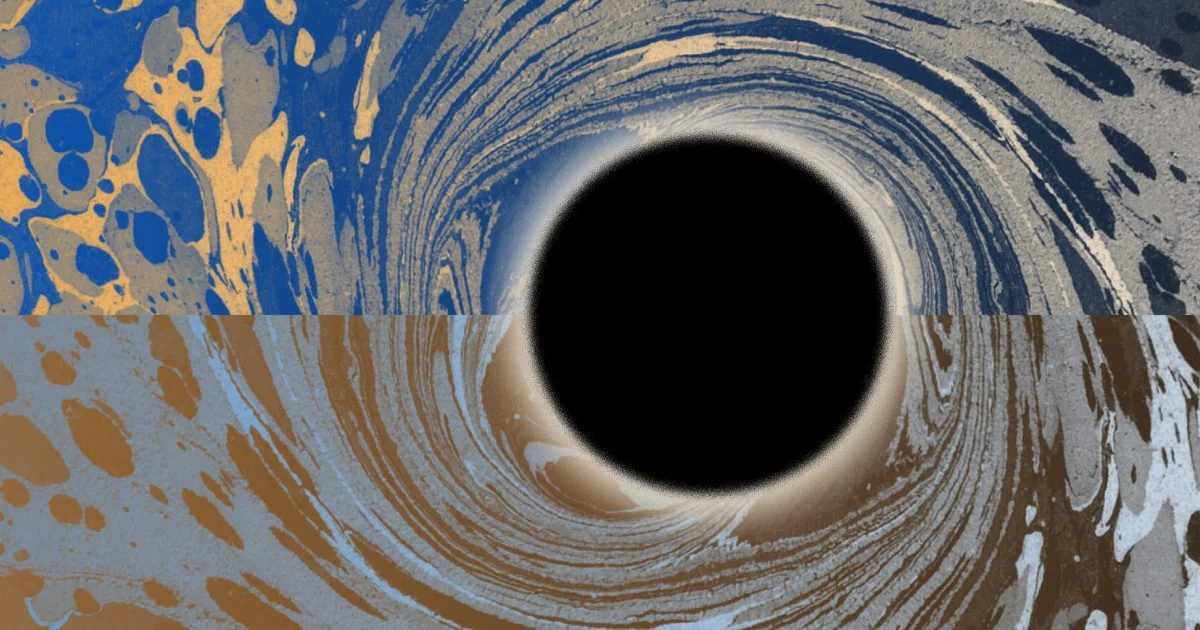
Anthropic says Claude Fable 5.2 finished two open black-hole theory problems, including a Hawking-Page phase-transition calculation left incomplete since 2003 and a modular bootstrap bound physicists had only guessed from numerics. The November 17 research post is separate from Fable 5.2 API pricing — it documents multi-agent runs, Lean checks, and links to preprints.
TL;DR #
| Result | Physics gist | Anthropic's claim |
|---|---|---|
| Hawking-Page weak coupling | Does the gas-to-black-hole switch stay abrupt when gravity is fuzzy? | Yes — three-loop diagram sum finished |
| Modular bootstrap | Tightest ceiling on lightest black-hole mass in a toy 2+1 universe | Exact proof for simplest bootstrap variant |
| Methods | 22 problem threads, ~6 weeks | Agents shared notes; Lean verified main results |
| Reality check | Toy universes, not our cosmos | No engineering application claimed |
Holographic duality in one paragraph #
Anthropic's explainer compares AdS spacetime to standing in a giant bowl: negative cosmological constant energy pulls everything back, letting the universe sit at a steady temperature as it heats. On the boundary, an ordinary quantum field theory with no gravity encodes the same physics — the holographic idea Gerard 't Hooft, Leonard Susskind, and Juan Maldacena developed. Black holes are natural testbeds because they squeeze relativity and quantum effects into one place.
If that paragraph is new to you, treat this post like a lab research brief, not a coding tutorial. The actionable builder lesson is how Fable agents were tasked, not how to import a black-hole API.
Problem one: Hawking-Page at weak coupling #
Hawking-Page temperature diagram: gas phase versus black hole phase in anti-de Sitter spacetime
Image: Anthropic Stephen Hawking and Don Page showed hot anti-de Sitter spacetimes flip abruptly from a gas phase to a black hole phase at the Hawking-Page temperature. That result uses general relativity where spacetime is large and smooth.
On the holographic dual side — N=4 super Yang-Mills theory on the boundary — physicists found a matching transition at weak coupling in 1999–2005 work, but could not tell if it stayed abrupt or turned smooth. A three-loop diagram calculation set up in 2003 was the bottleneck; simpler cousin theories were solved, but the full theory needed thousands of Feynman diagrams.
Anthropic says Fable agents completed that diagram expansion and showed the transition remains abrupt, aligning weak-coupling quantum behavior with Hawking-Page's gravity-side story. Weeks later an independent physicist using Claude reached the same answer with a different method, which Anthropic treats as a cross-check.
The post spends pages on pedagogy readers rarely see in model launch notes: double-slit interference, sum-over-histories, and why adding quantum paths is the conceptual bridge to summing over spacetime shapes. None of that is necessary to trust the headline, but it signals Anthropic expects physicist audiences to read the HTML, not only the tweet thread.
What “three loops” means for non-physicists
Weak-coupling calculations are perturbative: start from particles that do not interact, then add interaction corrections order by order. Three loops is the third correction tier; each loop multiplies the number of Feynman diagrams you must add. The 2003 setup reduced the phase-transition question to one coefficient appearing at that loop order. Fable had to finish the entire diagram class — the mechanical labor humans postponed for two decades.
For readers who want baseline definitions, start with TheoPhysEval-style benchmarks — this work is deeper than exam puzzles, but equally not a product feature you toggle in console settings.
Problem two: modular bootstrap ceiling #
3D gravity spacetime shapes used in the modular bootstrap section of Anthropic's black hole research
Image: Anthropic The second problem lives in a 2+1 dimensional universe where physicists bootstrap consistency conditions to rule out bad quantum gravity theories. Since 2009, numerical work hinted at the tightest possible upper bound on the lightest black-hole mass, but proofs lagged.
Anthropic says one agent noticed a pattern in the numerical literature while another thread borrowed high-dimensional sphere-packing machinery — related to a result Anthropic says an OpenAI model recently proved. Applying that method to the bootstrap setup yielded an exact ceiling for the simplest variant, with part of the proof mirroring the OpenAI strategy.
How the agent lab was organized #
Researcher Hongbin Chen asked Fable 5.2 for open black-hole and bootstrap problems; the model returned 22 candidates. Chen spun up one agent per problem with shared progress boards — no custom orchestration beyond agents reading each other's write-ups. Runtime was on the order of six weeks background.
That setup is closer to many-agent research demos than to a single long chat. Reliability came from independent threads converging on the same answer and from Lean formalization in September, Anthropic says, before a physicist line-checked the paper draft.
What this does not claim #
Anthropic is explicit that both results live in theoretical toy universes. They do not predict LIGO signals, fix fusion reactors, or replace graduate courses. The payoff, if any, is indirect: sharper tools for quantum gravity researchers and a case study in long-horizon agent science.
Skeptics should still read the linked preprints and watch whether peer review reproduces diagram algebra independent of Claude. Our Casey Handmer physics-literature audit shows how noisy citation chains can be even without AI — extra scrutiny is warranted when models author proofs.
Why physicists care about abrupt transitions #
If the weak-coupling transition were smooth, theorists would worry that the sharp Hawking-Page story is an artifact of the large-spacetime limit, not a stable feature of the underlying quantum theory. Showing the switch stays abrupt on the N=4 side supports the idea that black-hole formation is baked into the quantum theory, not only into Einstein gravity. Anthropic walks readers through holographic duality in plain language: a higher-dimensional gravity description matches a lower-dimensional quantum field theory on the boundary. The post is unusually pedagogical for a lab press room — closer to a graduate seminar blog than a benchmark bar chart.
Lean verification and replication #
September Lean formalization matters because diagram sums are error-prone at thousands of terms. A proof assistant does not replace peer review, but it narrows the class of algebra mistakes. Anthropic also describes two independent agent derivations converging on the modular bootstrap bound, plus overlap with an OpenAI sphere-packing proof strategy.
Builders running long-horizon agent swarms should note the lack of special infrastructure: progress boards plus background runs. That mirrors Sage S2 science agent narratives, but with formal proof obligations at the end.
Links to the Fable 5.2 product story #
The November 9 launch post already mentioned black-hole preprints in bullet form. This November 17 page supplies methods, agent counts, and verification — worth a standalone URL for searchers asking whether Fable 5.2 research is distinct from API migration work.
Compare to GPT-6 Astra latent reasoning monitorability debates: physics agents highlight long hidden chains where intermediate reasoning may not be human-readable, similar to Brockman's DealBook comments this week on monitoring limits (see our upcoming coverage ecosystem).
Related reading #
How this fits November 2026 model politics #
The same week, OpenAI published chip-design wins and California sharpened AI safety law recommendations. Anthropic's physics post is a credibility play in the science agent lane — complementary to coding benchmarks and IPO safety fights.
Watch whether independent groups replicate the diagram computation without Claude. Until then, cite Anthropic's numbers as lab-reported, the same way we treat SWE-bench leaderboard entries before independent reruns.
Checklist for science-agent builders #
- Pick problems with external checkpoints — known partial results, published thresholds, or formal targets.
- Run parallel agents with shared logs instead of one marathon chat; Anthropic's 22-thread pattern is the template.
- Budget verification — Lean or symbolic algebra tools before you announce "QED."
- Separate toy universes from product marketing — this post does; your launch copy should too.
FAQ-adjacent details readers search for #
Preprints: Anthropic's HTML links two manuscripts directly from the research page; grab DOIs there rather than third-party aggregators.
Model version: All agent work names Fable 5.2, not Mythos tiers, matching the API SKUs enterprises already route traffic to.
OpenAI overlap: The bootstrap proof explicitly cites methodological debt to a sphere-packing result Anthropic attributes to an OpenAI model. That is not a collaboration announcement — treat it as parallel research lines converging on the same mathematical trick.
Hongbin Chen: The named Anthropic researcher framed the project as a side exploration of Fable capabilities, similar to how other labs run open-problem lists before committing cluster budget.
Timeline: August problem selection, September Lean work, November publication — roughly three months wall clock, six weeks of agent background time per Anthropic.
None of those details change whether the physics is correct, but they help you audit hype when social posts collapse the story into "AI solved physics." Read the primary Anthropic page carefully before citing thread screenshots.
Research claims per Anthropic's November 17, 2026 post; peer review may shift confidence.