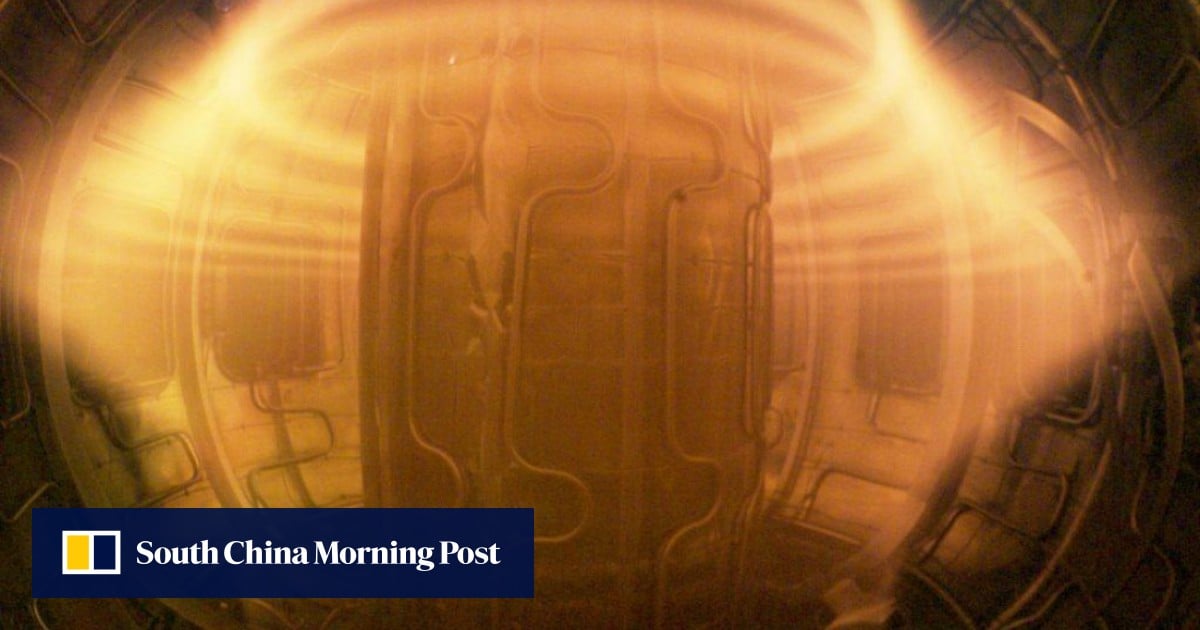
FusionAlpha is a simulator designed to help developers test reactor designs on computers before committing to expensive physical experiments
[Wency Chen](https://www.scmp.com/author/wency-chen)in Shanghai

For decades, fusion energy has sat at the edge of humanity’s clean-energy imagination – a promise of virtually limitless power that always seems just out of reach. But for Xie Huasheng, a fusion theorist and plasma simulation scientist, the industry finally has a tangible way to shorten its costly trial-and-error cycle: better software.
“Fusion simulation software has long faced an ‘impossible triangle’,” Xie said. Existing tools, he argued, tend to be either accurate but computationally expensive, fast but unreliable, or simple in principle but too crude to allow accurate extrapolation and guide next-generation reactor design.
“We are now at a turning point,” Xie said, noting that the performance of more than a dozen physics design and analysis models had improved sharply, driven by refined mathematical structures and advances in artificial intelligence that improved research efficiency.
In April, Xie founded VeloAlpha, a Beijing-based start-up building “FusionAlpha” – a simulator designed to help developers test reactor designs on computers before committing to expensive physical experiments.
He likened it to electronic design automation (EDA) software in the semiconductor industry, where chipmakers test and optimise designs long before they go to the wafer foundry.
Fusion is the reaction that powers the sun, releasing massive amounts of energy when nuclei of light atoms are forced to collide and merge. To recreate this cosmic process on Earth, scientists have to heat fuel until it becomes an extremely hot, electrically charged gas called plasma, and hold it stable long enough for the reaction to keep going.