Advertisement
Lightweight, low-cost, heat-seeking missiles could be used to identify stealth fighters in future air combat with strong accuracy
2-MIN READ2-MIN Listen
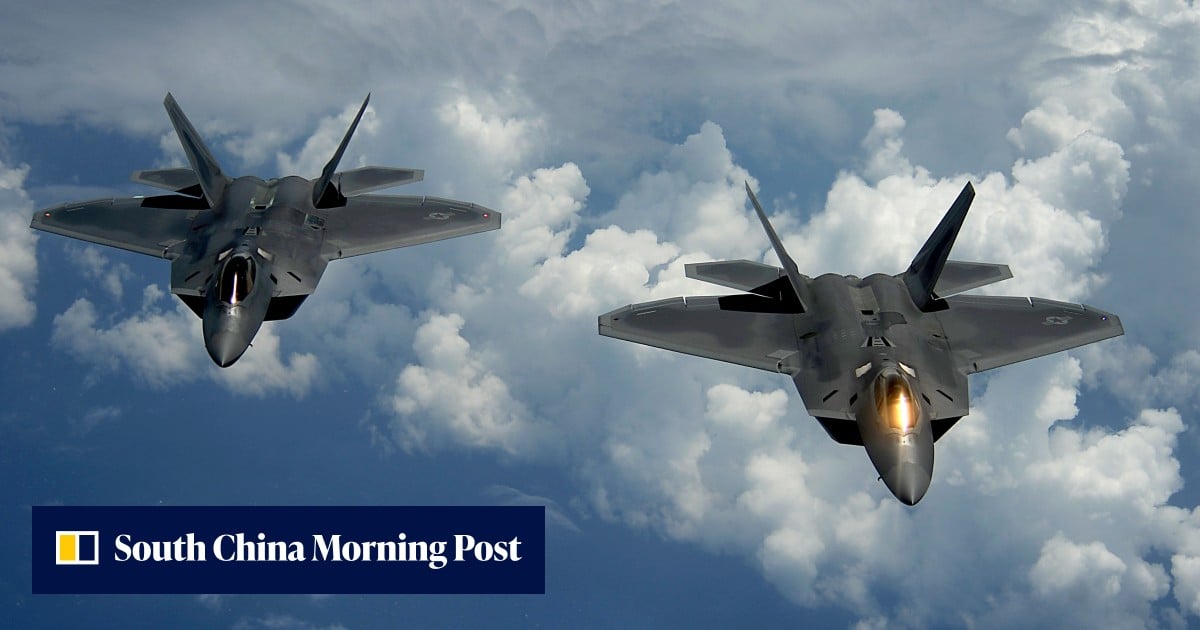
Chao Kongin Beijing The F-35 and F-22 may be among the world’s most
advanced stealth fighters, but they cannot hide one thing: heat.When heat-seeking missiles lock onto aircraft, fighters release flares to confuse infrared sensors and break missile tracking.
But the infrared signals produced by fighters, including heat from engine exhaust and air friction over the fuselage, are different from those generated by flares.
These heat signatures could provide valuable infrared information for target detection and recognition in future air combat, while making flares useless.
Chinese researchers have created a lightweight
artificial intelligence(AI) system that could help heat-seeking air-to-air missiles identify advanced fighter jets, and they demonstrated its high accuracy in laboratory tests against mock-up F-22 and F-35 targets.“Lightweight recognition models could become widely used in
future air-to-air missilesbecause they can provide high-speed recognition while maintaining strong identification capabilities,” An Jiangshan, first author of the study, said on August 10.Advertisement
Select Voice

Select Speed
1.00x