China’s Short-Drama Boom Was Built on Speed. Then AI Got Faster.
He Qitong Editor’s note: This is the first of a two-part series on how AI is reshaping China’s ultrashort-drama industry.
HENAN, Central China — When a tow truck stopped beside three luxury cars at Zhoutu Culture’s compound in the central Chinese city of Zhengzhou in July, crew members assumed they were headed to another shoot.
Zhoutu was shooting so many ultrashort dramas that the company calculated owning the cars would eventually cost less than renting them as props, and bring some tax savings. Founder Wang Huan and his business partners had each chosen a model they had long wanted.
But the Mercedes-Benz G63, Aston Martin DB11, and Bentley Continental GT were leaving for good. Zhoutu sold all three for a combined 4.5 million yuan ($650,000).
Wang photographed the three cars before they left and posted the images on social media with the caption: “Selling cars and all in short dramas.”
“Of course it stirred up some emotions,” he later told Sixth Tone. “But it wasn’t anything like what people might imagine — like feeling we’d gone bankrupt or something.”
Within months of adding the cars to its fleet, Zhoutu’s output had plunged from as many as 200 ultrashort dramas a month to around 30. Its full-time workforce had fallen from more than 500 employees at its 2025 peak to around 200. More than 20,000 costumes had been moved to a nearby building as an AI studio took over their former space. Even the canteen was closed.
Beyond Zhoutu’s gates, shoots were disappearing across Zhengzhou, one of China’s largest ultrashort-drama production hubs, often dubbed the country’s “Vertical Hollywood.”
The smartphone-first dramas, typically told in episodes lasting only a minute or two, reached 851 million users across China by May, in an industry now worth more than 100 billion yuan. Major platforms fueled the boom with scripts, guaranteed funding, and incentives for producers that could deliver at scale.
But the production model underpinning the industry’s rise began to unravel in February. AI was rapidly reducing the cost of work that had previously required live-action crews, while major platforms began cutting the guaranteed funding that had helped sustain breakneck expansion.
Across the live-action industry, people began calling it a “winter.”
Shot clock
“Master Comes Down the Mountain, Tasks Me With Wooing His Daughter” is one of the few Zhoutu productions still shooting in July.
In one scene, four armed guards sent by two sisters from a powerful family rush the protagonist, played by Cai Zhongyuan. He waves one hand and sends them sprawling. One draws a gun and fires; Cai catches the bullet between two fingers.
Director Li Jun adds both flourishes on set, giving the hero two more moments of triumph typical of male-oriented ultrashort dramas.
Cai then turns his attention back to the sisters, whom he had earlier encountered while they were bathing, and continues flirting with them. When the elder sister finally loses her temper and slaps him, the two collide — and kiss.
Li steps away from the monitor before the kiss. “Don’t pull away too quickly. Three seconds. Separate only after I say so,” she tells the leads. She adjusts a side light, tells the camera operator to shoot in slow motion, then calls action.
“Perfect.” In just three takes, the drama’s most important romantic scene is finished.
“Master Comes Down the Mountain” will eventually run for around 100 minutes. Li has three days to shoot it, on a budget of roughly 200,000 yuan.
Barely 160 centimeters tall, with cropped hair and a voice that carries across the set, she keeps the production moving almost without .
When crew chatter continues as the cameras are about to roll, Li cuts across it: “Why don’t you chat in front of the camera instead?” A stalled fog machine, missing prop, or crew member drifting into frame brings another rebuke.
“For simple shots like this, don’t come back to me asking what to do,” she tells the assistant director, pushing the crew to keep routine shots moving without waiting for her.
A comparable production last year would have cost around 300,000 yuan and taken seven or eight days, Li says. The roughly 30-person core filming crew has remained largely intact, but around 10 jobs tied to stunt work and special effects have been cut after related scenes were removed or shifted to AI.
At her busiest, Li directed roughly four dramas a month. From preparation to release, she says, an ultrashort production could take less than a month, with crews routinely working 14 to 16 hours a day.
Wang Ruoyan, 24, who plays the elder sister in “Master Comes Down the Mountain,” remembers getting only around 10 hours of sleep during one five-day shoot as lunch breaks disappeared into costume and makeup changes.
“I even fell asleep in the shower once,” she says. “When I woke up, 30 minutes had passed.”
Wang also saw actors carrying quick-acting heart medication on set. Li says she did the same during especially intense periods, urging actors on her crews to keep some with them to “save their lives.”
Last summer, Li recalled ambulances arriving three times in a single afternoon.
“Some people had acute myocarditis, some suffered heatstroke, and some were simply exhausted from working too hard and staying up too late,” she says. “People would become mentally disoriented, and if they weren’t careful, they could easily fall and get injured.”
On more demanding productions, Li says, actors might finish at 3 or 4 a.m. and be back on set four hours later.
“No one has the energy or passion to create,” Li says. “They’re just thinking about finishing, getting off work, and going to sleep.”
Luo Haoyu, an actor who frequently worked with Li, was on set as many as 28 days a month at the height of the boom. Some nights, he filmed until 5 a.m., then rushed straight to another shoot without even removing his makeup.
“Deep down, everyone knew those crazy days wouldn’t last forever,” Luo says. “We were burning ourselves out because everyone understood that last year was an exceptional period for short dramas.”
Hard landing
Those “crazy days” lasted until February.
That month, TikTok owner ByteDance released Seedance 2.0, an AI video model capable of generating increasingly polished footage for around 1 yuan per second.
Soon after, Hongguo — ByteDance’s ultrashort-drama platform and a major source of scripts and financing — began withdrawing guaranteed funding from many small and midsize live-action projects.
The shift hit companies like Zhoutu particularly hard: three years earlier, a Hongguo-backed rebirth melodrama, “My Daughter Pulled the Plug on My Oxygen Tank,” had given the company its breakout hit, generating more than 10 million yuan in user spending on its first day.
“The landing was extremely hard,” says Zhoutu founder Wang Huan.
Zhoutu has since opened a 50-person AI studio, while about 20 live-action directors also work on AI productions. It makes six to eight AI dramas a month, largely, Wang says, to “maintain a presence” in the market.
At the same time, the company is using cheaper live-action projects to keep its remaining workforce employed. “With so much investment and so many employees, our strategy is still to operate on a model that keeps more people working,” Wang says. If that fails, he says, Zhoutu may shrink further.
The company had already spent nearly two months after the Spring Festival, in mid-February, with little work coming in. “When you don’t know what to do, the safest option is to stop,” Wang says. “At least you won’t lose more money.”
Productions booked before the downturn kept Li on set for a few weeks. Then new scripts dwindled to roughly one a month, and by April her team had nothing to shoot. Directors around her began moving into AI production, while actors suddenly found themselves waiting for work.
Luo says his monthly income fell from around 20,000 yuan during the boom to roughly 5,000 yuan. In the first three months after the Spring Festival, he worked just 20 days in total.
“I felt confused and lost,” he recalls. “What am I supposed to do in the future?”
He began binge eating, sometimes until he felt he might vomit. For an actor normally careful about his weight, the behavior unsettled him.
“At the time, I thought, things were already this bad. Eating at least made me feel a little better,” he says.
He considered leaving the industry altogether, but could not bring himself to do it. “I still want to see whether audiences can once again have higher expectations for live-action productions,” he says.
Yet producers kept pouring into AI. More than 95% of the 128,000 ultrashort dramas released in the first quarter of 2026 were AI-generated, according to the China Netcasting Services Association (CNSA).
By May, Bytedance pledged 1.5 billion yuan to support live-action short dramas, while six major platforms announced at least 6 billion yuan in planned investment. Regulators also allocated funding for higher-quality productions across 11 provinces.
Live-action output rebounded in the second quarter, partly due to shelved projects returning, though CNSA data shows AI still accounted for 64% of releases.
But Wang is reluctant to bet Zhoutu’s future on another round of platform money. “If Hongguo stopped giving you money tomorrow, what would you do?” he says.
For Shi, a 22-year-old background actor, the slowdown meant days spent waiting for work. During the boom, small speaking roles and regular extra work could bring him close to 10,000 yuan a month. By the time Sixth Tone met him, he had landed just one job in 10 days.

For 110 yuan, Shi spent the morning waiting to appear for a few seconds as a guard: charge at the hero, pretend to be hit, fall to the ground.
He was also still owed 800 yuan from a production the previous December. The company had disappeared, as had the person who recruited him. All Shi had left was their nickname on messaging app WeChat.
“We don’t even know who to ask for our money,” says Shi, who asked to be identified only by his surname. “Construction workers can at least find someone to demand their wages from. With film crews, they’re long gone.”
Shi barely watches live-action ultrashort dramas anymore. He prefers AI-generated comic dramas.
“AI is especially good at stories that rely heavily on visual effects,” he says. “It does those really well.”
Still rolling
For the opening scene of “Master Comes Down the Mountain,” the male lead falls from the sky. Last year, Li says, the crew would have used wire work and spent at least half a day filming it. This time, the actor simply lay face down on a round stone table in front of a small green screen. “AI can generate all the surrounding scenery,” Li says. “It can make the male lead descend through the clouds, and even create a sweeping aerial shot following him all the way to the ground.”
The whole shot took less than 30 minutes, and Li estimates it saves around 10,000 yuan.
Months earlier, Zhoutu had offered many of its directors the option of switching to AI production. For Li, that meant planning shots and guiding a team through the video-generation process.
After a day or two learning the job, Li says she could already do the work. The pay was about 30% lower. Of roughly 10 directors around her who faced the same choice, eight switched to AI. Li refused.
“Live-action short dramas need a director more,” Li says. “With the right prompt, anyone can make AI videos. But with real filming, you have to work with the actors, camera, and lighting. The sense of achievement is different.”
Zhoutu now rarely makes premium live-action dramas with big budgets. Instead, it focuses on cheaper remakes of proven hits, particularly modern-day rural stories that can be filmed quickly.
“AI’s advantage is making two immortals arguing in the sky, not people arguing outside a village house,” Wang says. A family-conflict drama can cost less than 50,000 yuan to shoot with real actors. Internally, Zhoutu calls these “emotion-driven dramas for lower-tier markets.”
Many of Zhoutu’s remaining live-action productions are male-oriented stories and remakes of plots that have already yielded success. Wang says they can be shot faster than female-oriented dramas, which typically require more time for atmosphere and emotional development.
In one scene from “Master Comes Down the Mountain,” Wang Ruoyan and the second female lead enter the hero’s bedroom in lace and bunny-style nightdresses. Before filming, Li adjusts two strings of hanging round plastic discs. Placed close to the lens, the pieces blur into soft circles of light; she moves them farther apart until the effect sits where she wants it in the frame.
“This is the craftsmanship I only use in female-oriented dramas,” she jokes.
The extra effort does not always pay off. Some of her carefully polished dramas have performed poorly; others that she rushed through became hits.
“Those times make me wonder whether I really understand the market,” she says. “I started doubting myself.”
The final scene of “Master Comes Down the Mountain” has Cai seated at a dinner table as three women, including the two sisters, confess their love. The elder sister tells him to choose one.
“Can’t I have all three?” he replies.
The women rush him, pulling his ears and grabbing his arms as the camera pushes in. Freeze frame.
Although it’s the ending of the drama, it’s filmed on the first day of the three-day shoot. Li still has two days of scenes to get through.
At lunch, she makes the cast a promise: “I’ll do my best to get you back to the hotel by 7 p.m., so you can order takeout from bed.”
“That would be heaven,” Wang Ruoyan says.
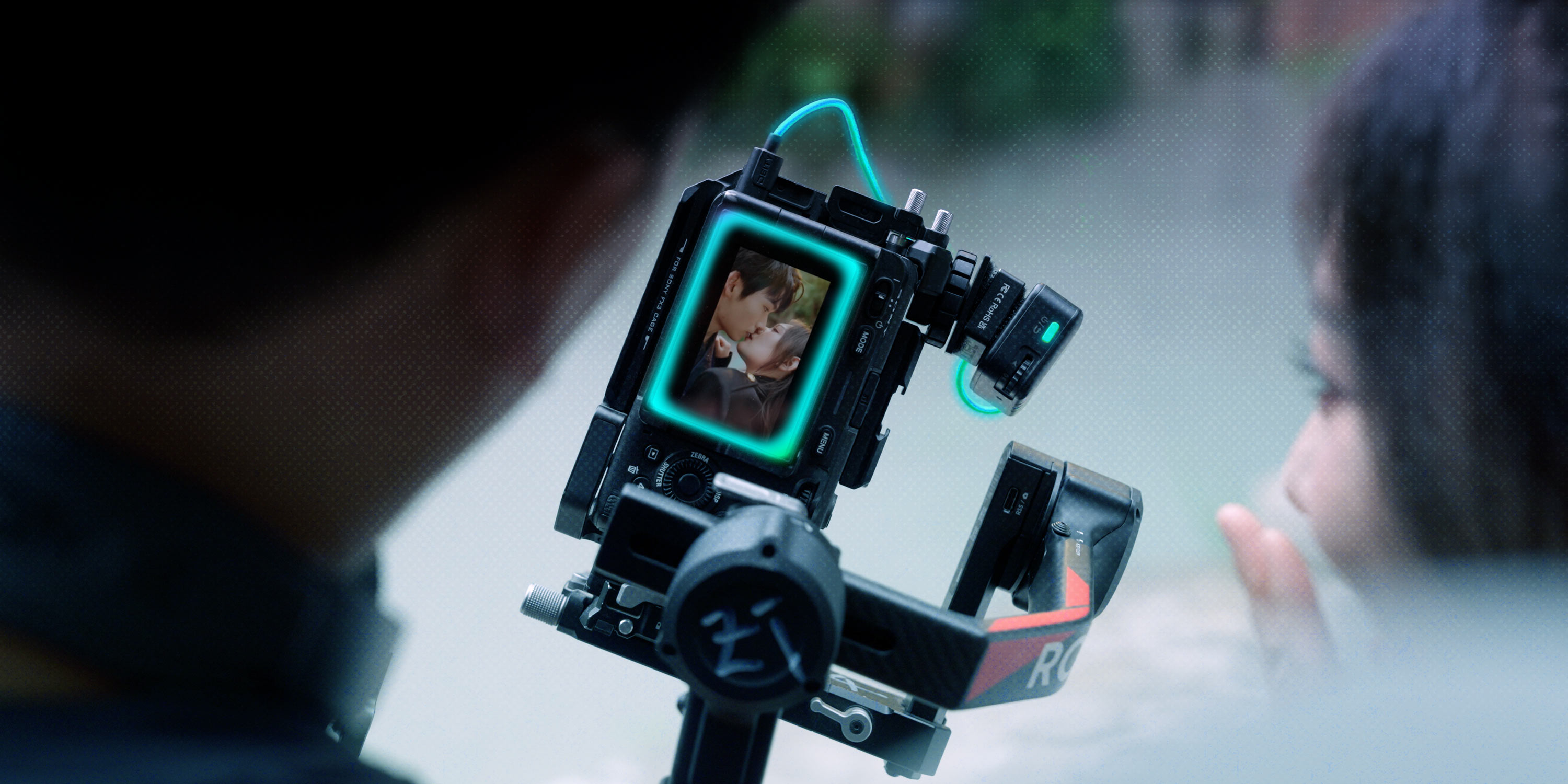
Additional reporting: Lü Xiao; editor: Apurva. (Header image: Monitors show a scene being filmed by director Li Jun in Zhengzhou, Henan province, June 2026. Reedited by Ding Yining; photo by Lü Xiao/Sixth Tone)