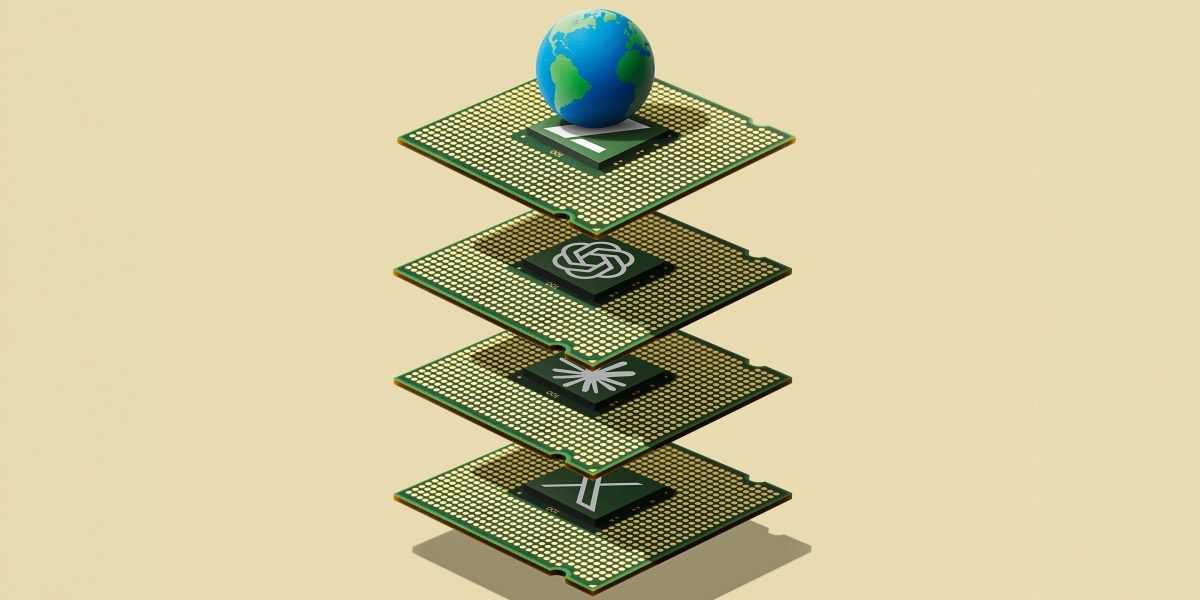
It was, perhaps, the worst-kept secret in the AI community.
In mid-July, online sleuths who obsessively track the internet for signs of new AI models started to whisper about the latest offering from Moonshot AI, the Beijing-based artificial intelligence startup behind the Kimi large language model: Something big was coming.
Moonshot AI’s latest model didn’t just live up to the hype—it raised the stakes.
On July 16, Moonshot debuted Kimi K3, the largest open-source model ever released, and promised it could perform close to the level of Anthropic’s Fable 5—perhaps the most powerful publicly available model on the market today—at a fraction of the cost. Moonshot’s official benchmarks consistently rank K3 among the top three AI models; one independent benchmark from Arena.AI even pegged K3 as the best model currently available, ahead of Anthropic.
The launch was a triumph for the lab and its founder Yang Zhilin, a 34-year-old Tsinghua and Carnegie Mellon alumnus—and Pink Floyd fan—who based his startup’s Chinese name on his favorite album, The Dark Side of the Moon.
But the release also rattled investors because it challenged the idea that U.S. firms could maintain their sizable lead in the global AI race simply by outspending Chinese rivals on computing power.
Markets sold off in Asia. The chip-focused Philadelphia Semiconductor Index fell 1.6%. Nvidia lost almost $600 billion in value and briefly lost its spot as the world’s most valuable company to Apple.
Many observers, including Anthropic CEO Dario Amodei, hadn’t expected a Chinese AI lab to release a model that could approach the U.S.’s best offerings for at least another six months. Tesla CEO Elon Musk suggested it might happen by the first quarter of next year. Kimi K3 blew up the timeline: Chinese AI is now cheap enough and good enough that even U.S. startups and Fortune 500 companies are quietly plugging the models into their operations to rein in spiraling AI budgets. It’s a remarkable closing of the gap that China achieved despite Washington imposing export controls to choke off China’s access to the world’s most advanced chips.
“The AI ecosystem in China is probably much better than people thought,” says Paul Triolo, a partner at DGA–Albright Stonebridge Group.
Chinese developers have been working from a severe disadvantage for years.
The U.S. began to cut China off from top-tier AI processors, like those made by Nvidia, in 2022. By limiting the sale of the advanced chips used to train and run AI models—and the tools that could be used to make them—Washington planned to kneecap China’s tech sector and preserve the U.S.’s AI lead.
DeepSeek, a Hangzhou-based lab attached to a Chinese hedge fund, punched a hole in that strategy in early 2025. It shocked the AI world by debuting its V3 and R1 models that matched the performance of its U.S. counterparts. DeepSeek claimed to have trained the models with a tiny budget by engineering efficiency with smart programming and math tricks. The models proved that Chinese AI developers could keep innovating, even with second-tier hardware.
DeepSeek was an early winner in China’s AI race, but rapid-fire model releases kept ushering in new favorites.
In June, AI startup Z.ai stole the spotlight when it released its GLM-5.2 model, which proved particularly strong at coding and creative design. Its newly listed stock had been on a tear, up over 1,100% through mid-July. At times, it broke 1 trillion Hong Kong dollars ($127.6 billion) in market capitalization, valuing the company—which had just $106 million in revenue last year—the same as BYD and Starbucks. But Moonshot’s Kimi K3 launch sent shares tumbling 40% in two days.
Even China’s consumer-internet giants are getting into the “frontier” race. Meituan’s LongCat-2.0 model encompassed as much data as DeepSeek’s V4 and performed at levels that matched OpenAI and Anthropic releases from February. More important, Meituan, best known as a food-delivery platform, claimed it trained the system entirely on Chinese-made processors rather than U.S. chips.
“The idea that Meituan could train a 1.6 trillion-parameter model on domestic hardware would have been inconceivable in October 2022,” says Triolo, referring to the month when the U.S. launched its AI export controls.
AI users globally are adapting to the new reality in which Chinese AI models are competitive with U.S. models on capability and far superior on price.
Chinese models now dominate much of the activity on OpenRouter, a popular marketplace where developers can access different models and providers through a single interface. At one point in mid-July, six of the top 10 models—and all of the top five—came from Chinese companies: Tencent, Xiaomi, DeepSeek, MiniMax, Moonshot, and Z.ai.
The rankings capture usage in developer circles, but adoption is showing up inside mainstream companies, too. Last year, Airbnb CEO Brian Chesky said his company was using Alibaba’s Qwen for customer service. Cursor, the AI coding startup, has said that Moonshot AI’s Kimi provided the foundation for Composer 2, its coding model. In a June social media post, Coinbase CEO Brian Armstrong explained how the crypto platform had halved its AI spending by pushing more of its employees to use Kimi and Z.ai’s GLM models.
One million tokens of output—roughly 750,000 words—cost $50 when using Anthropic’s Fable model. The same million output tokens from DeepSeek-V4-Pro cost about $0.87, while Z.ai GLM-5.2 cost $4.40. Kimi K3 is relatively pricey by Chinese standards at $15.
DoorDash is pushing coding tasks to Chinese models, with chief technology officer Andy Fang saying the company delegates “lower-level work” to Kimi, leading to “better quality [at] cheaper cost.”
Power costs less in China than in many areas of the U.S., in part because China has invested in power generation and transmission, making it easier to add data center capacity. New data centers in the U.S., meanwhile, often face political resistance owing to perceived strain on grids and water use.
Chinese AI companies are also willing to sacrifice profit margins in a bid to capture market share and establish their models as a de facto standard.
Ironically, the U.S. export controls designed to restrain China’s AI sector may have pushed prices lower, too. Without access to the most powerful AI processors, Chinese labs are forced to squeeze more performance out of less capable hardware.
“Labs are so compute-constrained, capital-constrained, and talent-constrained that a lot of them are being cautious in how they use their resources,” says Grace Shao, an AI analyst and author of the AI Proem newsletter.
Recent Chinese AI models are also now compatible with cheaper, locally made processors. “For the money [a Chinese AI company would] spend on an Nvidia chip, they can buy 10 local chips from Huawei or other local chipmakers,” says George Chen, a partner at the Asia Group.
Perhaps most important, Chinese firms have embraced the open-source movement, launching their models for free. Almost all Chinese companies release their models under permissive licenses, letting users download and fine-tune models at no cost and run them on local hardware, even in the U.S. The only costs that matter, in that case, are “GPUs and energy,” says Ameya Kanitkar, cofounder of Larridin, an AI measurement platform. When Anthropic sells its models, it factors in the additional cost of its R&D, he says.
Geopolitics can still muck things up. The U.S. is getting concerned about American companies using Chinese AI models, for security reasons and because of fears that Chinese developers might continue to undercut U.S. developers on price. Congress is probing U.S. companies like Airbnb and Cursor on their use of Chinese AI models. (In a statement, Airbnb said it used only “a limited number” of Chinese models, which were all open-source and run through “approved U.S.-based service providers.” Cursor did not return Fortune’s request for comment.) Lawmakers are also exploring whether the U.S. should be doing more to support its own open-source models.
57%
Chinese AI models’ share of tokens used by U.S. firms on OpenRouter in one week in July.
Chinese developers, meanwhile, are turning that anxiety to their advantage. Z.ai announced its GLM-5.2 model just days after U.S. officials briefly cut off access to Anthropic’s Fable and Mythos models for some users outside the U.S. and for foreign nationals. “Frontier intelligence should not belong to only a few people, nor be subject to withdrawal by a handful of rules at any moment,” Z.ai wrote in an accompanying social media post.
The startup is courting governments that want sovereign AI or models they can run on domestic hardware, with local control over data and upgrades. Demand has only grown as U.S. policy gets more protectionist and less predictable. “The decision to restrict the latest models really backfired,” Chen says. “If you think about Singapore or India, there’s growing uncertainty around U.S. AI policy. One day, you’re told you can use the latest model; the next day, no foreign citizens can use it. How can any country deal with that kind of uncertainty?”
Beijing, for its part, sees a soft-power benefit to the world using its AI. At an AI conference in July, President Xi Jinping pledged to “uphold openness and win-win cooperation” when it comes to the technology. AI, “should not be a solo performance by any one country,” he said, “but a symphony of global cooperation.”
The Fortune 500 Innovation Forum will convene Fortune 500 executives, U.S. policy officials, top founders, and thought leaders to help define what’s next for the American economy,
Nov. 16-17 in Detroit.