Beijing's grip on 70% of global indium supply is sending shockwaves through the AI semiconductor supply chain, with wafer prices up 250% since early 2025.
The metal you’ve probably never heard of is quietly becoming one of the most consequential bottlenecks in the AI revolution. China has intensified scrutiny on indium exports, tightening checks on a material that sits at the foundation of the high-speed optical chips powering next-generation AI data centers.
Here’s why that matters: China controls roughly 70% of the world’s indium supply. When the country decides to slow-walk export approvals for a critical semiconductor input, the entire global tech supply chain feels the squeeze.
From obscure metal to geopolitical lever #
The story starts in February 2025, when Beijing added indium phosphide (InP) to its export control list. InP is the compound semiconductor material used to manufacture the high-speed optical chips that shuttle data around inside AI data centers. In practice, license delays have functioned as a soft restriction, choking supply to international buyers who depend on Chinese-sourced indium as feedstock.
The results have been dramatic. Prices for 6-inch InP wafers have surged roughly 250%, climbing from around $1,429 to $5,000 since the restrictions took effect in early 2025.
The diplomatic scramble #
The severity of the situation drew high-level attention in May 2026. Coherent CEO Jim Anderson traveled to Beijing as part of a US delegation led by President Donald Trump, specifically to discuss supply concerns around indium exports.
Coherent is one of the world’s largest producers of InP-based optical components, the exact products getting squeezed by China’s export checks.
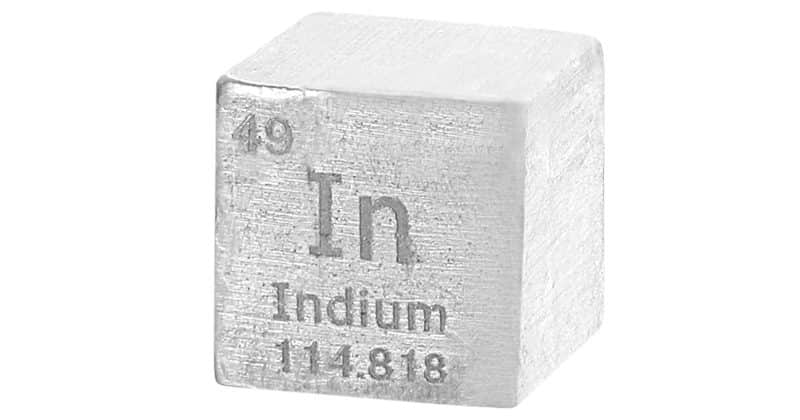
Indium is used in LCD displays, soldering materials, and various electronic components, and is primarily recovered as a byproduct of zinc smelting. The AI boom transformed its strategic profile: the explosion of data center construction globally turned indium phosphide from a specialty material into a strategic chokepoint. China’s position is formidable, with nearly 70% of global production concentrated there, making diversification genuinely difficult in the short term.
What this means for investors #
A 250% increase in wafer prices flows downstream into optical transceiver costs, networking equipment pricing, and ultimately into the capital expenditure budgets of every company building or expanding AI data centers.
Companies like Coherent and other InP-based chip manufacturers face a dual challenge: exploding input costs and supply reliability now subject to the diplomatic temperature between Washington and Beijing. Microsoft, Google, Amazon, and Meta are collectively spending tens of billions annually on data center infrastructure, and optical interconnect components that suddenly cost multiples of what they did 18 months ago put pressure on those capex budgets.
Watch for two developments going forward. First, whether Western governments accelerate funding for alternative indium sources or InP recycling technologies. Second, whether chip designers begin shifting toward alternative materials like silicon photonics that reduce dependence on InP entirely.
Disclosure: This article was edited by Editorial Team. For more information on how we create and review content, see our