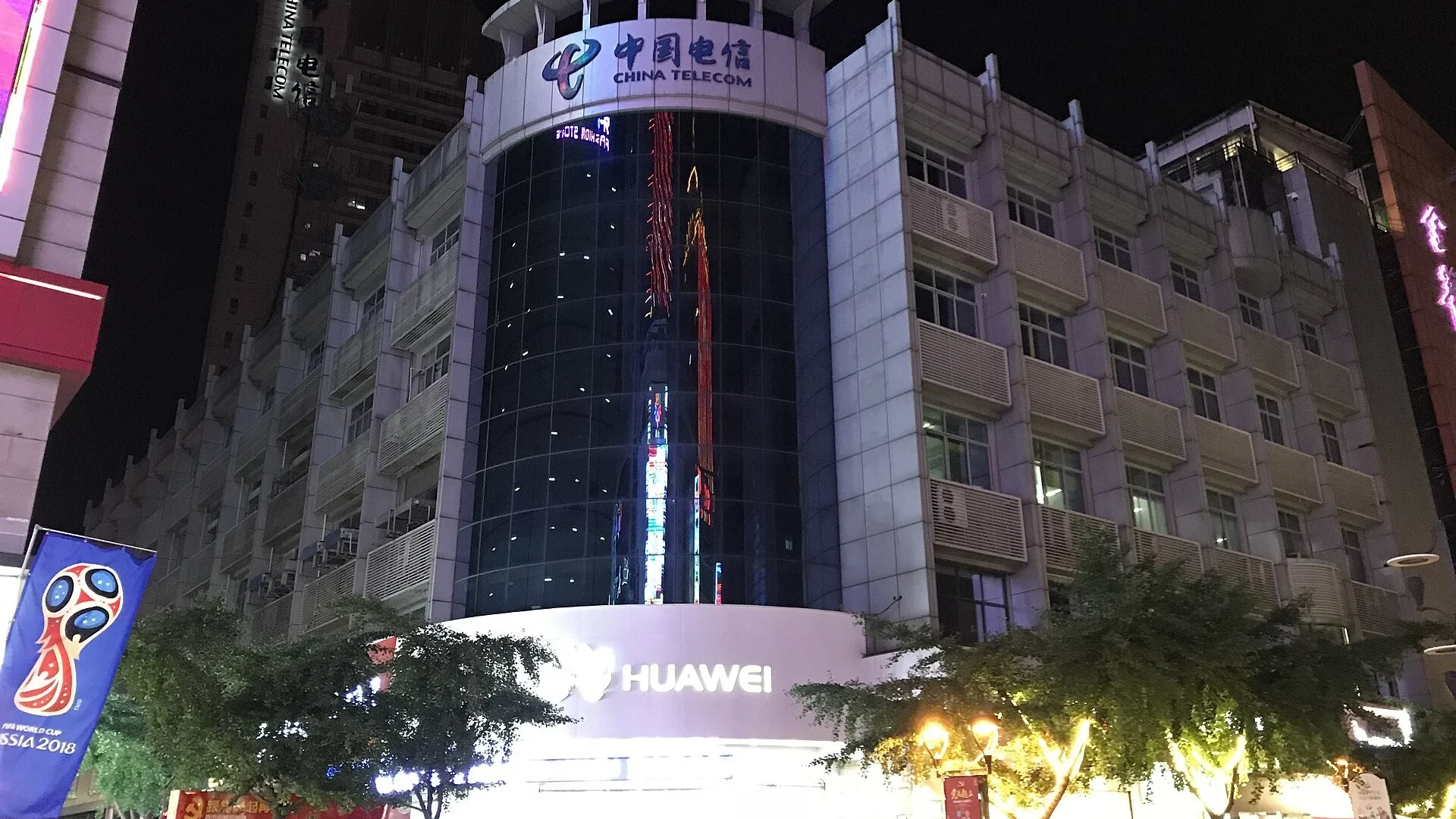
China Telecom has trained an open-weight AI model on 8,192 Huawei Ascend 910C processors, according to a technical paper from its Xingchen AGI Lab and reporting by the South China Morning Post. The model, Xing4.1-Preview, is a 285-billion-parameter sparse Mixture-of-Experts system with a 1-million-token context window, and its weights carry the Apache 2.0 license.
The release lands while US export controls keep Chinese buyers away from advanced American accelerators, including NVIDIA’s A100 and H100 GPUs. The South China Morning Post framed the paper against Washington’s tightening curbs. What makes this one different from earlier China Telecom claims is the supplier line. The paper names Huawei Technologies, where earlier statements about domestic chips stayed silent on who made them.
This analysis walks through what the paper confirms, what it leaves out, and what the release means for chip suppliers, cloud buyers and developers. It also sits next to our earlier coverage of the growing difficulty of distilling US AI models, which describes the other pressure Chinese labs face right now. For the wider beat, see our AI and machine learning section.
Don't miss new tech stories on Google
Add Shattered once in the Google app and our stories show up in your news suggestions.
What China Telecom Published About Xing4.1-Preview #
The source material is a technical paper from China Telecom’s Xingchen AGI Lab. It describes Xing4.1-Preview, an open-weight model, and states that pre-training ran on 8,192 Huawei Ascend 910C processors. Separate coverage adds that the team trained with Huawei’s MindSpore, the company’s open-source deep-learning framework, on Ascend hardware.
That is a short list of confirmed facts, and it is worth keeping the line between confirmed and inferred sharp. The paper, as relayed in the available reporting, gives the chip count, the chip model, the supplier, the framework, the architecture, the active-parameter figure, the context length and the license. It does not give a training date, a cost, a duration, benchmark results or a price.
The name also tells readers something. The Preview tag signals an early checkpoint rather than a final product. Labs often use that label when they want outside feedback before locking a release, though China Telecom has not said what comes next. Anyone reading the model as a finished competitor to the leading frontier systems is reading more into the paper than the paper says.
The Numbers: 8,192 Ascend 910C Chips and a 285B MoE Model #
The table below collects every spec the fact sheet confirms. Anything missing from it was not provided, and we have left those cells out rather than fill them with estimates.
| Item | Confirmed detail |
|---|---|
| Developer | China Telecom’s Xingchen AGI Lab |
| Model | Xing4.1-Preview |
| Architecture | Sparse Mixture-of-Experts (MoE) |
| Total parameters | 285 billion |
| Active parameters per token | About 17 billion |
| Context window | 1 million tokens |
| Pre-training hardware | 8,192 Huawei Ascend 910C processors |
| Software framework | MindSpore (Huawei, open source) |
| Chip supplier named | Huawei Technologies |
| License | Apache 2.0 (open weights) |
Eight thousand one hundred ninety-two is a deliberate-looking number. It equals 2 to the 13th power, which fits the way large clusters are usually built from repeating blocks. The paper does not say how the cluster was wired or partitioned, so treat any topology claim as speculation until the authors publish more.
How a Sparse MoE Model Runs on 17 Billion Active Parameters #
A Mixture-of-Experts model splits its feed-forward layers into many specialist blocks and routes each token to only a few of them. Xing4.1-Preview holds 285 billion parameters in total, but only about 17 billion fire for any single token. That works out to roughly 6 percent of the model doing the arithmetic at each step, or about one active parameter for every 17 stored.
The design trades memory for compute. Serving the model still requires room for all 285 billion weights, but the per-token compute looks closer to a 17-billion-parameter dense model. For a lab short on top-tier accelerators, that ratio is attractive. It lets the team chase a larger knowledge capacity without paying dense-model compute on every token.
Why MoE suits constrained hardware
Training an MoE model puts heavy demands on the interconnect, because tokens must travel between experts that live on different chips. That makes cluster networking a first-order concern. The paper confirms the chip count but not the network, so outside engineers cannot yet judge how efficiently the cluster used its 8,192 processors.
China Telecom’s other models follow the same pattern. Reports on the TeleChat3 series describe MoE models too, which suggests the carrier has settled on sparse architectures as its main route on domestic silicon.
Why the 1-Million-Token Context Window Matters #
The model is described as having a context window of 1 million tokens. In practice that is enough room for several long books, a large codebase or a stack of contracts in a single prompt. A carrier has obvious uses for that capacity, from call-center transcripts to network logs and customer documentation.
A caveat applies. A stated window says what the model accepts, not how well it reasons across that span. The available results contain no long-context evaluation, so the claim stays a specification and not a performance result. Developers should test retrieval accuracy at their own document lengths before trusting the headline number.
Long windows also stress memory. Serving 1 million tokens requires a large key-value cache, and the cost of that cache often decides whether a model is practical outside a demo. China Telecom has published no serving figures, so the economics of running Xing4.1-Preview at full context remain unknown.
Apache 2.0 Weights: What China Telecom Gave Away #
The weights ship under Apache 2.0, a permissive license that allows commercial use, modification and redistribution, and it includes an express patent grant. That puts Xing4.1-Preview in the same licensing bracket as many of the more usable open-weight releases. It is a more open choice than the custom community licenses some labs attach to their models.
For China Telecom, the license does two jobs. It invites outside developers to build on the model, and it turns the Huawei training story into something others can inspect. Any team that downloads the weights can probe the model’s behavior directly, which is a stronger form of disclosure than a paper alone. Readers tracking the open-weight field can compare this release against the models in our open-source LLM roundup, and our guide to free LLM APIs built on open weights explains how teams usually host such models without buying their own cluster. Note that nothing in the fact sheet says where Xing4.1-Preview is hosted or what a hosted endpoint would cost.
Huawei Ascend and MindSpore: The Software Side of the Stack #
Hardware gets the headlines, but the framework decides whether a cluster is usable. Huawei built MindSpore as its own open-source deep-learning framework, and the coverage of Xing4.1-Preview says the team trained with it on Ascend hardware. That pairing is the other half of the story. A lab can only leave the CUDA ecosystem if kernels, compilers and distributed-training tooling exist on the other side.
The fact sheet also flags a limit. Claims that the model used no NVIDIA hardware at all, or that CUDA appears nowhere in the stack, are not established by the paper details in the available results. Evaluation tooling, data preparation and earlier experiments could all have touched other hardware without appearing in a pre-training summary. We therefore report the Huawei pre-training fact and nothing broader.
That distinction matters for policy. A model pre-trained on Huawei chips proves a capability. A model built with zero NVIDIA exposure would prove independence, and the evidence supports only the first.
TeleChat3 and the Earlier Models: China Telecom’s Domestic-Chip Track #
Xing4.1-Preview is not China Telecom’s first model on domestic silicon. Separate reporting identifies the TeleChat3 series as MoE models trained on Huawei Ascend 910B chips, with sizes ranging from 105 billion parameters to trillions. That account credits the technical paper to China Telecom’s Institute of Artificial Intelligence, known as TeleAI.
Earlier still, China Telecom named TeleChat2-115B and a second, unnamed model as trained entirely on domestically produced chips. Reports put the unnamed model at 1 trillion parameters. The company’s cited statement said both models used tens of thousands of domestically manufactured chips, and it never named the supplier.
| Model | Unit credited | Reported size | Chips | Supplier named |
|---|---|---|---|---|
| Xing4.1-Preview | Xingchen AGI Lab | 285B MoE, about 17B active | 8,192 Ascend 910C | Yes (Huawei) |
| TeleChat3 series | TeleAI | MoE, 105B to trillions | Ascend 910B | Yes (Huawei) |
| TeleChat2-115B | China Telecom | 115B | Domestic chips, unspecified | No |
| Unnamed model | China Telecom | 1 trillion | Domestic chips, unspecified | No |
Read the table top to bottom and a pattern appears. The carrier moved from anonymous domestic chips to a named supplier, and from a single large model to a family spread across two internal research groups. The 8,192-chip figure for Xing4.1-Preview is also far smaller than the tens of thousands cited for the earlier pair, though the sources do not say whether those earlier counts describe one run or several.
Historical Context: From Unnamed Chips to a Named Supplier #
The shift from silence to a named supplier deserves its own section. When China Telecom first described its fully domestic models, it kept the chip vendor out of the announcement. Observers could guess, but the company gave them nothing to cite. A Chinese lab naming Huawei in a technical paper reads as a conscious change in posture.
Several explanations fit, though none is confirmed. Naming Huawei may signal confidence that the hardware now holds up under public scrutiny. It may also reflect a policy environment that rewards visible domestic-chip adoption. We cannot tell from the available results, and no named China Telecom or Huawei official has gone on record in the coverage we reviewed.
The same shift shows up elsewhere in the supply chain. Our report on Huawei and Phlexing showing two domestic chip-design tools traces how Chinese firms are filling gaps on the design side while model labs fill them on the training side. Taken together, the stories describe an effort to replace the stack in layers, not in one leap.
US Export Controls and the A100 and H100 Gap #
US export controls restrict Chinese access to advanced American AI chips, and the reporting names NVIDIA’s A100 and H100 among the covered GPUs. Those parts were the workhorses of the last generation of large-model training. With those parts off the table, Chinese labs have to lean on weaker legal alternatives or on domestic silicon.
China Telecom’s paper puts a data point on the third option. Eight thousand one hundred ninety-two Ascend 910C chips were enough to pre-train a 285-billion-parameter MoE model. Whether the result matches what an equivalent NVIDIA cluster would deliver is an open question, since the available results include no benchmarks and no training-efficiency comparison.
The policy angle is also moving. Our coverage of Trump’s refusal to share the US AI lead and the push for 10 million Chinese chips by 2030 shows how both capitals now treat compute as a strategic asset. A named Huawei training run gives Washington a concrete example to argue over, whichever side of the debate it favors.
What Remains Unconfirmed About Xing4.1-Preview #
A news analysis earns trust by marking its gaps. The table below separates what the sources establish from what they do not. We found no verifiable on-record quote from a named China Telecom, Huawei or US official, so this piece quotes none.
| Claim | Status |
|---|---|
| 8,192 Ascend 910C processors used in pre-training | Confirmed by the paper |
| Huawei named as chip supplier | Confirmed |
| 285B parameters, about 17B active per token | Confirmed |
| 1-million-token context window | Confirmed (as described) |
| Apache 2.0 weights | Confirmed |
| No NVIDIA hardware used anywhere | Unconfirmed |
| No CUDA anywhere in the stack | Unconfirmed |
| Training date, duration and total cost | Not provided |
| Benchmark and performance results | Not provided |
| Commercial price | Not provided |
The missing benchmarks hurt most. Without them, no one can rank Xing4.1-Preview against the leading models, and the headline reduces to a hardware story. That is still a story worth telling, but it is a different one from a model-quality story.
Competitive Comparison: How Xing4.1 Stacks Up Against Other Domestic-Chip Efforts #
Direct scoring is impossible today, so the comparison below sticks to disclosure and architecture. Inside China Telecom’s own lineup, Xing4.1-Preview is the most transparent entry. It names its supplier, states its chip count and releases its weights under a permissive license. TeleChat3 names its chips but covers a wider size range, and the earlier pair named neither chip model nor supplier.
Against rivals outside the carrier, the picture is thinner. Other Chinese labs face their own hardware and timing problems, which our report on Z.AI and Moonshot model delays lays out. Those delays hint that compute remains the binding constraint across the field, and a carrier with its own data centers and a Huawei supply line may sit in a different position than a pure model startup.
For a wider look at where Chinese and US systems sit on measured capability, our ranking of 15 frontier AI models provides the baseline Xing4.1-Preview will eventually be judged against. The model does not appear in it, and nothing in the paper suggests it was built to top such a list. A 17-billion-active-parameter design points toward efficiency and long context over raw leaderboard position.
Market Impact for Huawei, NVIDIA and Cloud Buyers #
We found no confirmed market figures tied to the release, so this section is analysis and not data. For Huawei, a named, public training run on 8,192 Ascend 910C chips works as a reference customer story. Huawei has not commented in the coverage we reviewed, and no financial effect has been reported.
For NVIDIA, the paper changes little in the short run. The export rules already shut off the A100 and H100 for Chinese buyers, so the company was not counting on that demand. The longer-term risk is subtler. Every successful domestic training run shrinks the argument that Chinese labs need American silicon, and it feeds a parallel software ecosystem around MindSpore.

For cloud and enterprise buyers inside China, the Apache 2.0 weights open a practical path. Companies can run a 285-billion-parameter MoE model on their own hardware without a license negotiation. Outside China, buyers will weigh the same freedom against compliance questions, since some organizations restrict models of Chinese origin. Each legal team will reach its own answer.
One more angle deserves attention, and it concerns a carrier’s incentives. A telecom operator sells connectivity, cloud capacity and enterprise services, so a strong in-house model can raise the value of everything else it sells. Training on a domestic supplier’s chips also gives the operator a story about supply security that customers in regulated sectors may find persuasive. None of this appears in the paper itself, so treat it as our reading of the business logic and not as a stated strategy.
The scale of the effort adds context. Pre-training a 285-billion-parameter model on 8,192 chips is a serious engineering commitment, and it demands reliable hardware over a long run. A failed chip or a stalled network link can cost days on a cluster this size. The paper’s summary does not discuss failure rates or recovery, which is exactly the kind of operational detail that engineers outside China will want to see before they judge how mature the Ascend platform has become.
What Developers and Enterprises Should Do Now #
Teams considering the model should treat this as a due-diligence checklist, not a buy signal. Start with what you can verify on your own hardware. The weights are public, so independent evaluation costs time and compute, not permission.
- Run your own long-context retrieval tests at 100,000, 500,000 and 1,000,000 tokens before trusting the window.
- Check serving memory needs for all 285 billion weights, not just the 17 billion active parameters.
- Review your legal and procurement policy on models of Chinese origin before any production use.
- Read the full paper for the training recipe and hardware notes the summary reports omit.
- Wait for third-party benchmarks before comparing the model with Western or other Chinese systems.
Teams building on Huawei hardware have a separate task. The MindSpore and Ascend path now has a public, named example at a meaningful scale, which makes it easier to justify an evaluation. It does not remove the migration effort of leaving CUDA-based tooling.
Five Predictions for Domestic-Chip AI Training #
These are our forecasts, not reported facts, and we have attached no numbers we cannot support.
- More Chinese labs will name their chip supplier. China Telecom has set a precedent, and disclosure now carries more upside than risk for firms with working Ascend clusters.
- Independent benchmarks will arrive quickly. Open Apache 2.0 weights invite testing, and the community usually posts results within weeks of a notable release.
- A fuller release will follow the Preview. The label suggests an unfinished checkpoint, so expect an updated version, though China Telecom has announced no schedule.
- The no-NVIDIA claim will face an audit. Researchers and journalists will press for clarity on evaluation and data-preparation hardware, because the current evidence covers only pre-training.
- The export-control debate will shift toward training efficiency. Policymakers will ask how much a restricted chip gap matters when sparse models stretch weaker clusters further.
The takeaway: China Telecom’s paper confirms that a named domestic supplier can carry a large pre-training run, but it stops short of showing the model competes at the top. Hardware capability is proven. Model quality is still unproven.
Frequently Asked Questions #
What is Xing4.1-Preview?
Xing4.1-Preview is an open-weight AI model described in a technical paper from China Telecom’s Xingchen AGI Lab. It is a 285-billion-parameter sparse Mixture-of-Experts model with about 17 billion active parameters per token and a 1-million-token context window.
Which chips did China Telecom use to train it?
The paper says pre-training used 8,192 Huawei Ascend 910C processors. Coverage adds that the team trained with Huawei’s MindSpore framework on Ascend hardware.
Did the model avoid NVIDIA hardware entirely?
That is not established. The available paper details confirm Huawei chips for pre-training, but they do not support a claim of zero NVIDIA hardware or zero CUDA anywhere in the stack.
Can anyone download and use the weights?
The weights are released under the Apache 2.0 license, which permits commercial use, modification and redistribution. Check your own organization’s policy on models of Chinese origin before deploying one.
How does it relate to TeleChat3?
TeleChat3 is a separate China Telecom model series from the TeleAI institute. Reports describe MoE models trained on Huawei Ascend 910B chips, ranging from 105 billion parameters to trillions. Xing4.1-Preview comes from a different unit, the Xingchen AGI Lab, and used the newer 910C.
How good is Xing4.1-Preview compared with other models?
No one can say yet. The available results contain no benchmark scores, so any ranking would be a guess. Wait for independent evaluations of the open weights.
What did China Telecom say about its earlier domestic-chip models?
The company identified TeleChat2-115B and a second, unnamed 1-trillion-parameter model as trained on tens of thousands of domestically made chips. It did not name the supplier of those chips.
Does this change US export controls?
Nothing in the coverage reports a policy change. The controls still restrict Chinese access to advanced US AI chips such as the A100 and H100, and the release adds a concrete example to the debate over how well those limits work.