Beijing is doubling down on domestic semiconductor and artificial intelligence development as part of a sweeping five-year plan, with major implications for global tech supply chains and crypto mining hardware.
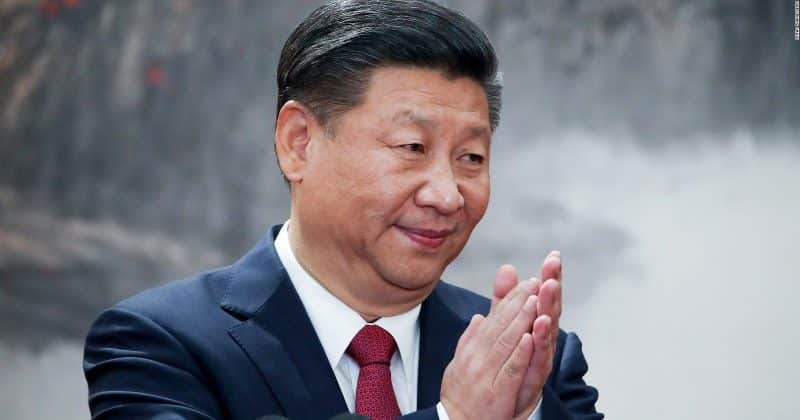
Xi Jinping has made it clear: China’s technological future runs through AI and chips. The Chinese president has repeatedly emphasized developing domestic capabilities in both sectors, describing 2025 as a year of breakthroughs during his New Year’s address on January 1, 2026.
What China is actually building #
By the end of 2025, China’s core AI industry had grown to include over 6,200 enterprises with a combined market value surpassing 1.2 trillion yuan, roughly $165 billion at current exchange rates.
The strategic blueprint is the 15th Five-Year Plan covering 2026 through 2030, which positions AI as a central pillar for industrial transformation. As of April 2025, Xi urged a sharper focus on basic research to strengthen high-end chip development, with the explicit goal of building an independent AI infrastructure.
New policies are already directing Chinese firms toward domestic chip alternatives, particularly those linked to Huawei, rather than imported US options like Nvidia’s H200. Even when US semiconductor exports receive government approval, Chinese policy continues to prioritize homegrown solutions.
Why crypto investors should care #
Bitcoin mining rigs, AI training clusters, and the GPUs powering both sectors all depend on the same handful of chip fabrication pipelines. When the world’s second-largest economy decides to build a parallel semiconductor ecosystem, the ripple effects touch everything from ASIC prices to the cost of running inference on decentralized AI networks.
As Chinese policy steers firms toward Huawei’s chip alternatives, the company’s Ascend AI processors become increasingly central to China’s compute infrastructure. This creates a bifurcated hardware landscape where Western and Chinese AI development may diverge in fundamental architectural ways, potentially affecting interoperability for global decentralized networks.
The bigger geopolitical picture #
China’s semiconductor ambitions didn’t emerge in a vacuum. Years of US export controls on advanced chips, particularly restrictions on selling cutting-edge Nvidia GPUs to Chinese firms, accelerated Beijing’s timeline for domestic alternatives.
The 15th Five-Year Plan reflects this reality. AI integration is being pushed across industries from manufacturing to healthcare to consumer services. China was already the world’s largest semiconductor market by consumption before any of these policies took effect.
With over 6,200 AI enterprises already operating and a trillion-yuan industry already established, the infrastructure is being built whether global markets are ready for it or not.
Disclosure: This article was edited by Editorial Team. For more information on how we create and review content, see our