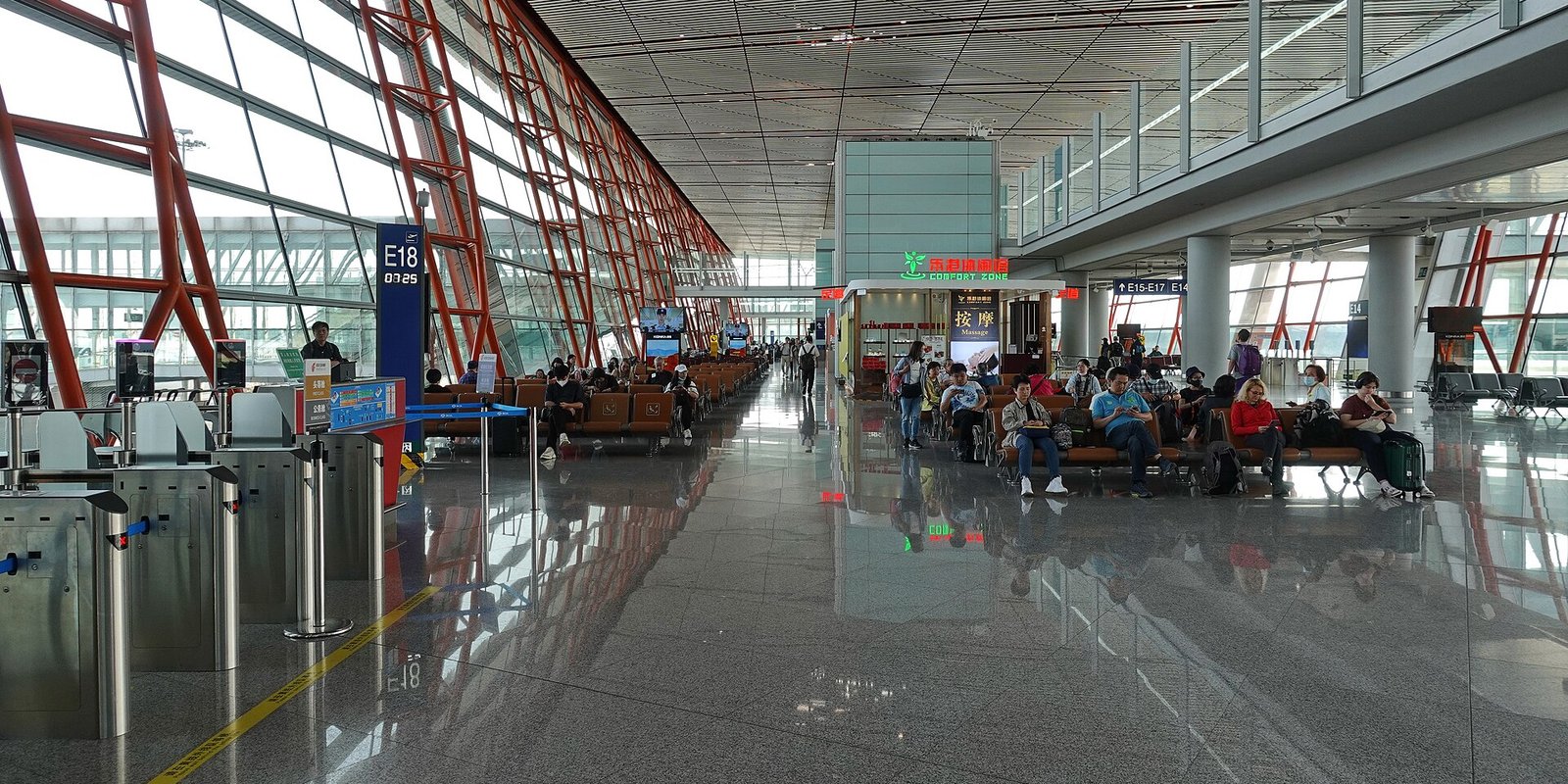
The international departures area of Beijing Capital International Airport’s Terminal 3 in May 2024 (illustrative). Image: 颐园居 / Wikimedia Commons, CC BY-SA 4.0, cropped

China has widened its travel restrictions on its most important AI workers to cover their families too. Spouses and children of certain AI and chip executives now need Beijing’s approval before going abroad, even for a short trip, Bloomberg News reports, citing people familiar with the matter.
What’s changed #
Government agencies have started telling the people affected, who include well-known start-up founders and the heads of strategically important companies in AI and related fields, according to Bloomberg. Their direct relatives now have to clear foreign travel with the government first. Several people have already been told they need approval for family trips, two of Bloomberg’s sources said.
It isn’t an outright travel ban, and it isn’t clear whether every family covered by the earlier rules has to follow the new ones. Beijing plans to add more people to the list over time, the sources said. China’s Ministry of Industry and Information Technology didn’t respond to Bloomberg’s request for comment, and the government hasn’t published the list or the criteria it uses.
An expansion of rules that began in May #
China has limited foreign travel for top AI staff at private companies such as Alibaba and DeepSeek since earlier this year, Bloomberg first reported in May. Researchers at elite universities, nuclear scientists and executives at state-owned companies have faced similar limits, with their families, for years. What’s new is the focus on the private sector, where most of China’s best AI talent has emerged since ChatGPT launched.
Separately, new exit-entry regulations took effect on September 15. They let officials stop a Chinese citizen leaving the country if they break export-control or technology-trade rules in a way that could endanger “national industrial or technological security,” Business Upturn notes. That regulation doesn’t mention AI researchers or their families by name.
Why Beijing is doing it #
The aim is to stop know-how leaking to the US. Chinese officials became more worried about losing talent and technology after Meta’s $2 billion deal for Manus, an AI agent start-up founded in China, according to Bloomberg; the government later ordered the deal unwound and moved to limit US investment in sensitive tech firms. Bloomberg says the travel rules aren’t necessarily tied to the Manus case, but guarding against technology leaks remains a key goal for Beijing.
It fits a wider pattern of Beijing tightening its grip on the AI industry while pushing it to catch up with the US, from deciding which Nvidia chips companies can buy to backing efforts like DeepSeek’s plan to train a giant model on Chinese chips. It comes days after Xi Jinping and Donald Trump agreed to start a US-China dialogue on AI.
Why it matters #
AI engineers are now being treated like nuclear scientists: a national asset whose movements the state controls. Bloomberg says the rules are likely to chill a sector already under unprecedented pressure, and they could push ambitious Chinese researchers to choose early in their careers between staying home and leaving for good.
Sources: Bloomberg News, via The Edge Malaysia (primary), Business Upturn.