The world's top copper producer wants to break its China dependency and ride the AI infrastructure boom
Chile is making its biggest bet on copper in decades, aiming to attract roughly $100 billion in mining investments over the next ten years. The goal: expand output to feed the insatiable appetite of data centers and AI infrastructure, while simultaneously weaning itself off a customer base that leans dangerously hard on a single buyer.
That single buyer is China, which currently absorbs more than 70% of Chile’s copper exports. Chile’s economic fortunes rise and fall with Beijing’s appetite, and Santiago has decided it’s time to change that.
Why copper, why now #
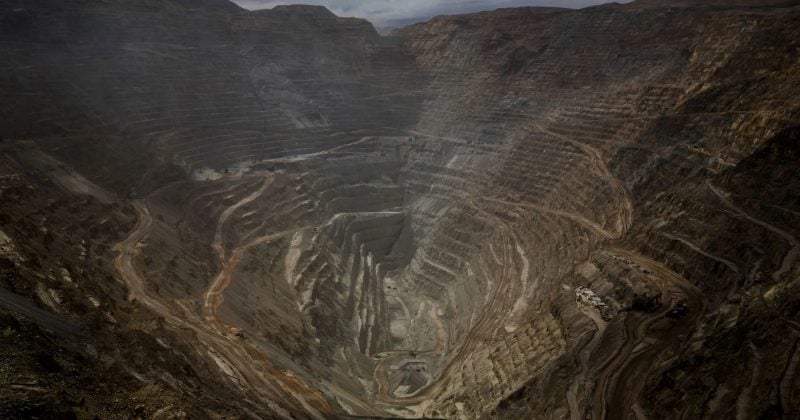
The country has held the title of world’s largest copper producer since 1983, a four-decade reign built on massive porphyry deposits buried in the Atacama Desert. In 2024, Chile produced an estimated 5.5 million tons of the metal, accounting for roughly 24% of global output.
Chile’s mining sector already punches well above its weight in the national economy. In 2023, mining contributed approximately 12% to Chile’s GDP and represented 57% of total exports. The $100 billion investment target would be transformative even by those standards.
The players and the plan #
The investment push involves both public and private heavyweights. Codelco, Chile’s state-owned mining giant and the world’s largest copper producer, sits at the center of the strategy. But the private sector roster reads like a who’s who of global mining: BHP, Antofagasta Minerals, Anglo American, and Glencore all operate significant projects in the country.
To put that figure in context, total foreign direct investment flowing into Chile reached $21.03 billion in 2023, with mining as the primary recipient sector. Hitting $100 billion over ten years would mean roughly doubling the annual FDI inflow directed at mining, assuming the target refers to new capital commitments rather than cumulative spending across existing and new projects.
There’s also growing pressure for Chile to move up the value chain. Rather than shipping raw copper concentrate to be refined elsewhere, particularly in China, advocates within the government want more domestic processing and refining capacity.
What this means for markets and investors #
The risks are real. Mining investment on this scale requires regulatory certainty, and Chile’s political landscape has been volatile on that front. Environmental permitting in the Atacama region faces increasing scrutiny from both domestic and international stakeholders. Water scarcity in the desert mining regions presents operational challenges that only intensify as extraction scales up.
Investors should watch for concrete project announcements and timeline commitments from the major operators. There are currently few specific project announcements or timelines regarding the $100 billion target. Until Codelco, BHP, and others start breaking ground on specific expansions tied to this initiative, the $100 billion figure remains more of a directional signal than a bankable forecast.
Disclosure: This article was edited by Editorial Team. For more information on how we create and review content, see our