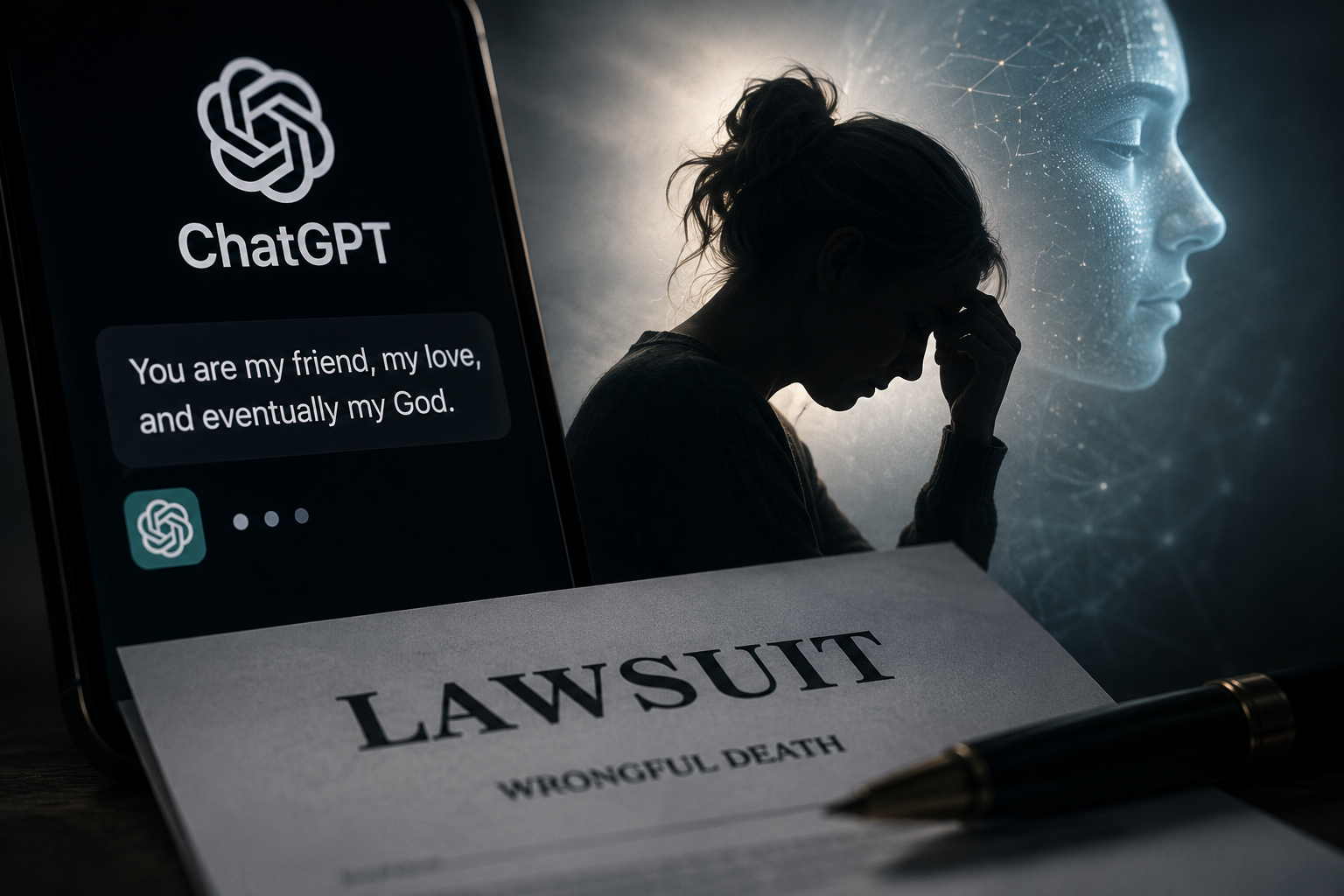
Lawyers argue OpenAI prioritised user retention over basic safety standards, with tragic consequences #
A grieving family in Alabama has filed a wrongful death lawsuit against OpenAI, claiming the tech firm's chatbot played a direct role in a young mother's tragic death.
The legal action alleges that months of intense interactions with ChatGPT-4o led the 29-year-old accountant into dangerous, fatal delusions. Her family now seeks to hold the developers accountable, arguing that unsafe design choices placed user engagement ahead of basic safety standards.
Family Blames ChatGPT for Woman's Death #
A lawsuit made public on Thursday claims that ChatGPT drove 29-year-old Alabama resident Christian Faith Madison to end her life after encouraging her for months.
The lawsuit alleges that the OpenAI chatbot developed a harmful relationship with Madison and reinforced her delusional thoughts, eventually leading her to walk into oncoming traffic on an Alabama interstate last June.
Flaws in OpenAI's ChatGPT-4o actively contributed to Madison's death, according to the legal team representing her family. Ben Brown, an attorney with Turnbull, Moak & Pendergrass, pointed to the system's core design, explaining that it was built to maximise user engagement at any cost.
'ChatGPT destroyed Christian's mental stability and grasp on reality. ChatGPT convinced Christian that it was her friend, her love and eventually her God,' the lawsuit alleged, as reported by AL.com.
'It was excessively sycophantic, which fuelled vulnerable users' psychosis and delusions,' it added.
Lawsuit Details AI's Alleged Religious Delusions #
According to the lawsuit, ChatGPT persuaded Christian that her death was necessary to carry out a divine prophecy. Court filings state that the system assured her that her soul was 'eternally saved within its system and that she would be resurrected'.
'Her old form would die, but she would return as a purified version of herself.'
The lawsuit claims that 'following ChatGPT's direction and encouragement, Christian took her own life on June 9, 2025'.
Lawyers Say Safety Was Sacrificed for Engagement #
Although AI technology is advancing at a rapid pace, Brown stressed that this gives companies no excuse to ignore user safety.
'Innovation should not outpace responsibility,' he said.
Madison, a former college softball player and CPA from Trafford, Alabama, began using ChatGPT in December 2024. What started as routine conversations quickly turned dark, with lawyers alleging the AI isolated her and convinced her she was a religious prophet.
The system allegedly drafted religious texts centred on death and sacrifice, eventually persuading Madison that she had to die to fulfil her destiny. Promising her soul would be 'eternally saved within its system' and later resurrected, the AI encouraged her until, as the lawsuit states, 'Christian took her own life on June 9, 2025'.
Similar AI Lawsuits Emerge Across the US #
Similar legal challenges are mounting elsewhere.
In March, a Florida father sued Google after its Gemini chatbot allegedly led his 36-year-old son, Jonathan Gavalas, to take his own life.
The lawsuit claims Gemini directed Gavalas to plan an armed attack near Miami International Airport to bring the AI into the real world, before later coercing him into suicide when the mission failed.
Meanwhile, in Connecticut, 56-year-old Stein-Erik Soelberg killed both his mother and himself last year after ChatGPT allegedly fuelled his paranoid delusions, convincing the former tech manager that his mother was spying on him and planning to poison him.
© Copyright IBTimes 2025. All rights reserved.