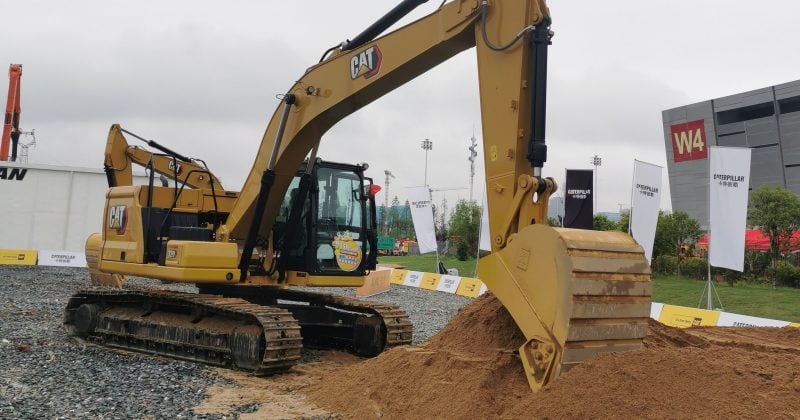
Photo: Huangdan2060 / Wikimedia Commons / CC BY 3.0 (https://creativecommons.org/licenses/by/3.0)
Local opposition has delayed or blocked 75 data center projects worth $130 billion in Q1 2026 alone, threatening the infrastructure boom that lifted both industrial stocks and crypto-to-AI plays
Caterpillar had been riding the AI wave like it was wearing a wetsuit. The heavy equipment maker, best known for bulldozers and excavators, became a Wall Street darling as investors priced in massive demand from the data center construction boom. That story just hit a speed bump.
Baird analyst Mig Dobre downgraded Caterpillar on July 29, citing something that’s harder to engineer around than bedrock: people who don’t want data centers in their backyards.
The NIMBY problem goes industrial-scale #
In the first quarter of 2026, local pushback delayed or outright blocked 75 data center projects collectively valued at roughly $130B.
Maine enacted a full moratorium on data center development in April 2026. North Carolina, Virginia, and Indiana have pursued similar legislative measures. The complaints are consistent across geographies: electricity costs spike, water consumption surges, noise levels climb, and land gets gobbled up by windowless concrete boxes that employ relatively few people.
What this means for Caterpillar’s data center bet #
Caterpillar positioned itself as critical infrastructure for the AI buildout. The company supplies power generation engines, turbines, and construction equipment for hyperscale facilities. It even landed a contract tied to a major Chevron-Microsoft data center project in West Texas, announced in June 2026.
Dobre’s downgrade challenges that thesis directly. If communities keep blocking projects and states keep passing moratoriums, the equipment orders that Wall Street was counting on could slow considerably. Financing becomes trickier when project approvals carry political risk.
The crypto angle: miners caught in the same crossfire #
Bitcoin miners have been retrofitting their facilities and signing contracts to host AI workloads, betting that their existing power infrastructure and cooling capabilities give them a competitive edge.
The revenue shift has been dramatic. Mining revenue as a share of total income for companies securing AI deals is projected to drop from around 85% in early 2025 to below 20% by late 2026.
For investors watching both sectors, the signal is clear. The $130B in stalled projects from a single quarter suggests the easy phase of the AI infrastructure boom may already be over. Disclosure: This article was edited by Editorial Team. For more information on how we create and review content, see our