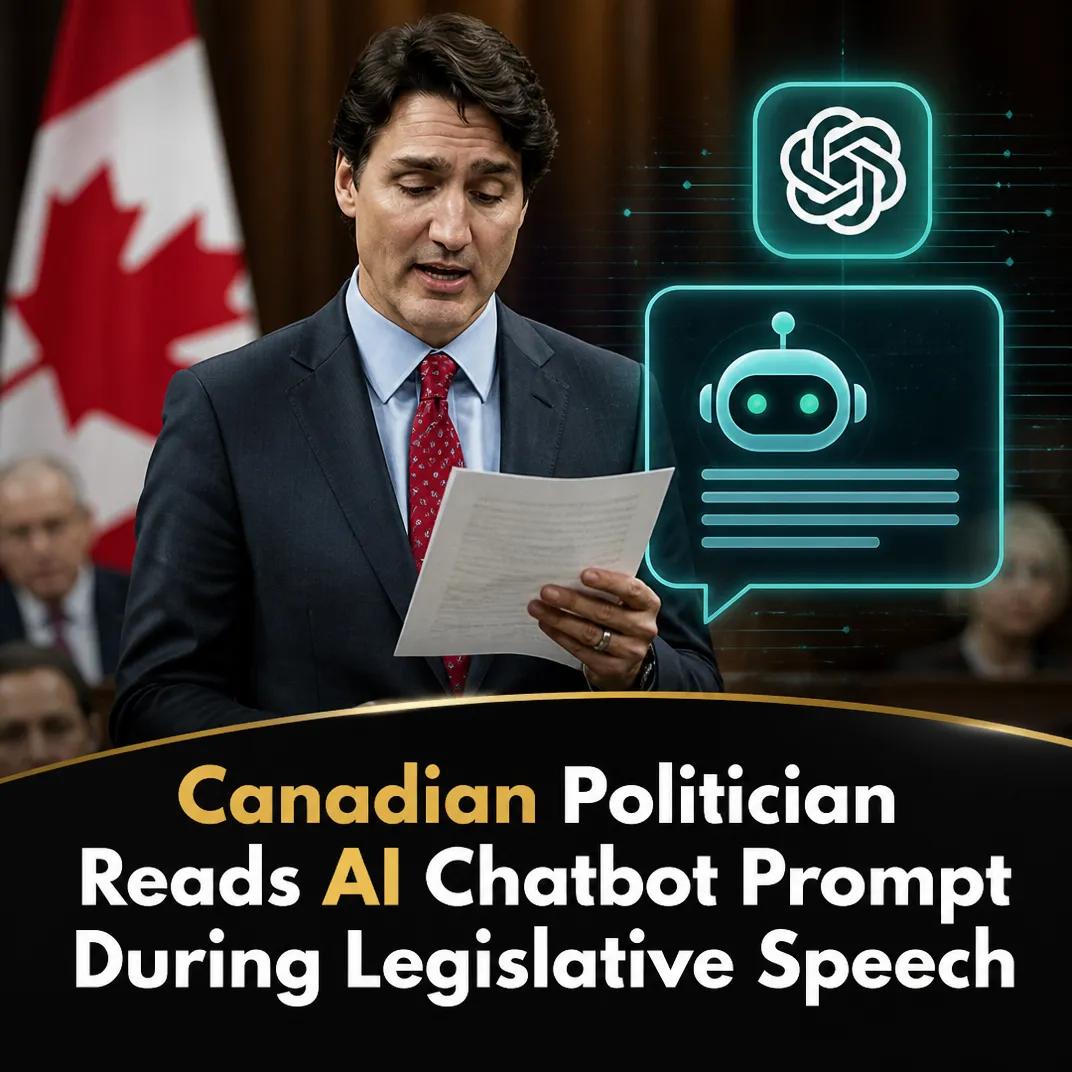
July 26, 2026, (Inside AI) — A Progressive Conservative legislator in New Brunswick, Canada, inadvertently read an AI chatbot's editing instruction aloud during a formal legislative address, turning a routine speech into a viral moment that underscores the creeping presence of generative tools in political communication.
Bill Oliver, a member of the Legislative Assembly of New Brunswick, was speaking about the Office of the New Brunswick Advocate when he d and said, "Public confidence in the office of an advocate matters." He then continued with a line clearly meant for him, not the public: "Here's a more natural, flowing version of that section that reads like a legislative speech rather than a series of short points."
The incident, which occurred last month but gained widespread attention this week after being posted on Reddit, was captured on official video. It shows Oliver seamlessly transitioning from his own words to the AI-generated prompt without apparent recognition of the error.
The gaffe reveals a deeper tension in modern governance: the quiet integration of large language models into the drafting of official statements, often without disclosure. While politicians have long relied on speechwriters, the use of AI introduces new questions about authenticity, accountability, and the erosion of organic deliberation.
Oliver's mistake is not an isolated curiosity. It mirrors a growing pattern of AI-generated content surfacing in formal settings. In 2023, a judge in Colombia used ChatGPT to help decide a legal ruling, and multiple academics have been caught submitting AI-written papers. The New Brunswick incident, however, is among the first to unfold in real time during a legislative session, offering a rare, unfiltered glimpse into the backstage of political speechwriting.
The video prompted sharp reactions online. One Reddit user commented, "So he asked someone to prepare him speech that someone didnt delete the prompt and the politician didnt read 'his' words beforehand. And this dude makes laws for you... amazing." Another wrote, "Okay, first -- breathe. You didn't just read an AI prompt -- you accidentally gave the audience a behind-the-scenes tour of your speechwriting process."
Despite the mockery, the episode highlights a practical reality: AI tools are increasingly used to polish language, condense talking points, and adapt tone for different audiences. A 2024 study published in Science found that AI-generated persuasive messages can be as effective as those written by humans, particularly when tailored to specific demographics (Bai et al., 2024). This efficiency is tempting for time-pressed officials, but it also risks homogenizing political discourse and obscuring the line between human conviction and algorithmic suggestion.
Oliver's office has not publicly commented on whether the speech was drafted with ChatGPT, Claude, or another tool. The phrasing "more natural, flowing version" is typical of AI editing interfaces, which often offer to rewrite text in a specific style. Without clear guidelines, such use remains in an ethical gray area. The New Brunswick Legislative Assembly has no formal policy on AI-assisted speechwriting, mirroring a gap in most parliamentary bodies worldwide.
Transparency advocates argue that AI use in official communications should be disclosed, especially when it shapes policy narratives. "If a speech is co-written by a machine, the public has a right to know," said Dr. Sarah Roberts, a professor of information studies at UCLA, in a 2025 interview with The Guardian. "It's not just about embarrassment; it's about understanding the influences on our representatives' words."
The incident also revives debates about AI literacy among elected officials. A 2025 survey by the Pew Research Center found that only 28% of U.S. state legislators felt "very confident" in their understanding of artificial intelligence, even as they vote on AI-related bills. This knowledge gap can lead to both over-reliance on tools and inadvertent exposure, as Oliver demonstrated.
In the broader context, the slip-up may accelerate calls for AI training in government. The European Parliament recently mandated AI literacy for all staff, and similar initiatives are being considered in Canada's federal parliament. For now, Oliver's mistake serves as a cautionary tale—and a reminder that even in the age of AI, the human element remains the weakest link.