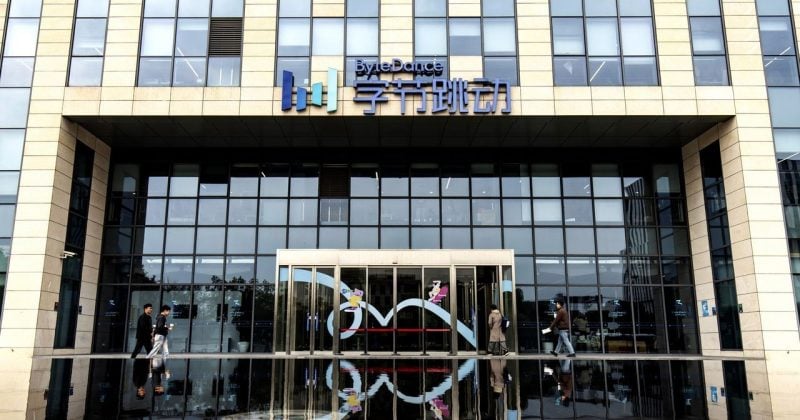
Via wired.com
The TikTok parent's AI lab has never used knowledge distillation, a pointed divergence from other Chinese AI labs that routinely learn from US-built models.
ByteDance’s AI research division, Seed, has operated under a simple but unusual rule since day one: no knowledge distillation. In a field where copying the behavior of stronger models is practically a rite of passage, TikTok’s parent company is choosing the harder path.
The decision positions ByteDance apart from a crowded field of Chinese AI labs that have openly or quietly distilled capabilities from larger models, many of them built by US companies like OpenAI and Anthropic.
What distillation actually means, and why skipping it matters #
Knowledge distillation is essentially AI apprenticeship. A smaller, cheaper model learns to mimic the outputs of a larger, more powerful one. The result is a compact model that punches above its weight, trained at a fraction of the cost.
The technique has become widespread in China’s AI ecosystem. When DeepSeek’s R1 model made headlines earlier in the broader distillation debate, it highlighted how Chinese labs were leveraging outputs from frontier US models to accelerate their own development. OpenAI and Anthropic have both raised concerns about the practice, and the conversation around tightening service terms to prevent it has only intensified.
By refusing to distill, Seed is building its models from scratch using proprietary data collection, synthesis, and cleaning pipelines.
The strategic calculus behind going independent #
One ByteDance employee framed the ambition clearly: “ByteDance’s goal for almost all of its models is to reach the global top tier, or even state-of-the-art standards.”
The lab has already put runs on the board. Seedance, ByteDance’s video generation model, was developed under this no-distillation framework. The model powers features across ByteDance’s consumer products, including Doubao, the company’s conversational AI assistant, and CapCut, its widely used video editing tool.
Geopolitics as competitive moat #
The US-China tech rivalry has turned AI development into something resembling an arms race, complete with export controls, chip restrictions, and escalating rhetoric about technology transfer. In this environment, any Chinese AI company that relies on distillation from American models carries a geopolitical liability on its balance sheet.
The distillation debate has drawn in virtually every major player in the AI space. OpenAI has publicly flagged concerns about its models being used to train competitors. Anthropic has weighed in on the ethics and competitive implications. Against this backdrop, ByteDance’s preemptive decision to avoid distillation entirely looks less like self-imposed restraint and more like a bet that independent development will ultimately produce better, more defensible technology.
Disclosure: This article was edited by Editorial Team. For more information on how we create and review content, see our