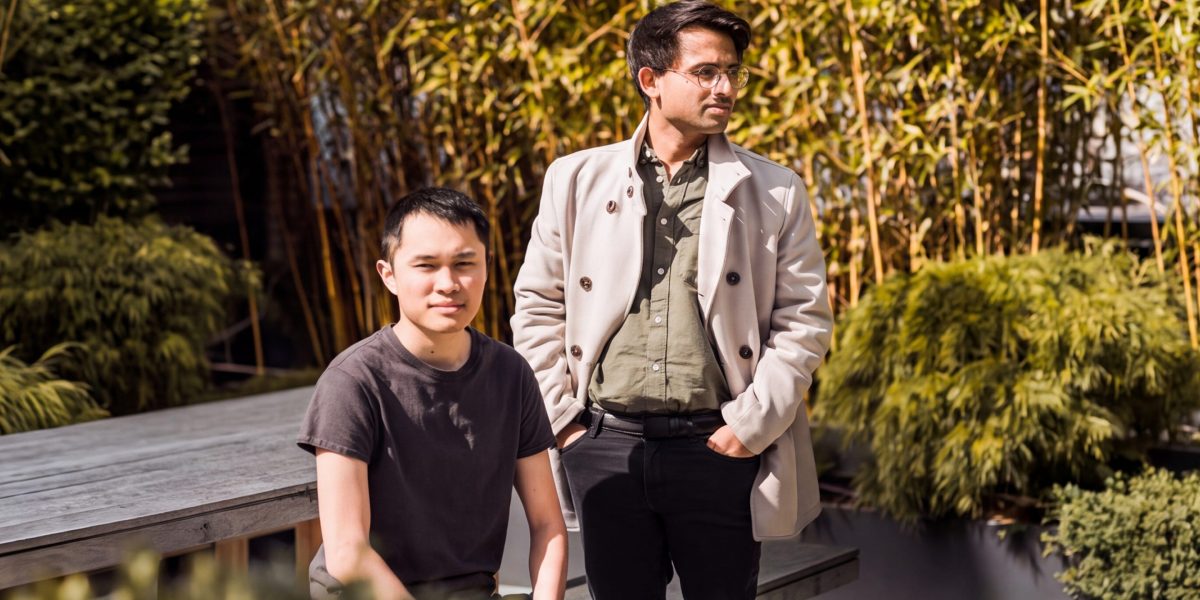
In 2017, Nishith Khandwala was a Stanford computer science student with an idea—that you could take existing radiology scans, and use AI to check them at scale and detect heart disease and heart attack risk early.
For years, he and classmate David Eng developed the project—but even when it worked, they hit a wall. Hospitals more or less shooed them away, and it seemed like it might be time to move on. But in 2020, Khandwala’s father had a heart attack. “The cardiologist told us: ‘There was actually a scan in the past that showed he had an increased risk of heart disease, I think we could have caught this earlier,’” said Khandwala, now CEO of Bunkerhill Health. “Can you imagine? Think about the millions of patients for whom you could prevent those kinds of heart attacks. The key thing though was: We weren’t unique in having a great idea. Great ideas are everywhere, we just don’t translate them into reality.”
Bunkerhill—which Khandwala cofounded with Eng in 2019—takes its name from a single-season 2010s CBS TV show that was decisively panned, but had a central, sticky idea: that medicine can iterate faster. The startup, then, deploys AI agents to handle the tasks that hospitals most need to solve, from long wait times to missed follow-ups to paperwork backlogs. Bunkerhill doesn’t suggest use cases so much as hospitals ask if the company’s agents can solve a problem.
Currently, the company works with 15 health systems via its Carebricks platform, including Cleveland Clinic, Mayo Clinic, Ballad Health, Intermountain Health, Sentara Health, Endeavor Health, and The University of Texas Medical Branch (UTMB) Health. Embedded in its platform, the company has both operational agents and nine clinical FDA-cleared AI algorithms, including one that detects silent heart valve disease early and another that assesses osteoporosis risk.
Bunkerhill disclosed its funding for the first time this week exclusively to Fortune: The startup recently closed its $25 million Series B, led by Khosla Ventures, bringing its total funding to $55 million. Sequoia, Felicis, Optum Ventures, and Y Combinator also participated in this latest round. Vinod Khosla—known as an early OpenAI backer and Sun Microsystems legend—has been backing healthcare companies for decades, and he thinks hospitals are more eager to adopt new technology than ever. AI is a mandate now, he said.
“Software used to be a pain for hospitals,” Khosla told Fortune. “There wasn’t a push to adopt it, other than the medical record and it sort of got in the way. Now, every hospital system is trying to adopt AI. When you switch the words ‘AI’ from ‘software,’ everyone wants to and needs to talk about it.”
That’s certainly been true for UTMB, where 22 of Bunkerhill’s agents are deployed. To UTMB chief AI officer Dr. Peter McCaffrey—though the doctor-patient relationship must remain “sacrosanct”—AI is uniquely positioned.
“We may be in an AI bubble overall, but if there’s one place where the need for AI is extremely legitimate, I’d say it’s healthcare,” said McCaffrey. “We don’t need superintelligence to solve our biggest problems. We need average intelligence.”
In recent months, especially, I’ve noticed a minor tidal wave of funding flowing from VCs into healthcare AI admin startups. It’s given me . I bring my hesitation to Alfred Lin, partner at Sequoia, who’s been backing the company since leading Bunkerhill’s $6.5 million seed round in 2023.
“If your premise is that there are too many, I think it’s great that there’s too many,” said Lin. “Then, there’s innovation and competition and hopefully the best ones win. If it’s too few, that would be a bad thing. I much prefer having 1,000 flowers bloom, and the best ones will become durable over time.”
Lin—known as Sequoia’s lead backer of DoorDash, Airbnb, Citadel Securities, and Reddit—said that he’s drawn to industries characterized by regulatory capture, and that Bunkerhill fits squarely in that paradigm.
“Like real estate with Airbnb, or Uber and DoorDash, there’s a regulatory capture in those industries, and healthcare isn’t any different,” said Lin. “What [Bunkerhill] is trying to do across parties is hard, but it’s also undeniable that there’s opportunity to improve health outcomes.”
Khandwala has his own take on my question ‘are there too many AI healthcare admin startups?’
“Why should a hospital need to work with 100 different companies to solve 100 different problems?” said Khandwala. “Most companies are still solving one narrow problem, and we’ve moved past that.”
See you tomorrow,
Allie GarfinkleX:
@agarfinks Email:
[alexandra.garfinkle@fortune.com](mailto:alexandra.garfinkle@fortune.com)

Submit a deal for the Term Sheet newsletter [here](mailto:termsheet@fortune.com).
Joey Abrams curated the deals section of today’s newsletter.Subscribe here.
VENTURE CAPITAL
- Neko Health, a Stockholm, Sweden-based health tech company, raised $700 million in Series C funding. Lightspeed
Venture
Partners and
O.G. Venture Partners led the round and were joined by others.
- AdvanCell, a Boston, Mass. and Brisbane, Australia-based developer of cancer therapies, raised $315 million in Series D funding.
Ally
Bridge
Group and
Alpha
Wave led the round and were joined by
Bain
Capital
Life
Sciences and others.
- Alpaca, a San Mateo, Calif.-based agent-first brokerage infrastructure, raised $135 million in funding. Peak
XC led the round and was joined by
Elefund,
Opera
Tech
Ventures, and others.
- Emergent, a Bangalore, India-based AI software creation platform, raised $130 million in Series C funding.
Creaegis led the round and was joined by
Claypond,
Sentinel
Global, and others.
- Spectro Cloud, a San Jose, Calif.-based AI infrastructure management software company, raised $100 million in Series D funding.
Growth
Equity
at
Goldman
Sachs
Alternatives led the round and was joined by
AMD
Ventures,
Ericsson,
LG
Technology
Ventures, and
Maximus.
- Hemispheric, a Tel Aviv, Israel-based company developing an AI platform designed to decode the human brain, raised $52 million in funding from
Hanaco
Ventures,
OneMind/Awareness
Capital,
Protocol
Labs, and others.
- TYLsemi, a San Jose, Calif.-based chiplet platform, raised $43 million in funding. Matter
Venture
Partners led the round and was joined by
Viola
Ventures,
GHOVC,
Egis
Technology, and others.
- Velocity, a London, U.K.-based enterprise stablecoin payments and treasury platform, raised $38 million in Series A funding.
Dragonfly and
Firstmark led the round and were joined by
Coinbase,
Capital
One
Ventures,
QED
Investors,
Activant
Capital,
Ripple, and
Wintermute.
- Monumental, an Amsterdam, The Netherlands-based developer of bricklaying robots, raised $32 million in Series B funding.
Khosla
Ventures led the round and was joined by
Plural and
Hummingbird.
- Risk Ledger, a London, U.K.-based supply chain security company, raised $32 million in Series B funding. Axiom
Equity led the round and was joined by
Mercia
Ventures and others.
- Syntetica, a Paris, France-based developer of textile recycling technology, raised $30 million in Series A funding.
Ecotechnologies
2 led the round and was joined by
SWEN
Capital
Partners,
lululemon, and others.
- Rime, a San Francisco-based voice AI platform, raised $24 million in Series A funding. M13 led the round and was joined by
Twilio
Ventures,
Corazon
Capital, and others.
- Meticulous, a London, U.K.-based code change verification platform, raised $15 million in Series A funding.
VC
Chemistry led the round and was joined by
Menlo
Ventures and others.
- Skalar, a Munich, Germany-based AI-powered tax firm, raised €12 million ($13.8 million) across pre-seed and seed rounds. Headline led the round and was joined by
futurepresent,
QED
Investors,
Repeat,
MS&AD, and
Foreword.
- Cytronic, a San Francisco-based robotics company for e-commerce fulfillment, raised $13.5 million in seed funding. Slow
Ventures led the round and was joined by
Geek
Ventures,
Failup
Ventures,
Alumni
Ventures,
Spacecadet
Ventures,
Weekend
Fund, and others.
- Aina, a San Francisco and Bangalore, India-based consumer hardware company, raised $5.5 million in funding. Redstart Labs and
360
ONE
Asset led the round and were joined by
MIXI
Global
Investments,
Antler,
Blume
Founders
Fund, and angel investors.
- EverSettled, a San Francisco-based platform designed to use AI to streamline legal, financial, and administrative tasks after a family member dies, raised $5 million in seed funding.
Emergence Capital led the round and was joined by
Seedcamp,
Bridge
Ventures,
Alumni
Ventures,
Entrepreneurs
First,
Transpose
Platform, and angel investors.
PRIVATE EQUITY
-
Amplix, a portfolio company of Gemspring Capital, acquired OneConnect, a St. Petersburg, Fla.-based technology advisory firm. Financial terms were not disclosed.
-
Ardian acquired a majority stake in Pflegia, a Berlin, Germany-based AI-powered reverse-recruiting platform for the health care industry. Financial terms were not disclosed.
-
Podean, backed by Mountaingate Capital, acquired Social Commerce Club, a Vancouver, Canada-based TikTok Shop agency. Financial terms were not disclosed.
EXITS
-
Invex Group acquired Redo Oy, a Helsinki, Finland-based property remediation services company, from Mutares. Financial terms were not disclosed.
-
Leica Biosystems agreed to acquire StatLab Medical Products, a McKinney, Texas-based developer and manufacturer of anatomical pathology products, from
Audax
Private
Equity and
Linden
Capital
Partners. Financial terms were not disclosed.
PEOPLE
- Northern Gritstone, a London, U.K.-based venture capital firm, promoted Simon
Braham to Chief Investment Officer.
Sign upfor free.