The Rise of the One-Person AI Studio #
There is a huge trend of "vibe coding" where people with zero professional dev background are shipping functional apps. In this specific competition, about 66% of the 13,400 participants weren't professional developers, and over 80% were solo teams. The most insane part? More than half of these products were built in under 30 hours with a total cost of less than $70.
Take the project World of Gates. The dev is a guy who spent 14 years just watching videos without ever posting. He used AI to build an open-world generative game where players can define their own scenes and interact with AI NPCs. He wasn't some industry veteran; he was just burning about 1,500 RMB a month on tokens to realize a specific vision (apparently based on the Touhou Project). He went from being a "nobody" to getting nearly 5 million views on his demo because the AI lowered the barrier to actually making the thing, and the platform provided the immediate audience.
Practical Deployment and the "Toy" Ecosystem #
One of the biggest pain points for indie AI devs is the infrastructure. If a project goes viral, your hobbyist server crashes instantly. This is why integrated platforms (like the Toy platform mentioned) are becoming a sanctuary for AI experiments.
I noticed a developer named "Zakeji" who managed to win three different awards. His portfolio is a perfect example of the spectrum of AI creation:
- The "Serious" App: A personality test that actually gained traction.
- The Technical Twist: A 3D version ofSoul Knight that added a Y-axis to a 2D Roguelike.
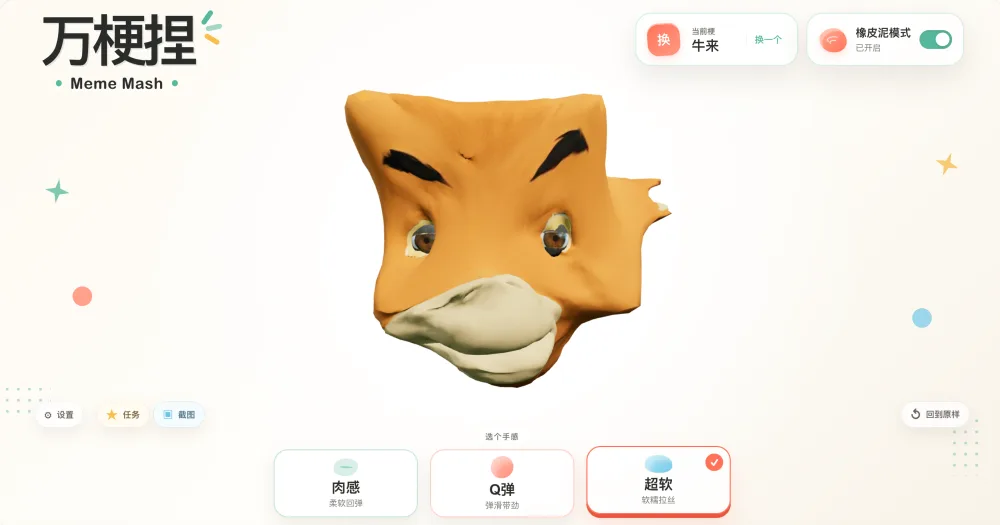
- The "Pure Chaos" Project:* Wan Geng Nie* , a physics-based "meme clay" simulator where you can deform internet memes. This one hit 3 million views.
The technical takeaway here is that the "cost of failure" has plummeted. When you don't have to manage your own AWS or Vercel clusters for a simple interactive demo, you're more likely to ship "useless" but viral ideas.
From Prompt Engineering to Real-World Utility #
It's not all just memes and games, though. Some of the most impressive work is happening in the multi-modal space. One project, "AI Blind Glasses," uses multi-modal AI to identify objects and provide haptic/audio feedback for visually impaired users.
The struggle for these small teams is the "last mile" of hardware:
- Latency vs. Accuracy: Balancing cloud AI costs with the need for real-time feedback.
- Hardware Constraints: Fitting high-performance components into a wearable frame without killing the battery in 20 minutes.
- Model Generalization: Moving beyond simple object recognition (like "apple" or "bottle") to complex environmental navigation.
For anyone doing a deep dive into AI workflows, the lesson is clear: the "build" phase is now the easiest part. The real skill is in identifying a niche, leveraging a distribution channel, and iterating based on a massive, immediate feedback loop. If you're just coding in a vacuum, you're missing the point of the AI era. Next Lyria 3.5 in Gemini actually makes AI music feel less robotic →