[The content of this article has been produced by our advertising partner.]
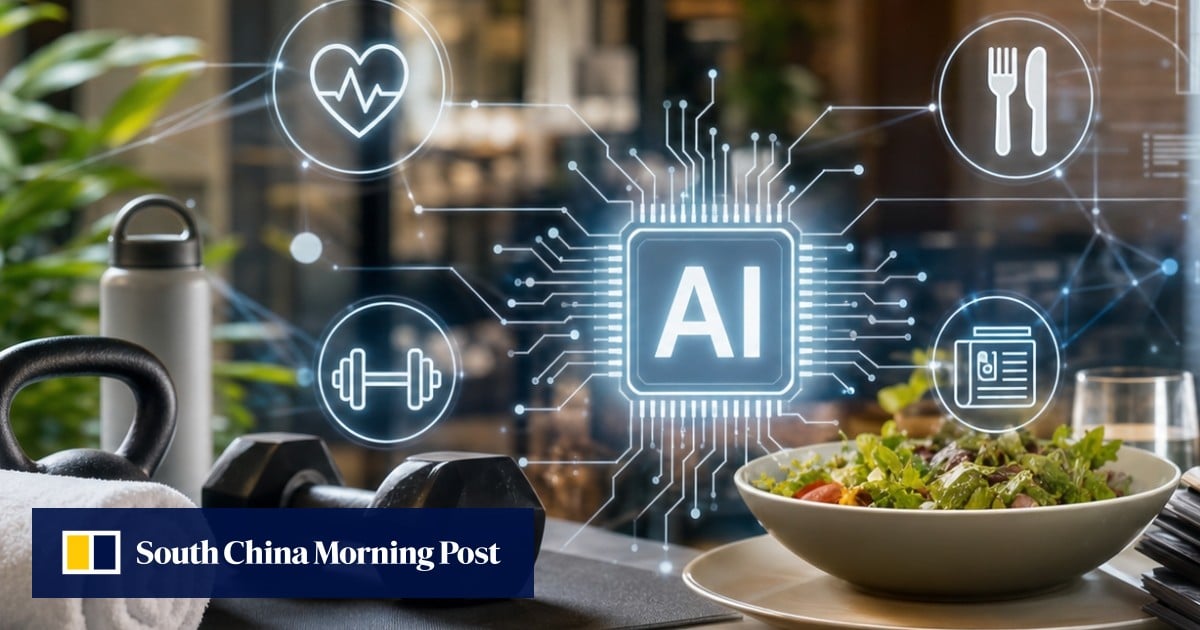
Artificial intelligence is rapidly moving from experimentation to execution, and business veteran Bruce Rockowitz believes the technology could become a critical competitive advantage across industries ranging from wellness and hospitality to media.
Rockowitz, known for his work in sourcing, brand development and building and scaling consumer-facing businesses, views AI not simply as a productivity tool but as a strategic asset capable of driving revenue growth, improving customer engagement and streamlining operations. Its potential, he argues, is particularly significant for businesses such as The Pure Group, food-and-beverage operators and magazine publishers, all of which are navigating rising customer expectations and increasing pressure to improve margins.
For The Pure Group, the fitness and lifestyle operator, AI offers a pathway toward greater personalization at scale. As wellness consumers demand increasingly customized experiences, AI systems can analyze behavioral data, attendance patterns and personal fitness goals to deliver tailored recommendations. From individualized workout programs to nutrition guidance and class scheduling, the technology enables businesses to create highly targeted customer journeys. The commercial implications are substantial. Higher engagement typically translates into stronger retention rates, a key metric for subscription-based businesses. In an industry where customer acquisition costs continue to rise, retaining existing members has become an increasingly important driver of profitability.
Beyond customer-facing applications, AI could also improve operational efficiency. Automated customer service platforms, predictive scheduling tools and data-driven resource planning can reduce administrative workloads while helping management allocate staff and facilities more effectively. The result is a leaner operating model without sacrificing service quality.
The food-and-beverage sector presents another compelling use case. Catering business operators worldwide are facing labor shortages, inflationary pressures and volatile consumer demand. According to Rockowitz, AI can help address these challenges through better forecasting and decision-making.
By analyzing sales histories, weather patterns, local events and purchasing behavior, AI systems can generate more accurate demand projections. That enables businesses to optimize inventory levels, reduce food waste and improve procurement efficiency. In an industry where margins are often thin, even modest improvements can have a meaningful impact on profitability.
AI is also changing how F&B outlets interact with customers. Recommendation engines, loyalty programs and personalized promotions can increase customer spending while improving the dining experience. Digital ordering systems powered by machine learning can suggest menu items based on previous purchases, creating opportunities for both customer satisfaction and revenue growth.
Media and magazine publishing may ultimately experience some of the most profound changes. Publishers continue to grapple with declining attention spans, fragmented audiences and fierce competition from digital platforms. Rockowitz sees AI as a tool that can help publishers better understand and engage readers.
Advanced analytics can identify emerging trends, measure audience interests and guide editorial planning with greater precision. AI-assisted workflows can accelerate research, transcription, translation and content organization, allowing editorial teams to focus on higher-value reporting and storytelling.
At the distribution level, personalized content recommendations can help increase reader engagement and subscription retention, two metrics that have become increasingly important as publishers shift toward recurring-revenue business models.
Still, Rockowitz cautions that AI should be viewed as an enabler rather than a replacement for human expertise. Technology can process information and identify patterns at scale, but creativity, judgment and relationship-building remain distinctly human strengths.
For companies in wellness, hospitality and media, the challenge is no longer whether AI will influence their industries. The question is how quickly they can integrate the technology into their operations and convert its capabilities into sustainable growth. Those that move early, Rockowitz suggests, may gain a meaningful advantage in an increasingly data-driven economy.