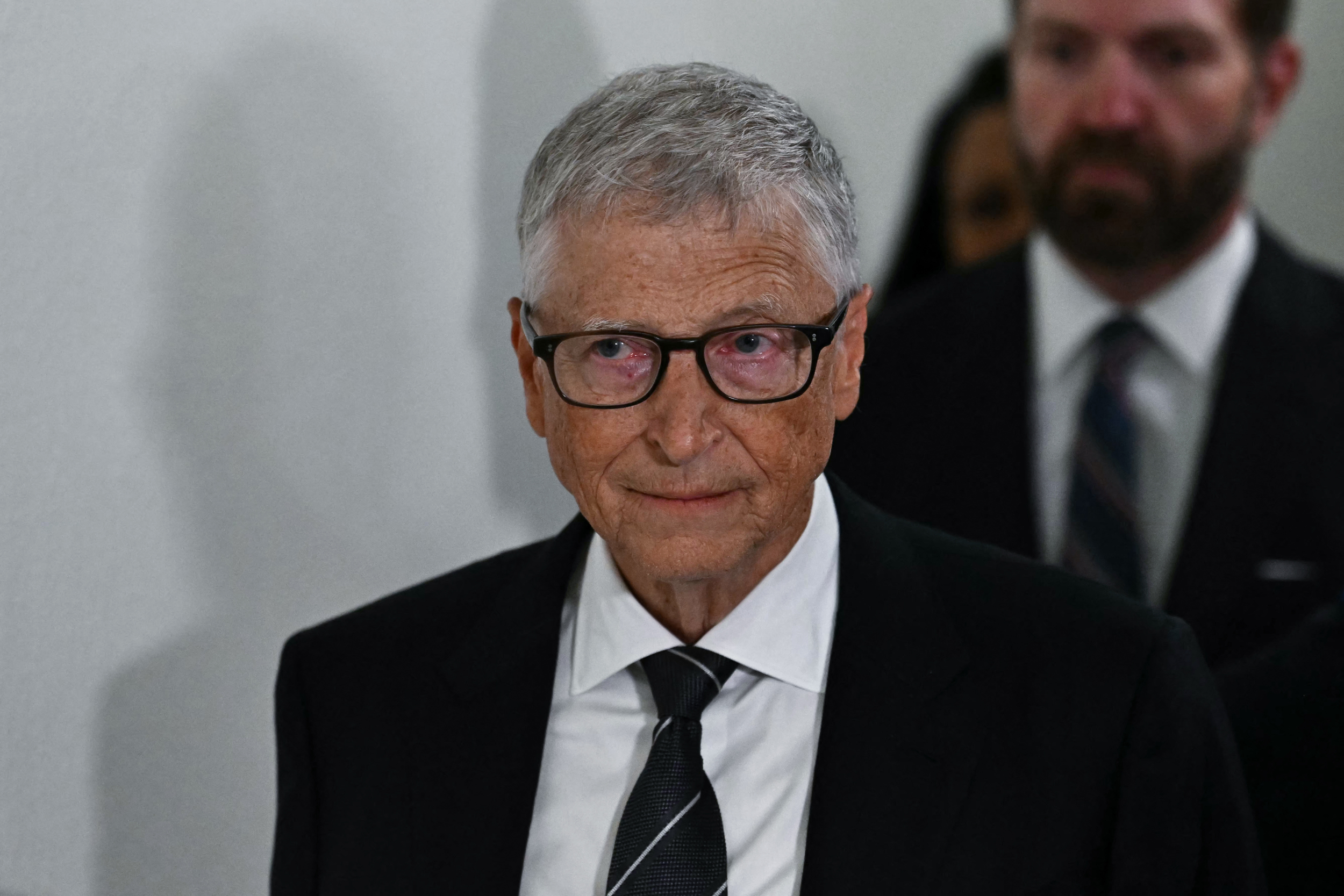
Gates warned that AI could ultimately do more harm than good without urgent intervention. #
For years, Bill Gates was one of artificial intelligence's most prominent optimists, predicting the technology could transform medicine, fight climate change and eventually free people from much of the work that dominates their lives. Now, the Microsoft co-founder says AI is advancing so quickly that, for the first time in his life, he finds himself wishing a new technology would slow down. In a new essay published Wednesday and an interview with The Washington Post as well, Gates warned that AI could ultimately do more harm than good without urgent intervention.
"I'm surprised to feel this way," Gates told The Post, "I've never seen a problem that innovation can't solve." He went on to say his thinking changed over the past year as AI systems progressed faster than he expected, particularly in software coding and cybersecurity. He described some of the technology's emerging capabilities in cyberattacks as "mind-blowing" and said he no longer believes the industry can be trusted to regulate itself.
Gates' concerns now lay in national security and safety threats, including AI-assisted hacking, biological weapons and fraud, massive disruption to employment as AI and robotics become capable of replacing more human tasks, and potential harm to children, particularly their education, development and human relationships. "AI can improve life for people at every income level. But it won't do that automatically," Gates wrote in his essay.
Gates previously said he envisioned a future in which increasingly capable systems would help solve shortages of doctors and teachers, accelerate drug discovery and scientific research, and make humans unnecessary for many forms of work.
He has not abandoned that vision. Gates said AI's potential benefits remain enormous, particularly in healthcare, education and government services. In poorer countries where the Gates Foundation operates, he said AI is already providing useful assistance to farmers and others who have limited access to experts.
"The good stuff is really there, no exaggeration," Gates told The Post. "The name of the game here is, can we have a small amount of the bad with the large amounts of the good?" What has changed is Gates' confidence that society is prepared to manage the transition.
"My basic view is nobody's shown up," Gates said of the regulatory response. "So this is a shrill call, and I want this to be bipartisan." As a result, he is calling for governments to take a much larger role in overseeing AI, including national and international frameworks addressing security, employment and other risks.
He envisions elected officials working alongside experts and citizens to develop rules for the technology, an approach that resembles proposals for international AI safety standards from other leading figures in the industry.
On employment, Gates is considering ideas that would have sounded unusual coming from one of Silicon Valley's most famous entrepreneurs only a few years ago. Among them are new taxes related to AI and a concept he calls "Human Reserved," under which certain occupations or jobs could effectively be protected for human workers rather than handed over entirely to machines.
Those proposals could put Gates at odds with technology executives and policymakers who argue that aggressive regulation could slow American innovation and weaken the country's position in the global AI race.
Gates acknowledged that his proposals remain preliminary and said AI executives he has spoken with have not yet endorsed them. He plans to elaborate on potential policy solutions in the future.
The 70-year-old billionaire also said he expects to devote the majority of his time to addressing AI's challenges, potentially reducing the time he spends on the philanthropic work that has dominated his career since stepping away from Microsoft's day-to-day operations.
© Copyright IBTimes 2026. All rights reserved.