Better controls clear a path for AI in finance
AI governance is becoming essential as automation moves into financial reporting.
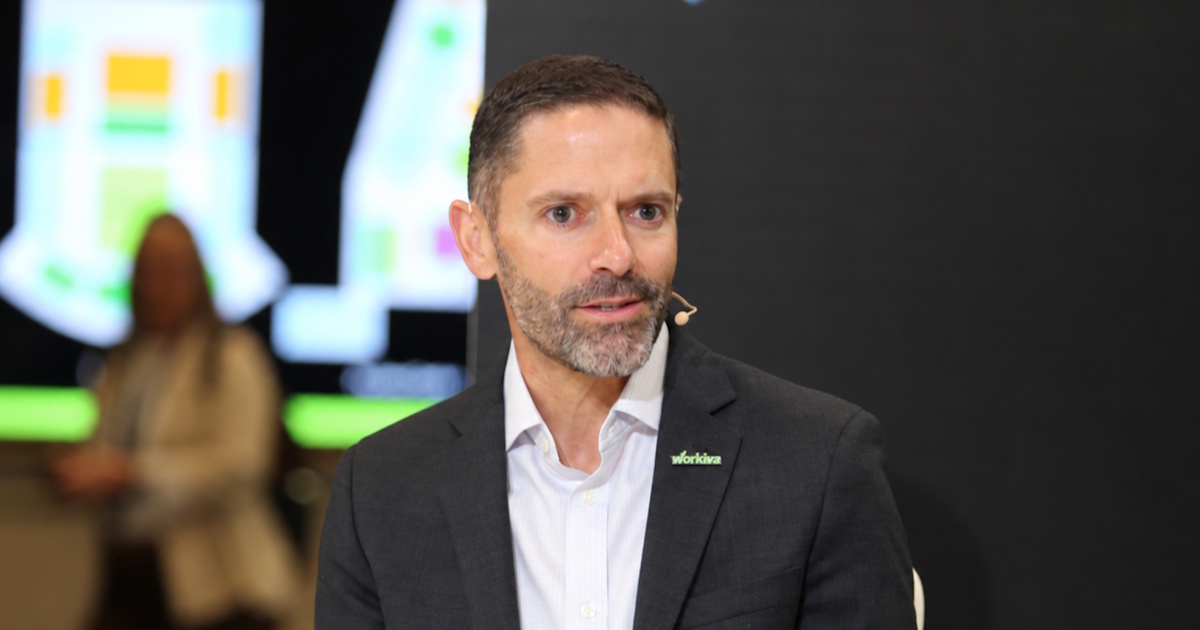
Executives face pressure to adopt AI faster, yet many organizations lack the data quality and controls needed to trust its output. Workiva Inc. is addressing that gap by applying established reporting safeguards to AI-assisted processes, but its research suggests corporate confidence has already moved ahead of operational readiness, according to Steve Soter (pictured), vice president and industry principal at Workiva.
“The thing that stood out to me the most was a stat that actually surprised me significantly,” he said. “It was that 84% of executives said that they were at least somewhat willing to trust AI to generate an annual report without human review.”
Soter spoke with Krista Case and Alison Kosik at Workiva’s Amplify event, during an exclusive broadcast on theCUBE, SiliconANGLE Media’s livestreaming studio. They discussed the controls companies need to use AI safely in financial reporting. ( Disclosure below.)*
AI governance must support traceable results
The risk is not limited to an incorrect number or statement. If companies cannot trace where information originated or demonstrate how it was reviewed, AI can turn an isolated mistake into a broader control failure. Existing financial controls therefore remain relevant even when machines complete more of the work, Soter explained.
“To me, I think it’s maybe a different flavor of the same risk,” he said. “When I think about it, back to the days when I was a controller, it was really important for me to know where the data was coming from, who touched it, what happened to it, how did it get reviewed and approved?”
AI can accelerate established reporting processes, but speed provides little value when the underlying workflow is unreliable. Financial teams still need governed data and documented approvals. Otherwise, automation can distribute an error more quickly and make the source of the problem harder to reconstruct, Soter pointed out.
“To me, AI doesn’t change that,” he said. “It actually makes it even more important because accelerating a process, if you don’t have it grounded by those things that we discussed, those four things, then speed doesn’t become an asset. It really becomes a liability. It becomes a risk.”
Human accountability remains in place
Human oversight becomes especially important when AI touches information intended for boards or external audiences. An automated tool may generate the material, but responsibility remains with the executive who approves it. That makes review a core part of the reporting process rather than a temporary precaution while the technology matures, Soter emphasized.
“An AI tool isn’t signing off on the financial statements; a human is,” he said. “If that human signs off on it, but yet trusted that AI had done everything that it was supposed to do and done it correctly, again, if that’s not the case, that could be a big risk.”
Data quality presents another obstacle. Workiva’s research found that only 11% of executives considered their data sufficient for AI use, suggesting many organizations are automating processes before repairing their information foundations. AI may help improve those records, but unreliable inputs will continue to produce questionable results, Soter noted.
“It makes you wonder, how bad was the data before we were even having this AI conversation?” he asked. “To me, that just underscores, honestly, the opportunity for AI, because I think AI actually has a role in potentially helping to clean that up, like maybe boosting that 11%, but AI is only as good as the data that it is using.”
Here’s the complete video interview, part of SiliconANGLE’s and theCUBE’s coverage of Workiva’s Amplify event:
( Disclosure: TheCUBE is a paid media partner for Workiva’s Amplify event. Neither Workiva, the sponsor of theCUBE’s event coverage, nor other sponsors have editorial control over content on theCUBE or SiliconANGLE.)*
Photo: SiliconANGLE
Support our mission to keep content open and free by engaging with theCUBE community. Join theCUBE’s Alumni Trust Network, where technology leaders connect, share intelligence and create opportunities.
- 15M+ viewers of theCUBE videos , powering conversations across AI, cloud, cybersecurity and more
- 11.4k+ theCUBE alumni — Connect with more than 11,400 tech and business leaders shaping the future through a unique trusted-based network
Are you an AWS customer? Support SiliconANGLE financially by buying your AWS services from our Marketplace portal page and links: https://siliconangle.com/aws-marketplace/
About SiliconANGLE Media
theCUBE AIand theCUBE SuperStudios — with flagship locations in Silicon Valley and the New York Stock Exchange — SiliconANGLE Media operates at the intersection of media, technology and AI.
Founded by tech visionaries John Furrier and Dave Vellante, SiliconANGLE Media has built a dynamic ecosystem of industry-leading digital media brands that reach 15+ million elite tech professionals. Our new proprietary theCUBE AI Video Cloud is breaking ground in audience interaction, leveraging theCUBEai.com neural network to help technology companies make data-driven decisions and stay at the forefront of industry conversations.