TL;DR — Key Takeaways
- President Donald Trump has forcefully defended AI data center development, arguing that communities rejecting projects risk losing jobs, tax revenue and ground to China in the AI race.
- Public opposition is becoming a political liability, with recent polls showing broad resistance to new data centers near where people live.
- Data centers could become an issue in competitive midterm races, particularly in Ohio, where Democrat Sherrod Brown is using the issue against Republican Sen. Jon Husted.
President Donald Trump has sharply criticized opposition to AI data centers, supporting the massive facilities even as voter concerns about electricity prices and land use turn the issue into a political problem ahead of November’s midterm elections.
“The only reason that communities throughout the U.S.A. should not want Data Centers is if they want to end up being backwards and poor,” Trump wrote on Truth Social. He argued that communities accepting the projects would gain jobs and tax benefits, while resistance could strengthen China’s position in the global AI competition.
“If we kill the Golden Goose, you will only have yourselves to blame,” the president added. “China could not be happier with this anti Data Center movement. Actually, they can’t believe it is happening!”
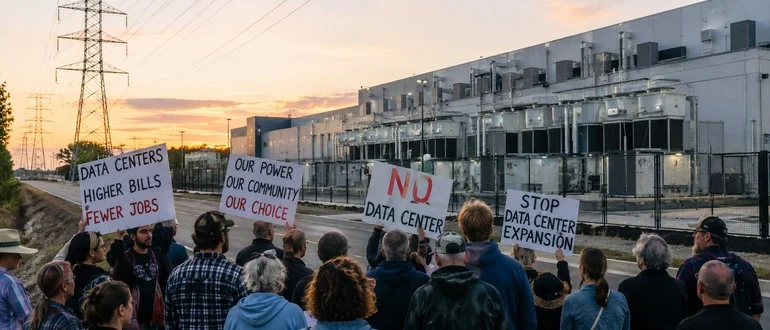
Public resistance to data center construction is now widespread across the U.S. A Gallup survey conducted in March found that seven in 10 Americans opposed construction of an AI data center in their local area, including 48% who strongly opposed it. A Heatmap poll in August found that about three-quarters of Americans would oppose a data center near where they live. Potential Impact on Elections
The political impact could extend well beyond local zoning fights. Republicans hold a narrow House majority and a 53-47 advantage in the Senate, making voter sentiment in competitive races particularly important this fall.
Ohio provides a potential test case. The National Republican Senatorial Committee has warned that negative views of data centers could hurt Republican Sen. Jon Husted in his special election against former Democratic Sen. Sherrod Brown.
Brown has made data centers a major campaign issue and spent millions on advertising connecting Husted to their development. The Republican committee warned that a Husted loss attributed to the issue could make politicians elsewhere reluctant to support new projects.
The resistance has already affected development. Data Center Watch found that grassroots organizations blocked or delayed at least 75 projects valued at roughly $130 billion during the first three months of 2026. Communities in Virginia, North Carolina and California are among those that have successfully challenged proposed developments.
States are also attempting to limit the costs that data centers can impose on residents. Texas Gov. Greg Abbott has directed regulators to make data centers pay for infrastructure required to serve them and has encouraged developers to build their own power generation. New York Gov. Kathy Hochul has taken a more restrictive approach, imposing a one-year moratorium on new hyperscale data centers.
Vice President JD Vance has acknowledged that electricity costs are central to the controversy. He said Monday that developers should build power capacity along with data centers rather than drawing power from the grid in ways that raise customers’ utility bills.