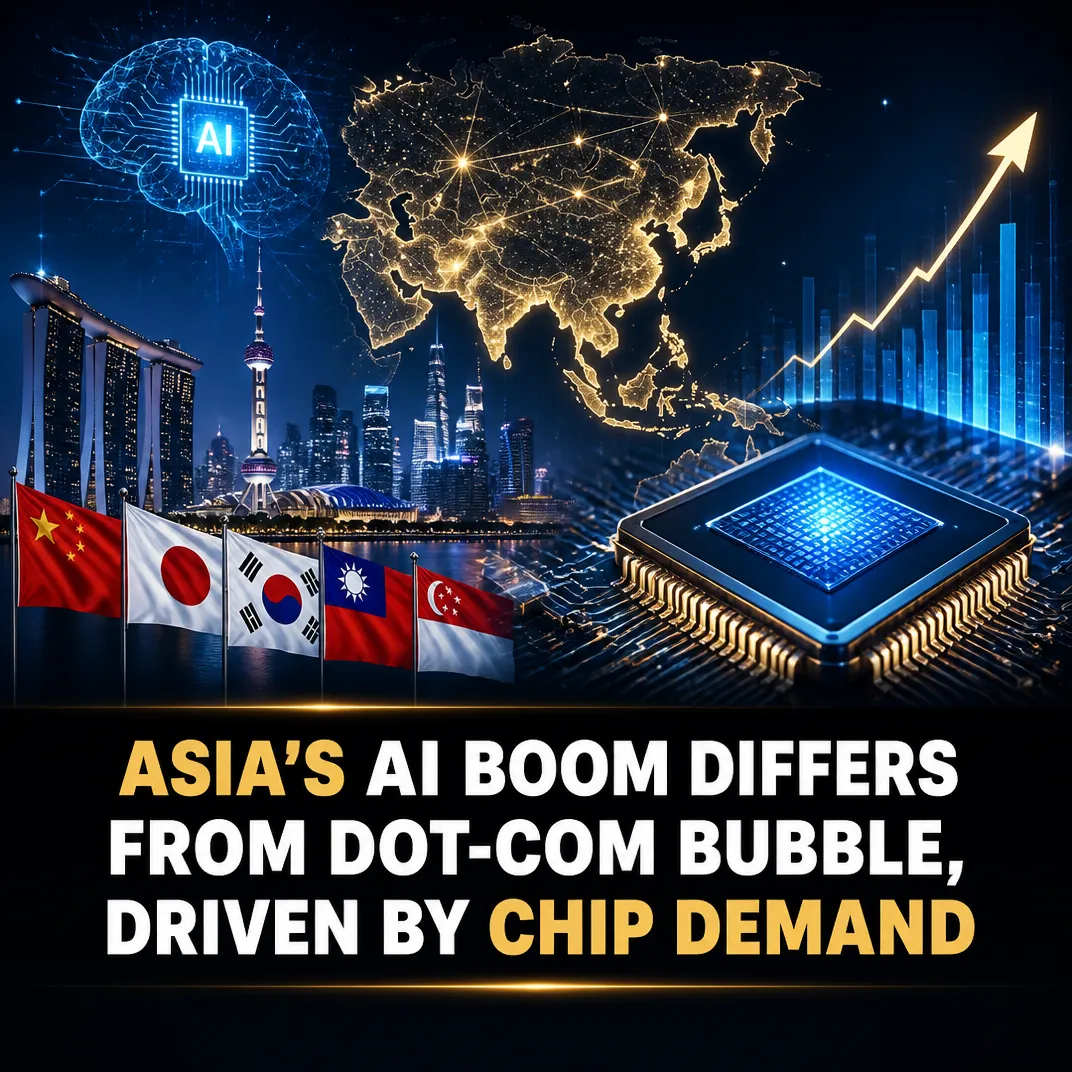
July 31, 2026, (Inside AI) — Asia’s technology leaders are charting a fundamentally different course from the speculative frenzy of the 2000 dot-com era, powered by tangible AI infrastructure demand and a surge in capital spending from U.S. tech titans.
Taiwan Semiconductor Manufacturing Co. (TSMC) and South Korea’s Samsung Electronics have seen their valuations soar, joining an elite group of Asian companies with market capitalizations exceeding $1 trillion. This milestone, first highlighted in a May 2026 newsletter from Tokyo, reflects a shift rooted in hardware and real revenue, not hype.
The driving force is massive investment from U.S. giants like Microsoft, Alphabet, and Amazon, which are pouring billions into AI data centers. TSMC, as the world’s leading contract chipmaker, fabricates the advanced semiconductors essential for AI workloads, while Samsung supplies high-bandwidth memory critical for processing speed. Their order books are backed by multi-year commitments, a stark contrast to the dot-com bubble’s promise-driven valuations.
During the late 1990s, Asian markets were littered with internet startups that collapsed when capital dried up. Today’s AI boom is anchored by companies with dominant market positions and proven manufacturing prowess. TSMC’s revenue from AI-related chips is projected to grow at over 50% annually, and Samsung’s memory division has rebounded sharply on AI server demand.
Yet the rapid concentration of wealth raises questions. The combined market cap of Asia’s trillion-dollar club now rivals the GDP of major economies. Analysts warn that geopolitical tensions, particularly around Taiwan, and potential overcapacity in chip manufacturing could introduce volatility. A recent IMF report noted that supply chain disruptions remain a key risk for semiconductor-dependent economies.
Industry observers point to a critical difference: the AI infrastructure buildout is fueled by enterprise demand, not consumer speculation. Cloud providers are racing to deploy AI capabilities, and Asian chipmakers are the indispensable suppliers. This dynamic has drawn comparisons to the railway boom of the 19th century, where infrastructure providers outlasted many service operators.
However, not all parallels are comforting. The dot-com era also saw a rush into telecom infrastructure that led to a brutal bust. Today’s AI spending cycle could face a similar reckoning if enterprise adoption fails to meet lofty expectations. A Bank for International Settlements paper cautions that AI-driven asset price inflation may detach from fundamental value if productivity gains lag.
For now, the numbers speak loudly. TSMC’s capital expenditure for 2026 is expected to exceed $40 billion, and Samsung is expanding its Texas fab to secure U.S. supply chains. These are concrete bets on a future that, unlike the dot-com promises, is already being built. The trillion-dollar club’s rise also spotlights a regional shift. While Silicon Valley designs the algorithms, Asia manufactures the physical engines of AI. This interdependence could reshape global tech alliances and trade policies, especially as nations vie for semiconductor sovereignty.
In Tokyo, where the story first unfolded, investors are watching closely. The Nikkei 225 has ridden the AI wave, but memories of past bubbles linger. The key test will be whether these valuations can withstand a downturn in AI spending, a scenario that seems distant but not impossible.