The company that’s made the microarchitecture powering practically every phone available today now imagines the next generation of mobile is going to be really, really good for gaming. ARM’s new GPU microarchitecture and neural upscaling appear to be a leap for performance, even if what’s much more important is which devices and which games will actually take advantage of it.
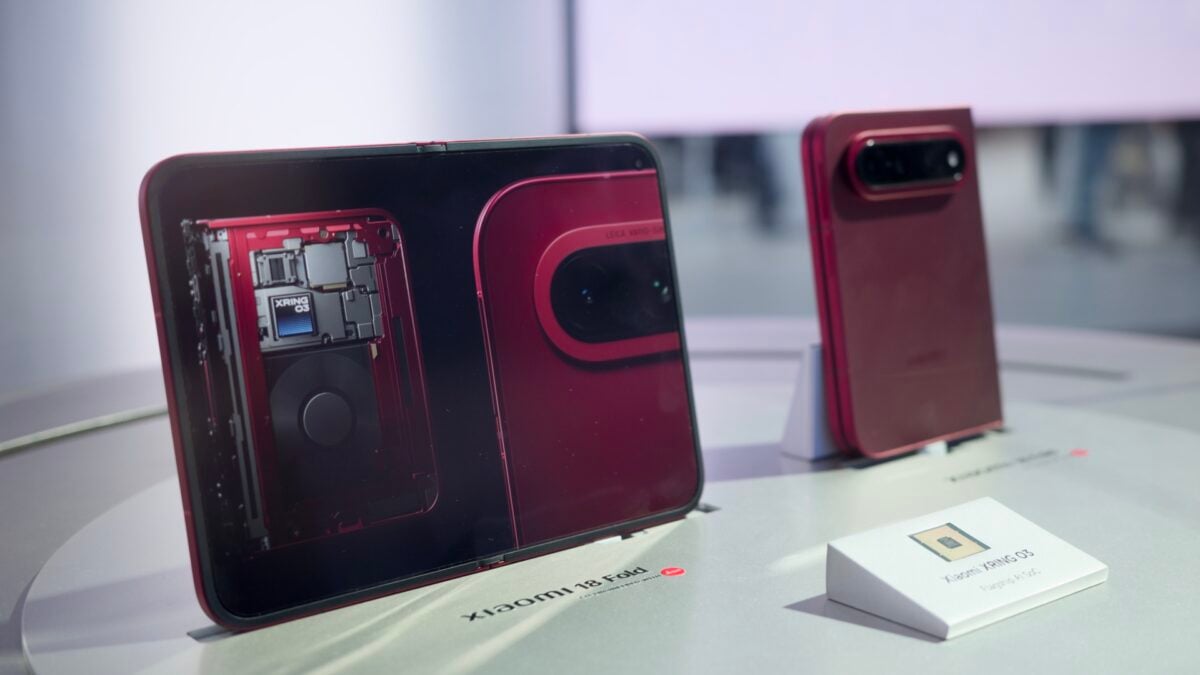
There’s only one phone available right now with this new GPU, the Xiaomi 18 Fold, with its custom Xrign O3 procesor. That’s the China-based company’s all-new wide foldable in the same vein as the Samsung Galaxy Z Fold 8 and whatever upcoming iPhone foldable Apple plans to show off this week. (We won’t see Xiaomi’s foldable stateside, so don’t get your hopes up to see it in person outside of a friend who loves to brag about all the China trips he does on a regular basis.)
ARM claims its new GPU sees a 14 percent uptick in performance compared to its previous flagship processor. On the gaming side, it’s also supposed to take advantage of Unreal Engine 5’s MegaLights, a direct lighting technique for dynamic shadows in games. That’s the kind of tech demo that will matter to a very small subset of gamers, though what will be more important in the end is the promised performance increases via upscaling.
ARM’s Neural Super Sampling (NSS) is combining with other technology that takes several pages from Nvidia, including their own version of ray reconstruction (a technique that tries to reform realistic in-game lighting impacted by software denoisers) and even its own “fake frames,” with frame generation, a feature that we may not see available in any titles until next year at the earliest. ARM has promised we may potentially see many times better framerates thanks to upscaling.
And it’s not just for phones, either. ARM said in an interview with The Verge that we’ll see the ARM Malio G2-Ultra NX capabilities in other devices that will indeed come to the U.S. More importantly for my neck of the woods—i.e., laptops—ARM’s VP of Edge AI, Chris Bergey, said we’ll even see it in tablets or Chromebooks. Still, the real test for these capabilities will be in phones and gaming tablets. Using upscaling means a mobile device uses less battery to achieve higher-end graphics, boosting battery life while allowing a baseline playable frame rate.
I first reported on ARM’s upscaler plans in August 2025. The “Neural Super Sampling” technology proposed to stick AI in the rendering pipeline, allowing its chips to take an image rendered at a lower resolution—say 540p—and fill in pixels until the image appears to run at 1080p without any apparent loss in image quality. What I am still more curious about is how this will be implemented inside the mid-range phone market, rather than the latest and greatest devices that cost more and more thanks to the ongoing RAM shortage.
Lately, we’ve experienced a form of shrinkflation, where, to combat rising prices, companies are selling tech with less memory and few to no real upgrades over previous-generation devices. What ARM doesn’t mention is how well its new technology would run on lower-end devices that may not have the flagship- or even “pro”-level performance of a more-than-$1,000 phone.
What’s more, we’re going to have to see if anybody actually takes advantage of this tech beyond the usual suspects. ARM has only confirmed Where Winds Meet, Infinity Nikki, and Arena Breakout will use NSS. These open-world, time-wasting RPGs and extraction shooters aren’t exactly sending me hunting for a new phone. We’ll see what other games employ ARM’s tech in the coming weeks.