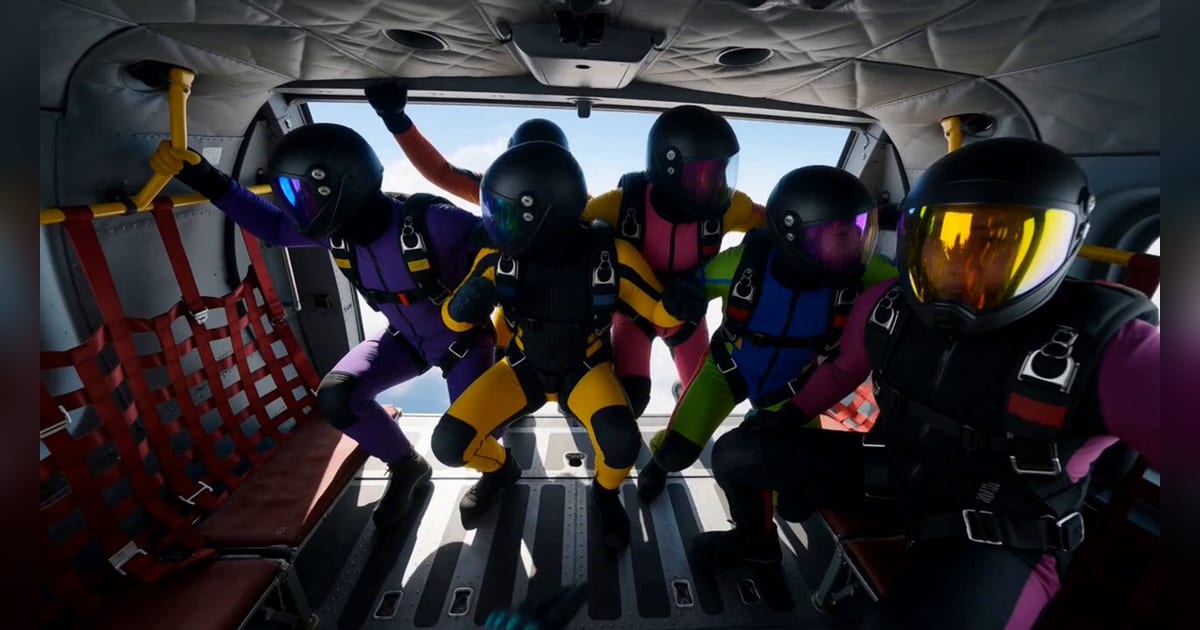
Argil, the Paris AI-video startup founded by Laodis Menard and Brivael Le Pogam, has added MiniMax H3 as a footage-generation option inside its workflow for AI-avatar social videos.
MiniMax's July 31 post establishes the narrow news: H3 is live inside Argil, with open weights still described only as "coming soon."
[MiniMax on X](https://x.com/MiniMax_AI/status/2083222275701240298?ref=runtimewire)

[Brivael Le Pogam on X](https://twitter.com/brivael/status/2083180918051688753?ref=runtimewire)
The Argil placement is a different distribution path from H3's model release and direct API access. MiniMax's announcement names Argil as the application carrying the model into a creator workflow. Argil handles the surrounding production work, including avatars, voices, scripts, captions, B-roll and rendering.
Menard and Le Pogam met while working at advertising technology company Teads roughly a decade ago. Y Combinator's Argil profile says they built a startup together in 2016 that failed. The founders later focused on reducing the cost and production work involved in making video, and Argil joined Y Combinator's Summer 2024 batch.
H3 enters an avatar-led production workflow
For Argil, the integration matters because H3 becomes one footage-generation option inside a product built around avatars, scripts, captions, B-roll and automated rendering, rather than a standalone model demo. Argil's site organizes the product around customer-trained AI clones and stock avatars. Its tools cover generated voices, subtitles, supporting footage, transitions and article-to-video production, with API access for customers automating video creation.
MiniMax's platform documentation describes H3 as a general-purpose multimodal video model supporting text-to-video, image-to-video, first-and-last-frame generation and reference-based generation. The model can produce video at up to 2K resolution. Its reference inputs can include images, video and audio, according to the H3 API.
MiniMax offers H3 through its V2 video-generation endpoint for developers making direct model calls. Argil packages the model inside a production system for customers starting with a presenter, script or article and working toward a finished social clip.
The announcement does not identify which H3 modes Argil supports or how users select the model. It also sets no release date or license terms for the promised open weights.
Argil's execution challenge is integrating H3 footage with its avatars and editing system while preserving visual consistency across repeatable, automated production. The model's output still has to fit the speaker, script, captions and final render that Argil coordinates.