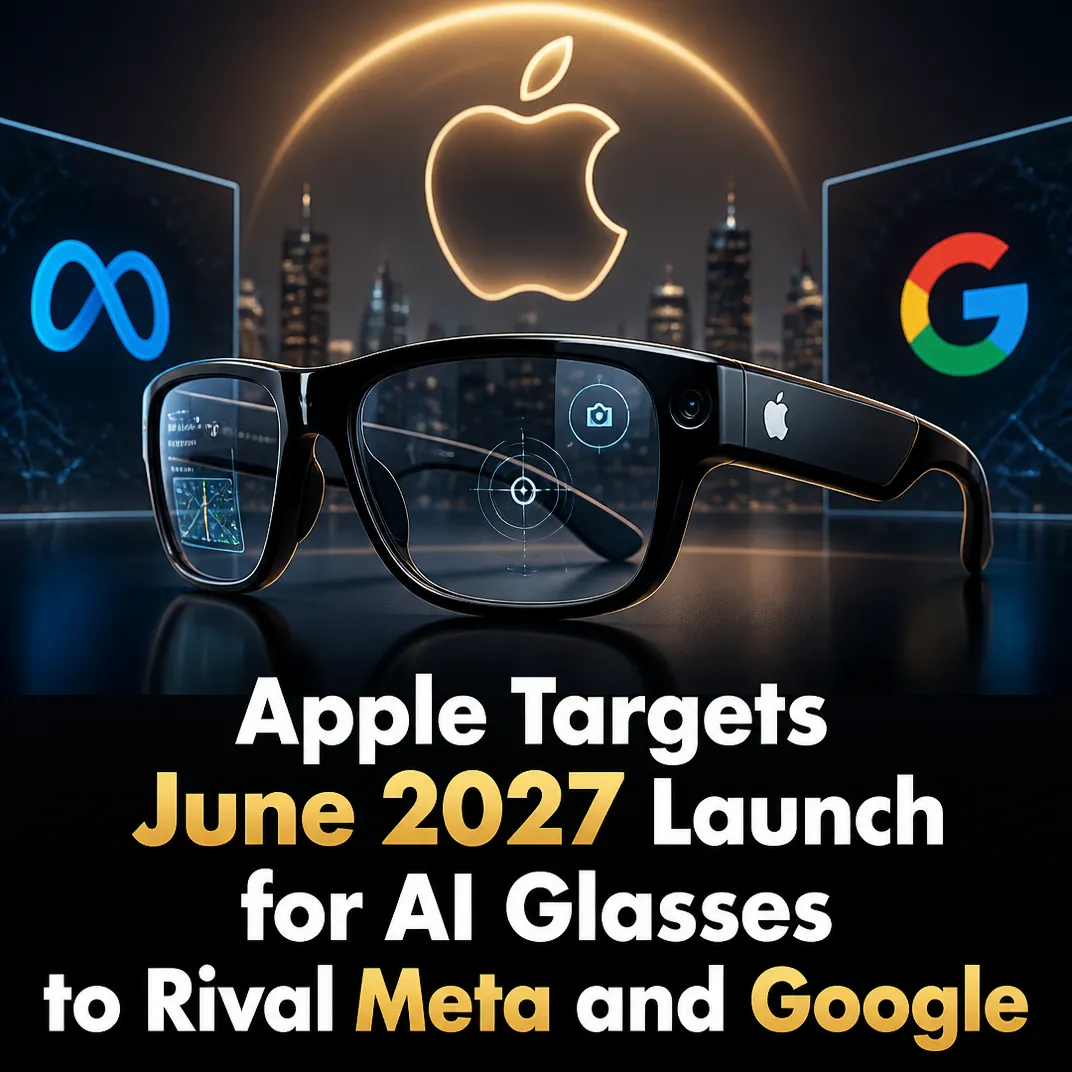
July 27, 2026, (Inside AI) — Apple is reportedly targeting its June developer conference next year to unveil AI-powered smart glasses, signaling a direct challenge to Meta and Google in a market that could reshape personal computing.
The device, which has been in development for years, will likely reach consumers by the holiday season, according to Bloomberg. But the timeline has slipped from earlier expectations due to intense internal debate over privacy—a flashpoint that doomed previous smart glasses like Google Glass.
Apple’s entry comes as Meta already commands roughly 80% of global AI glasses sales with its Ray-Ban Meta glasses, priced from $299. Developed with EssilorLuxottica, those frames look like ordinary eyewear, making their built-in camera hard to spot—a feature that has sparked outrage over secret recordings.
Apple is taking a radically different tack. Engineers are testing a version with no camera at all, while another prototype includes cameras that cannot capture photos or video. Instead, the sensors would only perceive surroundings to feed AI features, a design that could sidestep the surveillance stigma.
“Apple has made internal changes to both the hardware and software to address privacy issues,” Bloomberg noted, adding that similar camera-free sensing tech may appear in future AirPods.
The glasses are expected to include a camera, microphone, speakers, and deep integration with Siri, mirroring Meta’s hands-free calling, navigation, and AI assistant. But Apple’s privacy-first architecture—potentially disabling recording at the firmware level—could become its key differentiator.
This cautious approach reflects hard lessons from the industry’s past. Google Glass was pulled from the consumer market within two years after backlash over its conspicuous camera. Now Google is attempting a comeback with Samsung, planning new AI glasses later this year. Snap is also launching Specs, an augmented reality device priced at $2,195, though its bulkier form factor targets a niche audience.
Apple’s pivot to privacy-preserving sensing aligns with research on privacy-aware computer vision, where on-device processing and functional separation of sensing from recording can reduce misuse. Yet the company must still convince developers to build apps for a camera that cannot take pictures—a constraint that may limit initial appeal.
Meta’s early lead stems from its partnership with EssilorLuxottica, which gave it access to iconic Ray-Ban designs and retail channels. Apple lacks such a fashion pedigree, but its ecosystem lock-in—with seamless connection to iPhones, Macs, and Apple Watch—could drive adoption if the glasses deliver unique AI experiences.
The broader bet is that smart glasses will become the next major platform after smartphones. IDC forecasts the augmented and virtual reality headset market will grow at a compound annual rate of 43.8% through 2028, though glasses must overcome social acceptance hurdles.
Apple’s developer conference reveal—if confirmed—would give it nearly a year to court app makers before a retail launch. That window could prove critical as rivals iterate rapidly. Meta recently stepped up efforts to position its glasses as a computing platform, and Google’s re-entry with Samsung threatens to fragment the Android ecosystem.
The Cupertino company’s internal struggles also highlight the tension between innovation and its brand promise of privacy. Earlier reports had pegged a 2026 release, but the new timeline suggests the product team is still wrestling with fundamental design choices—a rare public glimpse into Apple’s normally secretive development process.
For consumers, the arrival of Apple’s glasses may finally answer whether AI wearables can become indispensable tools or remain a niche gadget. The answer will depend on whether Apple can deliver utility without the creep factor that has haunted the category for over a decade.