Tech's biggest names are quietly shrinking their most ambitious bets, and the human cost is starting to look uncomfortably familiar. #
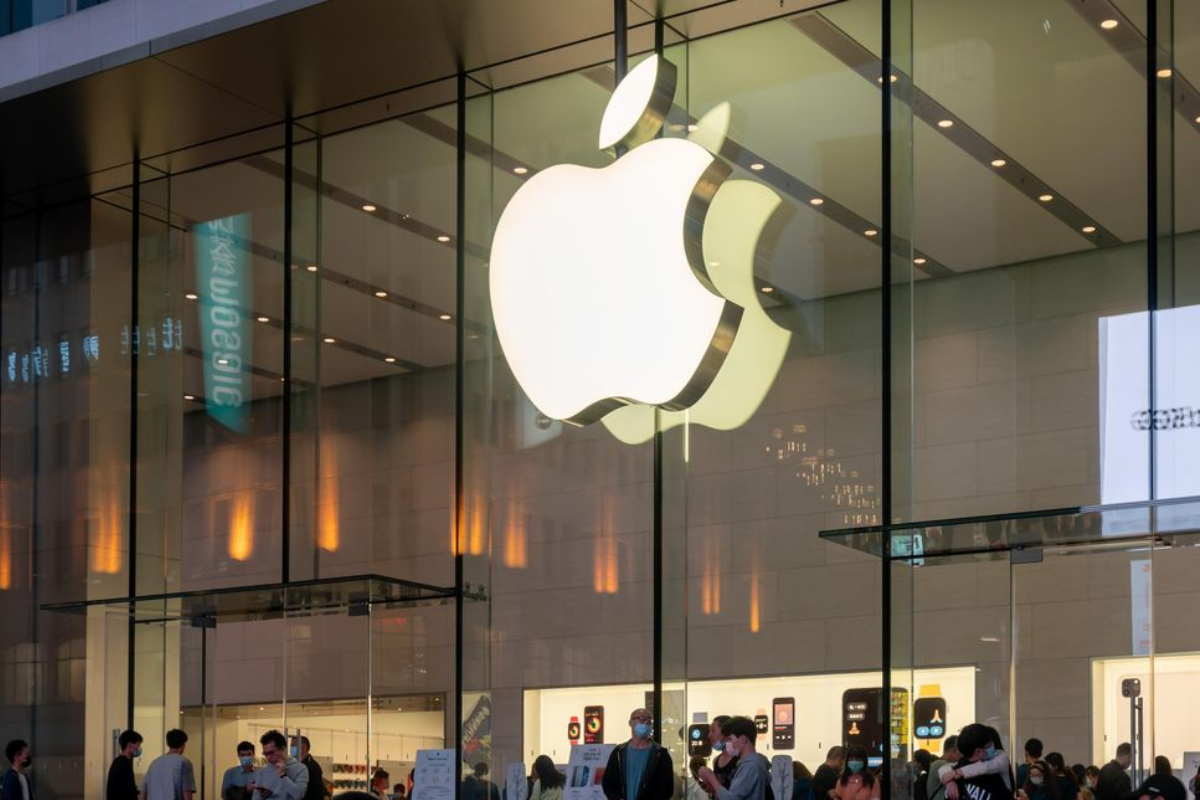
Apple has confirmed rare mass layoffs affecting staff in its Siri and Vision Pro teams in the United States, with around 200 employees told in August 2026 that their roles are being cut. The move marks one of the most visible retrenchments at Apple in years and underscores how the company is struggling to turn its most hyped new products into solid businesses.
The cuts follow months of speculation about Apple's commitment to its mixed reality and artificial intelligence bets, particularly after the Apple Vision Pro headset launched in 2025 to a wave of hype and then, fairly swiftly, a thud.
It was billed as the company's first major new hardware category in nearly a decade, yet it never came close to the iPhone or even the Apple Watch in everyday relevance, and its premium price tag made adoption a tough sell.
Apple Layoffs Hit Vision Pro and Siri at a Vulnerable Moment #
AppleInsider reported last week that more than 60 employees on Apple's Vision Pro team were being laid off. Those staff were part of the group trying to build a future around augmented and mixed reality, the sort of science-fiction-adjacent stuff that Silicon Valley has promised for years would replace the smartphone.
The Vision Pro, released in 2025, failed to catch on with customers. According to the reporting, sales never matched Apple's internal hopes, and the headset quickly picked up the dreaded label of 'flop' within the industry. For a company that rarely misfires on hardware, that is a serious bruise.
The Vision Pro team was not alone. On Friday, various outlets reported that employees working on Siri and in Apple's gaming division were also being cut. Altogether, around 200 roles are going, a small fraction of Apple's global workforce but a big symbolic move for a firm that has historically avoided the kind of sweeping layoffs now common across the tech sector.
An Apple spokesperson confirmed that the changes are under way and tried to frame them as part of a broader reshuffle rather than a simple round of job losses. 'While we will create new roles as part of this change, it will also impact a limited number of existing roles. We are grateful to these team members for their contributions, and we are committed to supporting them throughout their transition, including opportunities to apply for other roles at Apple,' the spokesperson said.
That is the official line. Behind it sits a more awkward reality for Apple: its long-delayed Siri overhaul has struggled to impress in a market obsessed with generative AI, and its grand mixed reality experiment is suddenly being pared back.
TikTok, Netflix and LinkedIn Join Apple in August Tech Layoff Wave #
The Apple layoffs are part of a wider, fairly brutal cull of tech jobs this month that cuts across social media, streaming and enterprise software.
TikTok has already gone through two rounds of layoffs in August alone. According to a letter the company sent to the Grants Management Office of the Washington State Employment Security Department, 75 workers in the Seattle area are being let go in its latest move. These cuts follow an earlier decision in August to eliminate 250 jobs when TikTok shuttered its Nashville office, which had focused on content moderation.
The late‑August layoffs have a different target. TikTok told Washington state officials that the jobs being removed are tied to its e‑commerce operation, and that the changes are 'necessary given recent restructures to the Company's operations.'
Roles affected include data scientists and software engineers, among others. As with Apple, TikTok has said employees will be able to apply for other positions inside the company, though that is a thin comfort when the writing is already on the wall.
Netflix, meanwhile, is reshaping its gaming push in a quieter, if no less painful, fashion. The streaming giant has spent the last few years talking up games as the next chapter in its subscription story. Yet earlier this month, it confirmed that it is closing two of its games studios, Night School Studio in Los Angeles and Moonloot in Helsinki.
Night School Studio is best known for the Oxenfree series, a cult favourite that gave Netflix some prestige in gaming circles. The company did not say how many jobs would be lost, but a Netflix spokesperson told GameFile that 'we see an opportunity to be more focused in our execution, so we are making organizational changes to the business to match those priorities.' Translation, Netflix is cutting back on experimental stuff and channelling resources into clearer bets.
LinkedIn, the professional network that many laid-off workers now depend on daily, is also trimming its own headcount. LinkedIn set up a research and development centre in Israel in 2022 after acquiring analytics start‑up Oribi for between $80 million and $90 million (£58.64 million and £65.97 million). According to reports, LinkedIn has now decided to shutter that R&D operation, affecting around 50 employees.
The company has not publicly detailed the rationale for closing the Israeli centre, but the move fits a broader pattern of tech firms consolidating far‑flung teams and rethinking side projects that no longer fit neatly into their core strategies. It is hard not to notice the irony of a jobs platform cutting an entire lab, even as it hosts wave after wave of posts from people hit by layoffs elsewhere.
Apple and the Numbers Behind 2026's Tech Job Fallout #
According to data compiled by layoff tracker Layoffs.fyi, the latest cuts at Apple, TikTok, Netflix and LinkedIn have pushed total tech job losses in 2026 to 127,180 across 281 companies. That tally is nearly 5,000 more than all tech job cuts recorded in 2025, and August is not over yet.
The current pace is still well below the carnage of 2023, when 265,660 employees at 1,194 tech companies lost their jobs, according to the same tracker. Yet the direction of travel is what matters for people inside these firms. Many assumed 2024 and 2025 were the worst of it. Seeing 2026 quietly overtake last year in total cuts feels, frankly, grim.
What sets Apple's move apart is not the raw number of jobs, which is modest compared with some of its peers, but the signal it sends. When even the world's most valuable tech company is trimming teams in emerging areas like mixed reality and virtual assistants, it suggests that the post‑pandemic boom in speculative tech betting is decisively over.
Workers in those fields know the pattern by now. First come the lofty internal presentations and breathless keynotes, then the hiring splurge, then the rebrand as a 'strategic refocus' once the numbers do not work. Somewhere in the middle, actual people's livelihoods get flipped into a line item.
And if Apple, with its cash reserves and famously long‑term planning, is scaling back on its more experimental bets, smaller rivals will be watching closely, and nervously.
© Copyright IBTimes 2026. All rights reserved.