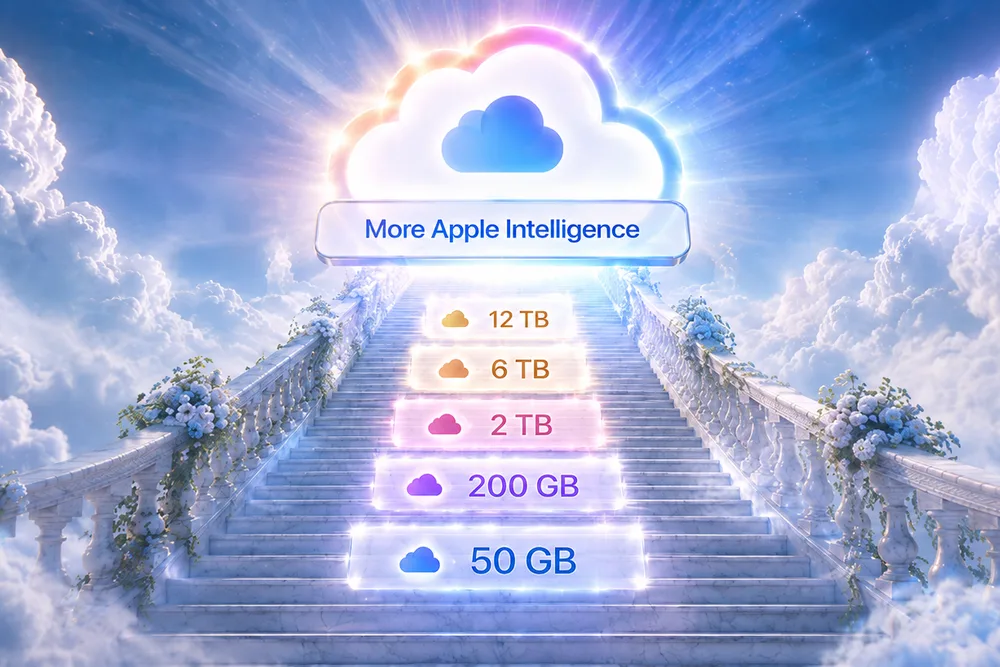
The logic here is simple: server-side compute costs money. While Apple has spent a lot of time bragging about on-device processing, the heavy lifting—like complex image generation or analyzing hours of security footage—happens via Private Cloud Compute. Instead of introducing a confusing new "AI Credit" system or a standalone "Apple Intelligence+" subscription, Apple is just piggybacking on the infrastructure users already understand.
If you've ever hit your storage limit and seen that "Upgrade iCloud+" pop-up, you know exactly how this will work. You won't be buying tokens; you'll just be "buying up the stack," as Tim Cook put it during a recent earnings call. It's a seamless way to monetize LLM agents without making the average user feel like they're managing a cloud computing budget.
The hardware play behind the paywall #
This subscription strategy isn't just about the iPhone. Apple is clearly prepping a wave of AI-heavy hardware—smart glasses, camera-equipped AirPods, and new HomePods—that simply don't have the thermal headroom or battery capacity to run massive models locally. These devices will be tethered to the iPhone and the cloud.
By baking AI limits into iCloud+, Apple creates a recurring revenue stream that scales with the ecosystem. The more AI-integrated gadgets you own, the more likely you are to hit those "usage caps" and upgrade to a higher storage tier just to keep your devices "smart."
The end of the "Free AI" honeymoon #
Apple is following a trend we've already seen with the big players. ChatGPT, Claude, and Gemini have all moved toward a "freemium" model where basic chat is free, but high-reasoning models and heavy-duty tools are locked behind a monthly fee. Even regional players are shifting toward charging for productivity-heavy tasks like data analysis or video generation because the compute costs are simply too high to subsidize forever.
For a developer, a "per million tokens" price list makes sense. For a consumer, it's a nightmare. Apple's approach hides the technical complexity of prompt engineering and token consumption behind a familiar storage number. It's a classic Apple move: sell the hardware first, then charge you a monthly fee to unlock the full potential of that hardware. The real question for most of us is whether the utility of an AI-powered home or a smarter Siri is actually worth the jump from a 200GB plan to a 2TB one.
OpenAI Fires Back at Apple's Trade Secret Lawsuit with Public 8d ago
Next Volkswagen is applying its famous "platform" strategy to →