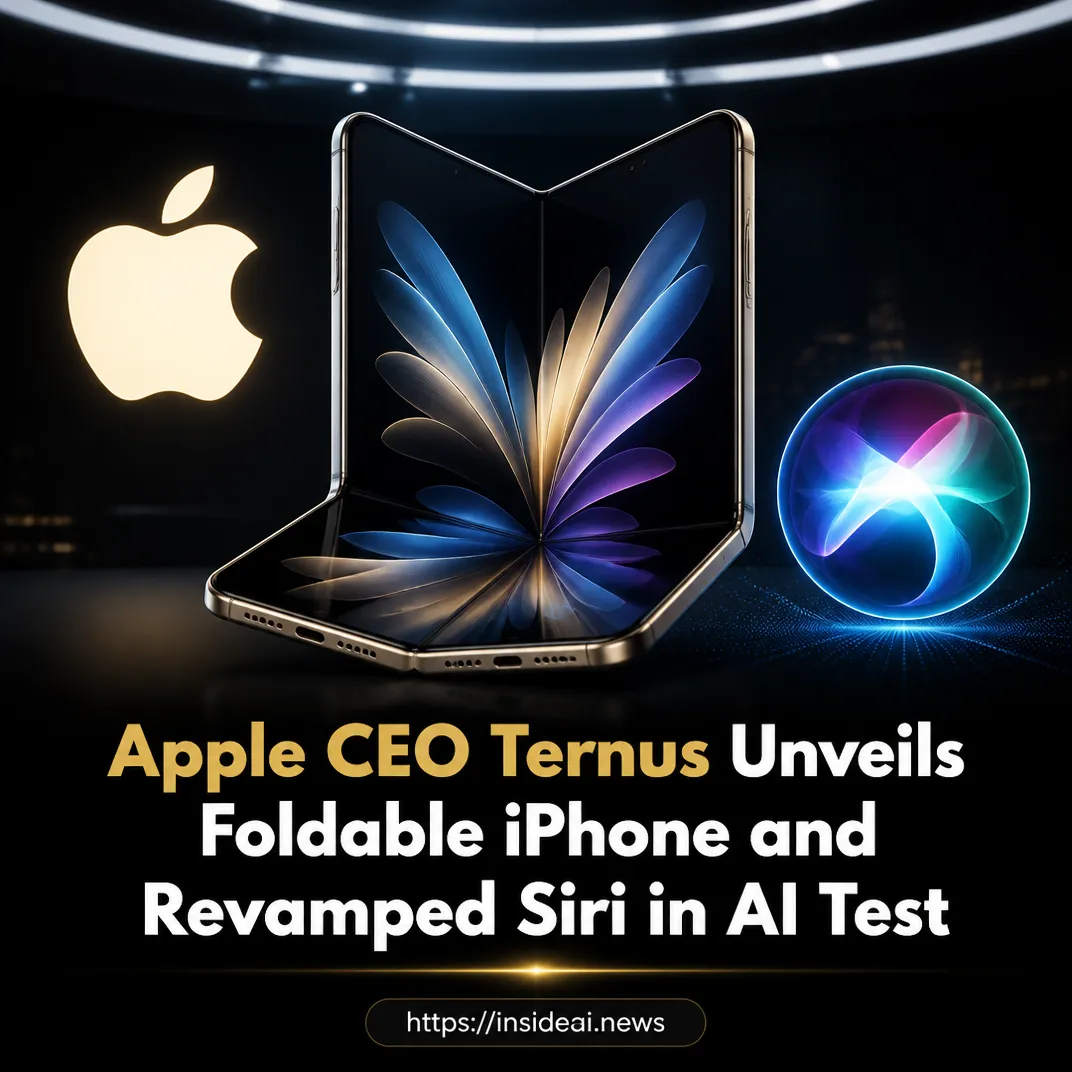
September 8, 2026, (Inside AI) — Apple CEO John Ternus faces his first major test Wednesday when he unveils a foldable iPhone and a rebuilt Siri assistant, two products that will signal whether the company can compete in the AI race.
Analysts expect the new foldable phone, priced above $2,500, to quickly lead the nascent folding phone market despite cameras and processors that may not top the market. The device folds open like a passport and represents Apple's first new hardware form factor in nearly two decades.
The stakes extend beyond hardware. Ternus must prove that Apple's billion-plus installed base and loyal customers will embrace its AI strategy, which has lagged rivals like OpenAI and Google. A successful Siri revamp by year-end could put Apple on par with Google's Gemini assistant, analysts said.
Foldable iPhone Aims to Redefine Premium Segment #
Apple is expected to update its premium iPhone Pro and Pro Max devices but delay refreshing the iPhone Air and budget lines until spring. The strategy focuses attention on the foldable phone, which analysts say could generate more than $45 billion in revenue by the end of next year.
"Even with a $2,500 price tag, the Apple foldable is going to fly off the shelves, especially because Apple is excellent at creating an aura of exclusivity, luxury, and scarcity," Nabila Popal, senior research director at IDC, said.
Foldables remain a single-digit share of the phone market, but Apple's late entry may be an advantage. Samsung, Google, and Huawei have sold folding phones since 2019, giving Apple time to solve engineering challenges like durable hinges and screen creases.
"They've seen what has worked and what hasn't worked with their competitors," Anshel Sag, an analyst at Moor Insights & Strategy, said.
Siri Overhaul Tests Apple's AI Pacing Against Rivals #
Ternus' bigger challenge is convincing customers and developers that Apple can keep pace with OpenAI, which ships major improvements every few weeks. Apple has traditionally moved slower, and Siri's reputation has suffered from years of delays.
"If Siri still sucked, then he would have a much more difficult Wednesday," Carolina Milanesi of Creative Strategies, said. "Now they can comfortably say Siri is delivering and has value, but they need to just continue to work and make it better and keep up."
The Siri overhaul taps Google's AI technology behind the scenes, a rare partnership that could accelerate Apple's AI capabilities. But regulatory hurdles loom. Gene Munster of Deepwater Asset Management said Apple's Siri update might take until 2028 to win approval in China and won't initially launch in Europe due to a regulatory dispute.
"It matters a lot that they get the U.S. out in time because it builds the confidence that they can do something in Europe," Gene Munster of Deepwater Asset Management, said.
Investors have largely overlooked Apple's slow start in generative AI, betting on its massive device base and brand loyalty. Ternus, who kept a low profile as hardware engineering chief for five years, is expected to focus on powerful devices as a foundation for on-device AI expansion.
The foldable iPhone and Siri revamp are the first products Ternus has led since succeeding Tim Cook. Whether they succeed could determine if Apple plays catch-up or extends its premium hardware dominance into the AI era.