Member-only story
Abstract #
Context: AI teams often fail not in modeling but in reliably moving messy data.Problem: Single-machine workflows hide scale, skew, leakage, and reproducibility risks.Approach: Apache Spark structures distributed , EDA, features, tuning, and evaluation.Results: The pipeline achieved 0.8526 accuracy, 0.9043 ROC-AUC, and 0.7622 PR-AUC.Conclusion: Production AI begins when data work becomes repeatable, auditable, and scalable.
Keywords: Apache Spark; PySpark; Data Engineering; Machine Learning Pipelines; Spark Optimization
When Your Model Is Not the Bottleneck #
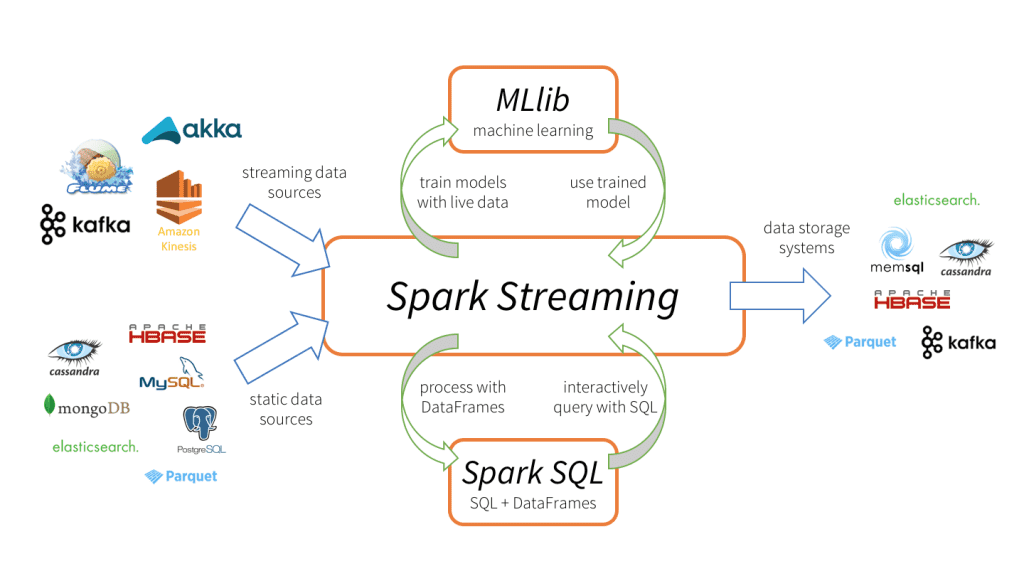
What happens when your model is ready, your features are promising, your evaluation pipeline is clean, but the data refuses to move? This is one of the most common failures in applied AI: teams obsess over architecture, embeddings, fine-tuning, and inference latency, only to discover that the real constraint is upstream. The training data arrives late. The feature table is inconsistent. The batch job takes eight hours. The joint explodes. The streaming pipeline silently lags behind reality. In advanced AI systems, the model often gets the attention, but the data infrastructure decides whether the system becomes production-grade or remains a notebook experiment. Apache Spark exists precisely in this uncomfortable space…