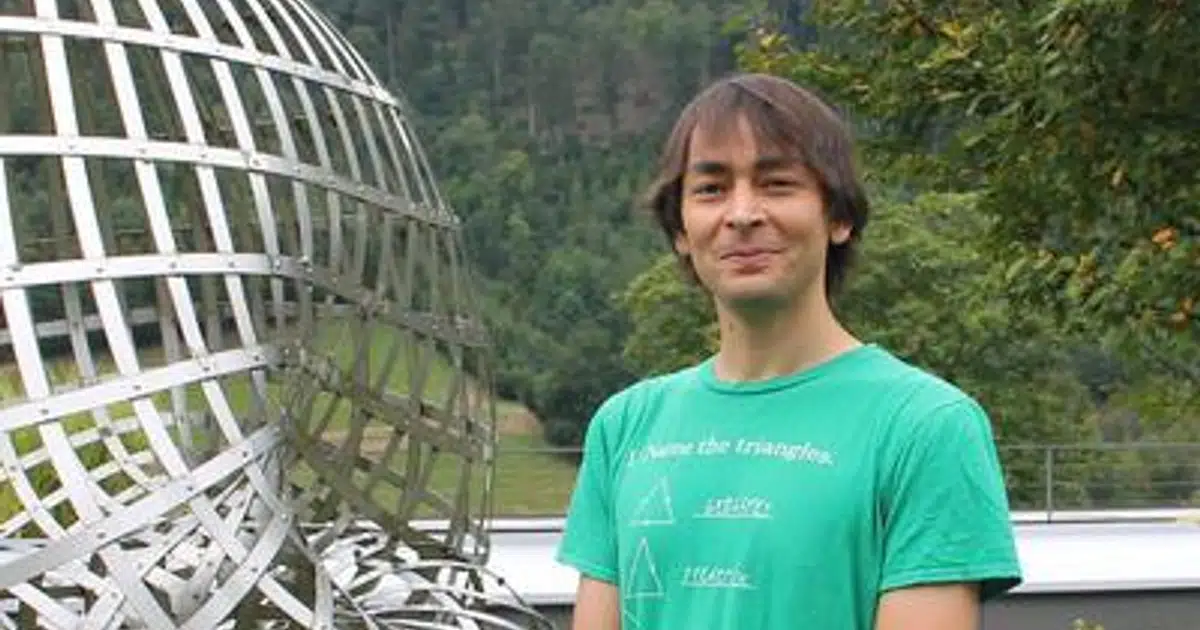
The Riemann hypothesis has long been considered one of the most difficult math problems in the field
ON THE heels of Anthropic PBC’s record-breaking initial public offering, a researcher at the company said he believes he used its artificial intelligence software to solve a famous number theory problem that has plagued mathematicians for more than 150 years.
Mathematician Levent Alpoge published a note on his personal website on Friday (Nov 20), claiming to have come up with a proof of the Riemann hypothesis. He shared a link to code written in the programming language Lean that he said showed evidence of his success.
According to his note, Alpoge messaged Anthropic chief executive officer Dario Amodei on Sunday night to ask about announcing his findings to the public.
Alpoge called the timing of his announcement “horrible,” but said, “I just could not live if I waited even longer.” Anthropic declined to comment, and Alpoge did not respond to a request to comment.
The Riemann hypothesis relates to the distribution of prime numbers and has long been considered one of the most difficult math problems in the field.
OpenAI and Anthropic have been working for years to demonstrate the advanced capabilities of their most cutting-edge models by solving challenging math and life sciences problems.
If confirmed, Alpoge’s work would mark the second Millennium Prize Problem that may have been solved by AI; OpenAI said its models had generated a solution to the 90-year-old Navier-Stokes problem in September. Andrew Sutherland, a senior research scientist at the Massachusetts Institute of Technology, said he verified Alpoge’s work about the Riemann hypothesis on his computer and has seen at least three other verifications on multiple systems from other professional mathematicians.
Alpöge’s efforts with Claude build on the work of many mathematicians who have studied the Riemann hypothesis, as well as the field of mathematic formalisation, according to Sutherland.
“I am both very nervous and very excited” for the future, Sutherland said, explaining that mathematicians have years ahead to dig into this proof to understand how it can be applied. “This is a day for celebration,” Sutherland said, even as he acknowledged the concerns in his field about AI’s potential impacts the math profession and other jobs.
Noah Giansiracusa, an associate professor of math at Bentley University and faculty associate at Harvard University, added that, if the solution works, it’s a big deal for AI.
“It sounds like there’s a pretty good chance this is airtight and valid,” Giansiracusa said.
Alpoge described the experience of attempting to prove the problem as a “stream-of-consciousness jaunt.”
“Claude and I have had a great time together with such breadth in recent months, but this time Claude far outpaced me near the finish line,” Alpoge wrote. BLOOMBERG
Decoding Asia newsletter: your guide to navigating Asia in a new global order. Sign up here to get Decoding Asia newsletter. Delivered to your inbox. Free.
Share with us your feedback on BT's products and services