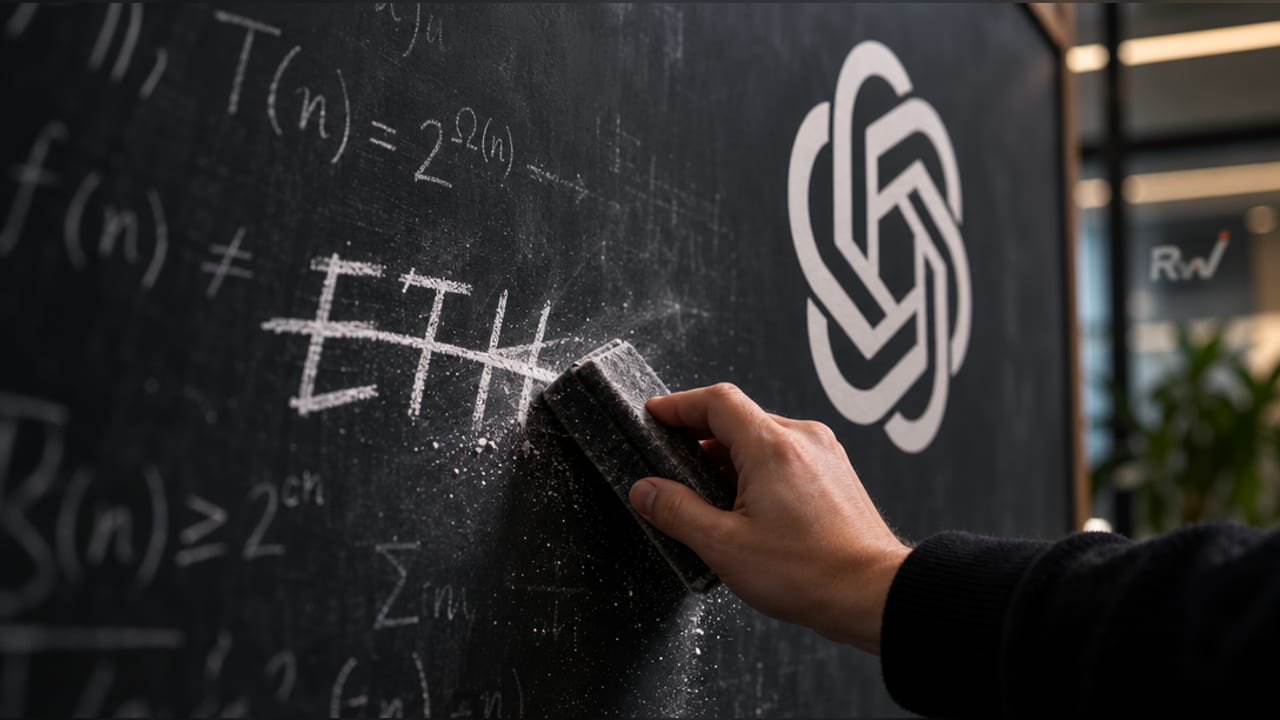
Two AI labs now claim a faster-than-exponential algorithm for SAT. A leading complexity theorist says he can't vouch for it yet but expects little effect on practical solvers.
        By [Emerson Redding](https://runtimewire.com/author/emerson-redding)
        · Published
Why it matters #
The Exponential Time Hypothesis underpins hardness results in hundreds of papers. If two independent AI-generated proofs hold up, much of that work needs revisiting, and labs are now racing to claim research firsts, not just benchmark wins.
Anthropic published its own refutation of the Exponential Time Hypothesis (ETH) late Monday, hours after OpenAI announced that its system had disproved the same conjecture.
Anthropic added a paper and a Lean 4 formalization to its formal-math repository on GitHub at 10:07 p.m. CT. The paper, "A 2^o(n) Time Algorithm for 3-SAT," is credited to Claude. The repository says the result "was discovered by an internal research Claude model" and that the Lean formalization "was written by AI models."…
When you purchase through links in our articles, we may earn a small commission. This doesn’t affect our editorial independence.