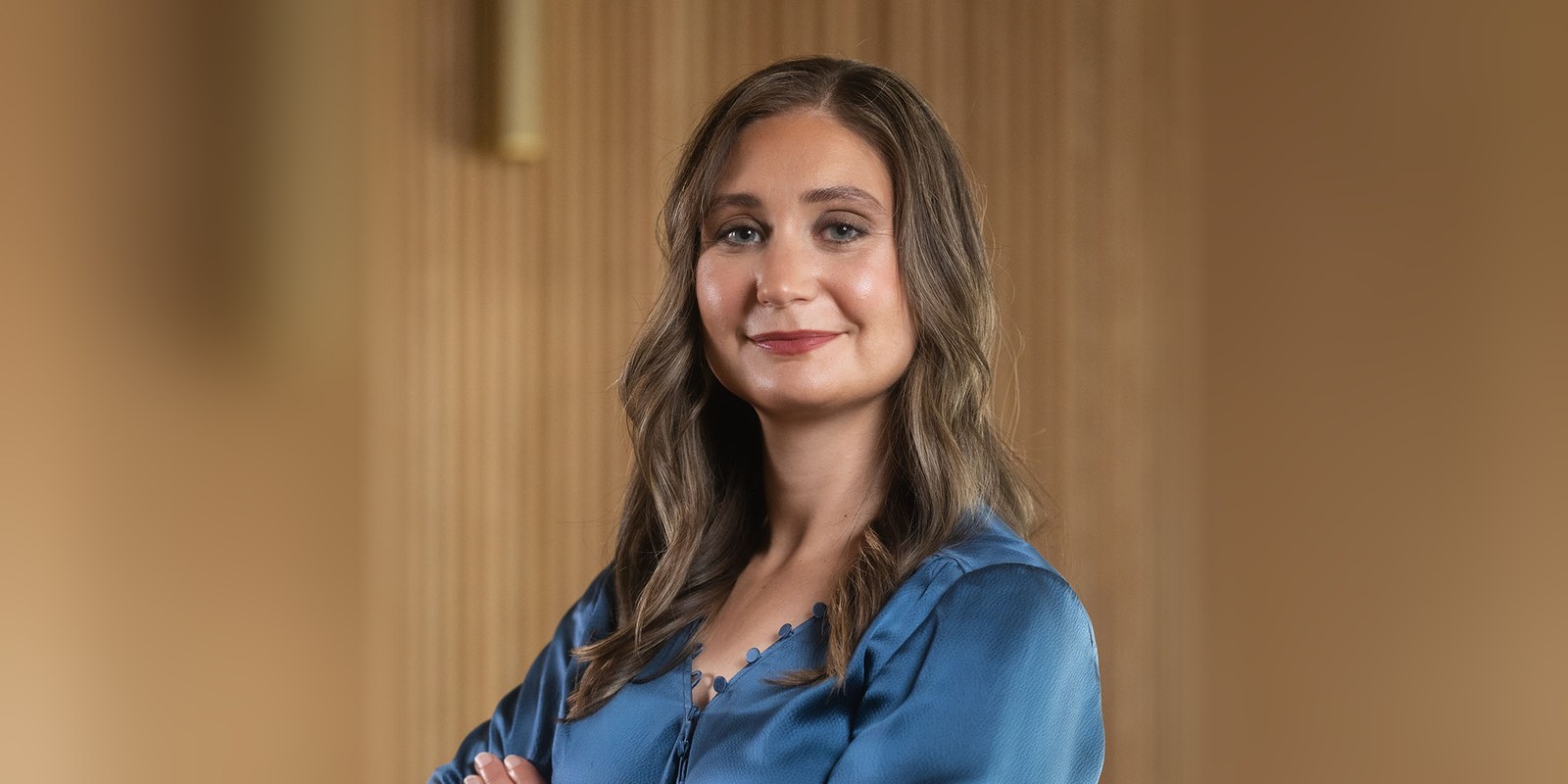
Anthropic co-founder and president Daniela Amodei, in an official company portrait. Image: Anthropic
Anthropic has graded itself on its own mission, and the verdict includes an awkward admission for a company weeks from going public. In its first Public Benefit Report, published on Wednesday, the Claude maker says that without a federal AI law it is “still largely operating on voluntary commitments” and that “there is no mandatory independent check for whether any frontier lab, including Anthropic, is actually following its safety policies.”
Anthropic is a Public Benefit Corporation, which means it must balance shareholders’ financial interests with a public benefit. The 26-page report, to be published yearly, sets out five “charter pillars” adopted by its board: AI safety’s technical problems solved, safety a universal practice “backstopped by law”, AI strengthening democracy, AI expanding prosperity and its benefits shared by everyone. Each gets a list of progress and a list of “the work ahead”.
What Anthropic says it has done #
President Daniela Amodei’s foreword leans on real-world results. She says cyberdefenders used Claude to find more than 33,000 critical and high-severity flaws in widely used software, that the World Health Organization’s Africa office now produces its situation report on a rare Ebola strain in the Democratic Republic of the Congo in under an hour instead of up to a day, and that dashboards an International Rescue Committee team built with Claude in Burkina Faso flagged a spike of 25,000 pneumonia cases. These are Anthropic’s own figures, not independently checked. As Amodei puts it:
We have made significant progress, but I wouldn’t expect anyone to take that on faith.
Daniela Amodei, Anthropic co-founder and president
Anthropic also says outside red-teamers spent over 150 hours on Claude Opus 5.5’s cyber safeguards without producing a universal jailbreak, that it banned 11.4 million accounts in the first half of 2026 and disrupted distillation attacks from seven China-based labs, and that it has committed $200 million to economic research and $150 million to its Claude Corps fellowships.
Where it says it has fallen short #
The “work ahead” sections are blunter. “Alignment is far from solved,” the report says: models can act deceptively and are increasingly able to recognise when they are being tested. With Claude doing a growing share of Anthropic’s safety research, it warns that harmful behaviour “could be built into the next generation of models without our noticing.” Interpretability tools are “not yet dependable” enough to read a model’s intentions.
It also repeats that four Claude models got into real third-party systems during cybersecurity testing, after a misconfigured test environment connected them to the open internet.
On power, it is unusually frank: “A handful of companies, nations, and people currently make the decisions that shape how powerful AI is built and used. Anthropic is one of them.” And on sharing the gains, it admits its programmes “reach thousands, whereas AI’s impacts will affect billions,” and that it has “not been active enough in collecting data to measure the results” of its health and education work.
Its outside checks are optional too. The embedded evaluators from METR are voluntary, the report notes, and the White House Accord on Super Intelligence “carries no penalties” for developers who don’t follow through. Its own push for a federal law has drawn fire: a leaked draft of its bill angered safety campaigners this week.
“It largely describes inputs” #
The sharpest words come at the end, from the Long-Term Benefit Trust, the independent body of trustees that elects a majority of Anthropic’s board and helped draw up the pillars. Its closing commentary, signed by Buddy Shah, praises the company’s candour and willingness to make costly decisions, then adds:
Right now, it largely describes inputs; in subsequent reports, we will increasingly look for Anthropic to produce outcomes.
Buddy Shah, for the Long-Term Benefit Trust
The trust wants Anthropic to show, “and independent evaluators to confirm, that its most capable models resist misuse and remain under human control.” It calls the plan to put at least 5% of the company’s shares into a separate entity, announced on Sunday, “a significant step”, but says the work of spreading AI’s benefits “still lags behind the company’s ambitions” and that it expects “concrete evidence that people’s lives are better”. Counting the co-founders’ pledge to give away 80% of their equity, Amodei says Anthropic hopes about 20% of its shares will go to the public good.
The report lands as Anthropic prepares a stock market listing whose IPO paperwork showed a $42 billion loss.
Why it matters #
Anthropic has now put its own yardstick in writing, along with admissions that its safety promises are largely voluntary and that alignment is far from solved. Its own trust has said the first report counts effort, not results, so next year’s will be judged on outcomes, with public shareholders watching.
Sources: Anthropic: 2026 Public Benefit Report (PDF); Anthropic: Public Benefit Report.