It seems like everyone is trying to get you to buy a face computer these days. Meta has seemingly endless pairs; Google and Samsung are on the verge of getting in on the action; Apple might be interested. That’s not even counting the array of popular big brands like Rokid and Alibaba that are looking to replicate the success of Ray-Ban Meta AI glasses overseas.
Despite all that high-profile attention, there’s one thing I didn’t have on my bingo card, and that’s smart glasses sweeping wireless earbuds into the trend. But, expected or not, here we are.
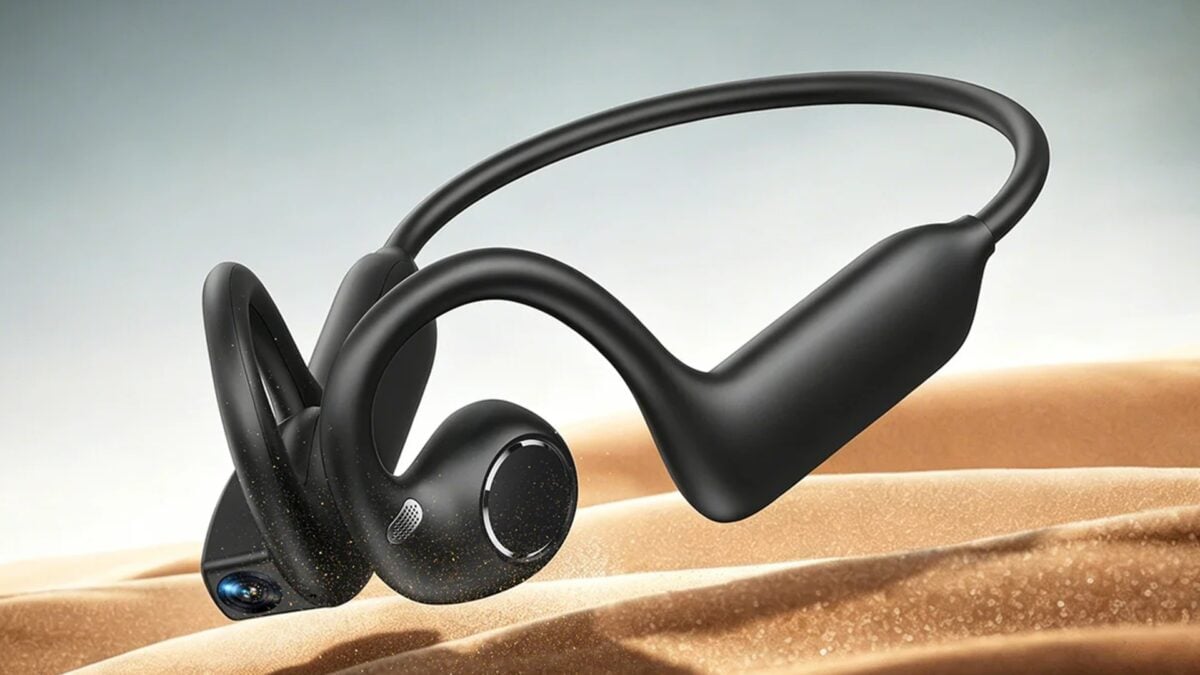
The sudden interest in smart glasses is creating a whole new category: open-ear headphones/earbuds with a camera on them. Quite a few pairs have already popped up. Take the X1 from a company called Auriview, for example, which bills itself as an “AI bone conduction headset.” This gadget, which you wear on your head, resembles bone-conducting earphones that you’d use for running or other exercises. The difference is that a 4K camera is sandwiched on the side, enabling computer vision similar to that of popular AI glasses made by Meta, as well as the ability to record video and take pictures.
According to Auriview, the X1 is a bit of a tank, allowing up to 30 hours of continuous music playback. The Ray-Ban Meta Gen 2 AI glasses, for comparison, have a maximum of eight hours of battery life, but that length plummets when continuous use like audio playback is taken into account.
The X1 is a bit of a Frankenstein. Other, similar gadgets have popped up over the past few months, and they’re just as odd. A company called Rollme, for example, has a device called the Aircam, a gadget that it bills as “3-1 AI camera earbuds.” Like the X1, the Aircam comes with a camera for recording and for computer vision, but it also highlights premium audio, in particular 16mm “hi-fi drivers” that can deliver “lossless” sound. This one definitely leans into the audio/wireless earbuds aspect of the form factor as well as the “smart glasses” of it all.
If neither the X1 nor the Aircam was enough to convince you that there’s a trend afoot, there are also recent gadgets like the MusicCam and the Mozin Fold M1 Pro, both of which follow a similar format: AI cameras that have a heavy dose of earbuds/headphones in their DNA. Mozin Fold M1 Pro
やっぱりこういう変態がいないと面白くない。
オープンイヤー型のイヤホンに横からニョキっとカメラが出てくる。
SoCはWQMicroのWQ7034(RISC-V) 40時間の連続再生が可能らしい。撮影は何時間だろう。
お値段は299ドル(4.8万円)[https://t.co/dw5KwuymkV][pic.twitter.com/GJD4s5dto1]— こたうち さんさん (@kotauchisunsun)

[June 26, 2026]
The whole idea seems a little ridiculous, but I guess it does make sense in one way: they’re not glasses. For someone who likes the feature set of smart glasses but doesn’t want to, you know, wear glasses, a headset like this would make sense. That being said, I have no idea who that hypothetical person would be. If you don’t want to wear smart glasses because you are, for example, afraid of looking like a dummy, I can’t see a big-ass headset with a camera jutting out solving the problem. Nothing about these headsets is discreet.
I also have questions about privacy. Smart glasses have come under fire for slapping cameras on people’s faces in a discreet form factor that enables the creepier people among us to record without being noticed. To help mitigate that creepiness, smart glasses companies have included LED indicators that tell others when the glasses are recording. It’s not a perfect solution, but it’s something, and it’s not even mentioned by the companies I listed above.
Many of the products I just mentioned are made by relatively unknown companies, some of which are being crowdfunded, so I wouldn’t bet on bone-conducting headsets with obnoxious cameras slapped on the side being the Next Big Thing, but the wearables space is clearly in a state of experimentation, so I’d buckle up. Things are likely to get weird.