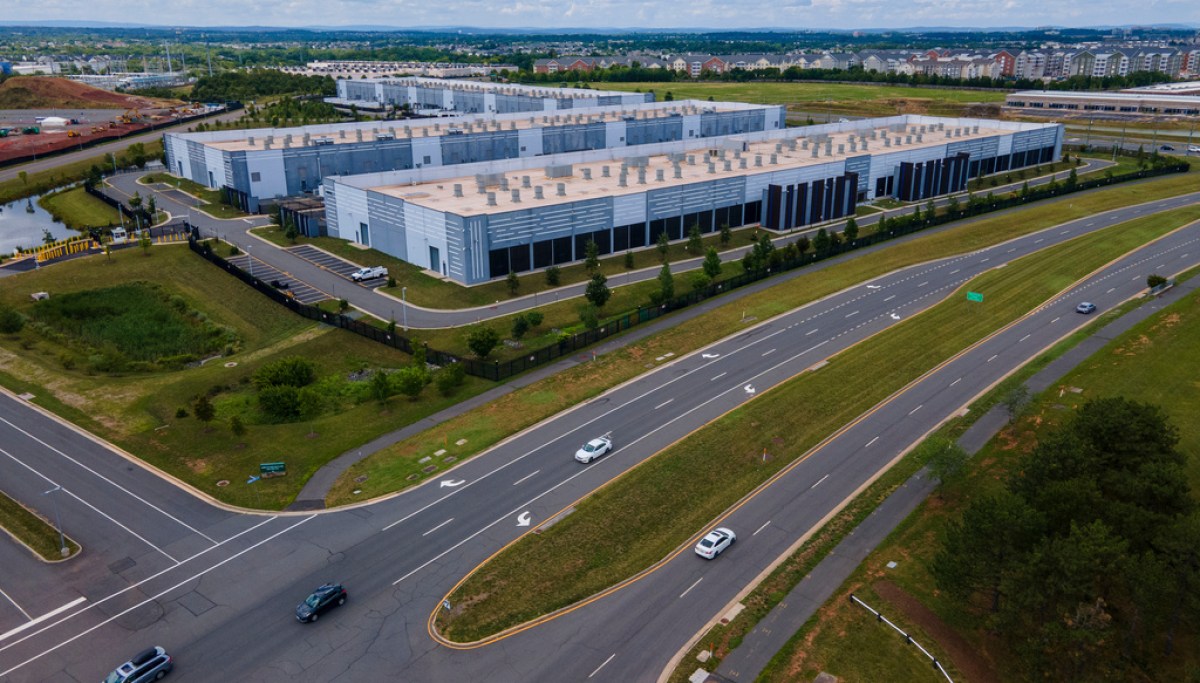
The scale of the AI data center build-out is staggering. Capital commitments have already hit hundreds of billions of dollars and are forecast to top a trillion by 2029, larger than the GDP of most countries. Massive campuses spread over thousands of acres are planned. As a microchip executive recently put it, “This is the largest scale infrastructure build-out in the history of humanity.” The question is, are we building the right thing?
The entire build-out rests on an unexamined bet: that the majority of growth in artificial intelligence will happen inside centralized data centers that must continue to expand if AI is to progress. Yet more AI is not synonymous with more data centers. By pretending it is, we’re locking ourselves into massively expensive infrastructure based on a snapshot of today’s technology, while the technology itself is moving toward smaller, local, specialized models.
Stay informed.Stay ahead. #
Join Washington Examiner for unlimited access to the news, analysis, and commentary that matter most.
[See Options](https://www.washingtonexaminer.com/subscribe/digital/)

Already a member? [Log in](https://www.washingtonexaminer.com/sign-in/)
In the first inning of the AI age, centralized, cloud-based systems such as those at OpenAI and Anthropic have made headlines and have reached enormous valuations. But the technology is still new, and the architecture that ultimately wins this race hasn’t been decided yet.
There are many problems with the centralized cloud model, even aside from the fact that few of AI’s biggest companies are profitable.
For one, asking a single model to answer every question in every situation is neither practical nor cost-effective. The same is true with people. Is it better to have one intelligent generalist who answers every question and tackles every problem, no matter what field or discipline it’s in? Of course not. The world is vastly complex, and the intelligence built to navigate it should be too. That’s why specialization produces our greatest scientists. Katalin Kariko spent four decades researching a single molecule — messenger RNA — during which time she was demoted and her research was defunded. Decades later, her research formed the basis of the COVID-19 vaccine that saved hundreds of millions of lives. Gregor Mendel spent his life studying pea plants and unlocked inheritance and population genetics. The pattern holds in engineering, too. Nobody designs a jet engine from a survey course. It takes years inside a system to understand it, let alone design a new one. AI is no different. Expertise comes from depth. Asking a single model to do everything means settling for mediocrity everywhere.
At the same time, centralizing AI compute in a few massive data centers makes critical infrastructure vulnerable to cloud outages or targeted cyberattacks. Renting rather than owning its AI infrastructure makes each company beholden to someone else’s operations, pricing, and priorities. Critical industries, from aviation to energy to defense and healthcare, depend on secure data that live as close to their operations as possible.
Feeding proprietary operational data into servers hundreds of miles away is not only impractical but also often illegal, a direct conflict with the data sovereignty and compliance rules these industries already operate under. And who wants to risk putting their custom and copyrighted trade secrets into an AI system that could be jailbroken by competitors or even geopolitical enemies?
As AI becomes increasingly sophisticated, it will become less centralized. This pattern is common across technology and innovation. When television was first introduced, everyone watched the same few channels, until the technology matured and shows became more audience-specific, with thousands of offerings to choose from.
AI is already moving in that direction, with smaller, more efficient models tailored to a specific product, company, or industry. Running on a computer or a phone, rather than at a distant data center, they leverage existing hardware to make AI setup minimal and cheap.
It’s natural for companies to want to own their own intelligence. In a free market, who wants to run the same AI model that everyone else has? In the early days of computers, organizations would lease mainframes from companies such as IBM until costs came down enough to buy PCs and servers outright. Owning the technology makes fine-tuning and repeated iteration possible, which companies can control and use to their advantage.
Bespoke models run at a fraction of the cost, because they don’t need to be capable of every task imaginable. Overcoming the tyranny of distance, latency all but disappears as real-time processing becomes the default instead of the exception.
A hospital intensive care unit’s monitoring system, for instance, needs to flag a patient crash in milliseconds, a task that can’t tolerate a round-trip to a distant data center, let alone an outage. It also depends on sensitive patient health data that are safer staying within the hospital’s own walls than on outside servers.
Of course, there may always be some demand for large models for specific tasks that require generalized intelligence. But the majority of commodity work will not run through data centers. It will be owned by individual companies and live on-site. Specialized expert models are better for mission-critical work.
OPINION: AN AI CAMERA ERROR PUT A BABY AT GUNPOINT. WARRANTLESS SURVEILLANCE HAS GONE TOO FAR But the trillion-dollar data center build-out recklessly assumes that AI can only scale one way: by getting bigger, more centralized, and all-encompassing, dependent on infrastructure hundreds of miles from where the intelligence is put to work.
The bountiful fruits that AI can deliver may well call for the largest scale infrastructure build-out in the history of humanity. That’s why it’s imperative that we build for the AI future that’s actually coming.
David Stout is the CEO and Founder of webAI, the first end-to-end private AI platform.