AMD's comeback story keeps getting stronger, and it couldn't come at a better time for an AI industry struggling to meet out-of-control demand for compute.
On Thursday, AMD unveiled its next-generation "Venice" CPUs, officially dubbed the EPYC 9006 Series. It's a whole family of products aimed at matching the right CPU with the right workloads. These server CPUs are especially aimed at AI agents and high-performance computing (HPC).
Photo: Jason Hiner
The AI industry is paying attention to what Venice will mean for agents, which have exploded in popularity this year and deepened the compute crisis by massively increasing demand for infrastructure. Research has shown that agents can consume 1,000x more tokens than standard chatbot queries.
And while large language models and chatbots rely heavily on GPUs, where Nvidia is the clear market leader, agentic workloads lean much more on CPUs for orchestration, feeding GPUs, and powering the enterprise services and tools that agents use to get work done.
And in server CPUs, AMD rose to 46% market share of x86 server revenue and 33% of unit shipments in Q1 2026, according to Mercury Research. That's a continuation of its remarkable decade-long comeback story under CEO Lisa Su. Su, who became CEO in 2014, decided in 2017 that AMD needed to re-enter the server CPU market and make it a top priority. At that point, its market share had fallen to 0%. So approaching 50% nine years later speaks to how well the market has responded to the quality of its products.
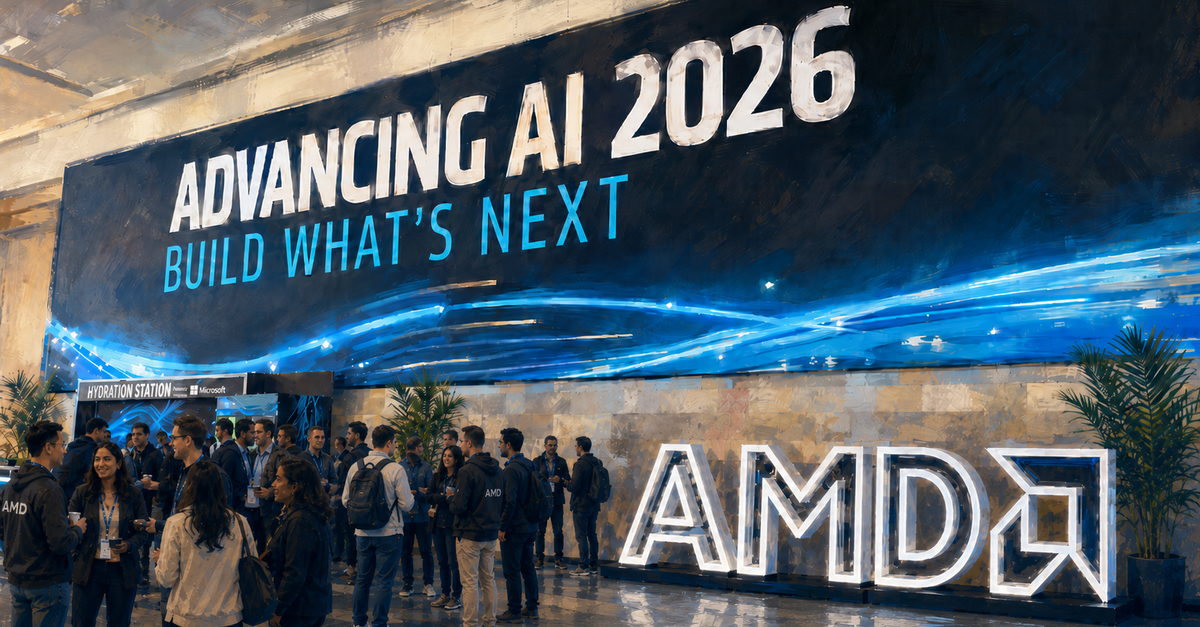
"I'm very happy to say Venice is in full production," AMD CEO Lisa Su announced on Thursday at the keynote of its Advancing AI event in San Francisco. "Customer demand is incredible. It's the strongest we've ever seen for a new EPYC generation. We're seeing every major server OEM and every major cloud provider on track to begin rolling out in the fourth quarter, as we start with the broadest EPYC launch we've ever had."
The performance of Venice has even surprised AMD, which found that the high-end version of its chip offers 2.2x the performance per core than Nvidia's comparable Vera processor. That kind of power and efficiency will be welcomed by hyperscalers and neoscalers looking to boost performance and/or reduce the cost of their intelligence-per-watt.
While AMD now offers Helios as a full rack-scale AI system to match Nvidia's industry-leading Grace Blackwell and Vera Rubin racks, the reality is that many server rooms and cloud providers go with best-of-breed options for AI by running AMD CPUs and Nvidia GPUs. That includes leading hyperscalers AWS, Microsoft Azure, and Oracle and neoscaler Lambda.
Our Deeper View #
Make no mistake, Nvidia remains the dominant player in AI accelerators with 90% market share, because those are still mostly focused on GPUs. And Nvidia will likely remain the leader there for years to come. But AI workloads are transforming with the rise of agents, which will foundationally shift the compute and infrastructure needed to power AI. The voracious demand for compute shows no sign of slowing down, but the industry is becoming much more conscious about efficiency and cost. The pressure will continue to be on companies like AMD and Nvidia to deliver breakthroughs in performance while lowering the cost of intelligence-per-watt. The other thing to keep an eye on is how AMD's more open ecosystem play (ROCm) will continue to contrast with Nvidia's vertical integration (CUDA) to attract different players and partners, and what that part of the rivalry will mean for the shape of the AI ecosystem as it evolves.