Tech giants are negotiating community benefit agreements worth billions as AI-driven energy demand reshapes local power grids and raises costs for consumers.
The biggest infrastructure buildout in a generation isn’t being negotiated in corporate headquarters. It’s happening in town council meetings across the Midwest, where Amazon and Microsoft are sitting down with local officials to hammer out deals that promise jobs, tax revenue, and renewable energy in exchange for something increasingly precious: permission to consume enormous amounts of electricity.
The new community contract #
Microsoft fired the first formal shot in January 2026 with its “Community-First AI Infrastructure Initiative,” a framework built around five core commitments. The company pledged to minimize electricity cost impacts from its data centers, pursue sustainable water use, fund local education programs, and create jobs in the communities where it builds.
In West Des Moines, Iowa, a Microsoft CBA is projected to generate over $2 billion in tax revenue. The deal also promises at least 3,000 construction jobs and 400 permanent positions.
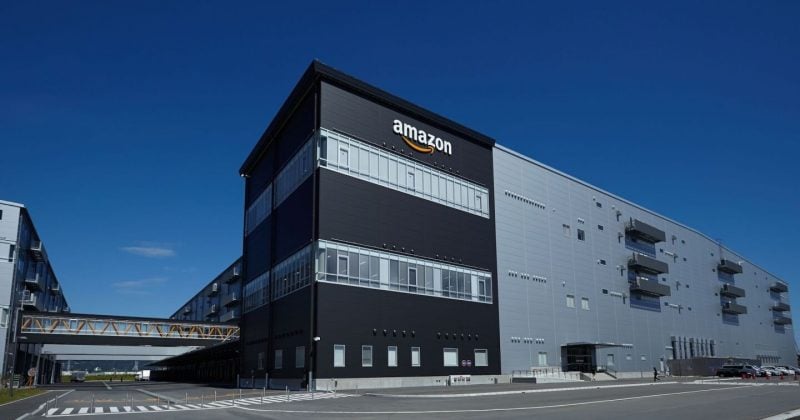
Amazon, meanwhile, went even bigger in northern Indiana. The company committed $15 billion to a data center complex that would create 1,100 new jobs and fund utility infrastructure upgrades alongside K-12 STEM education programs.
The $29 billion electricity problem #
PJM Interconnection, the regional grid operator covering up to 14 states across the mid-Atlantic and Midwest, has tied data center demand to roughly $29 billion in added electricity costs for utility customers since capacity auctions ramped up in 2024. The latest capacity auction in June 2026 alone is estimated to add $6.3 billion in impact through 2028.
Where crypto mining fits into the picture #
Crypto mining operations, particularly those connected to ERCOT (the Texas grid operator), act as large-load demands that contribute to the same infrastructure strain and consumer cost pressures. Every megawatt consumed by a Bitcoin mining facility is a megawatt that Amazon or Microsoft would happily pay a premium for. And unlike miners, whose revenue fluctuates with token prices and halving cycles, hyperscalers can sign 15-year power purchase agreements backed by trillion-dollar balance sheets.
Some miners have pivoted to offering flexible load services, essentially agreeing to shut down during peak demand in exchange for cheaper rates. Others are relocating to regions with surplus renewable energy.
What this means for investors #
For crypto miners and related equities, the key risk is displacement. As hyperscalers lock up power capacity through long-term contracts and community agreements, the available supply for mining operations shrinks. Companies like Riot Platforms and Marathon Digital have already been diversifying into AI hosting for exactly this reason. Investors should watch two things closely. First, how PJM and other grid operators handle capacity pricing as data center demand continues to climb through 2028. Second, whether state legislatures start mandating CBAs as a condition for data center permits, which would formalize the cost of doing business and potentially squeeze out operators who can’t afford to play the community investment game.
Disclosure: This article was edited by Editorial Team. For more information on how we create and review content, see our