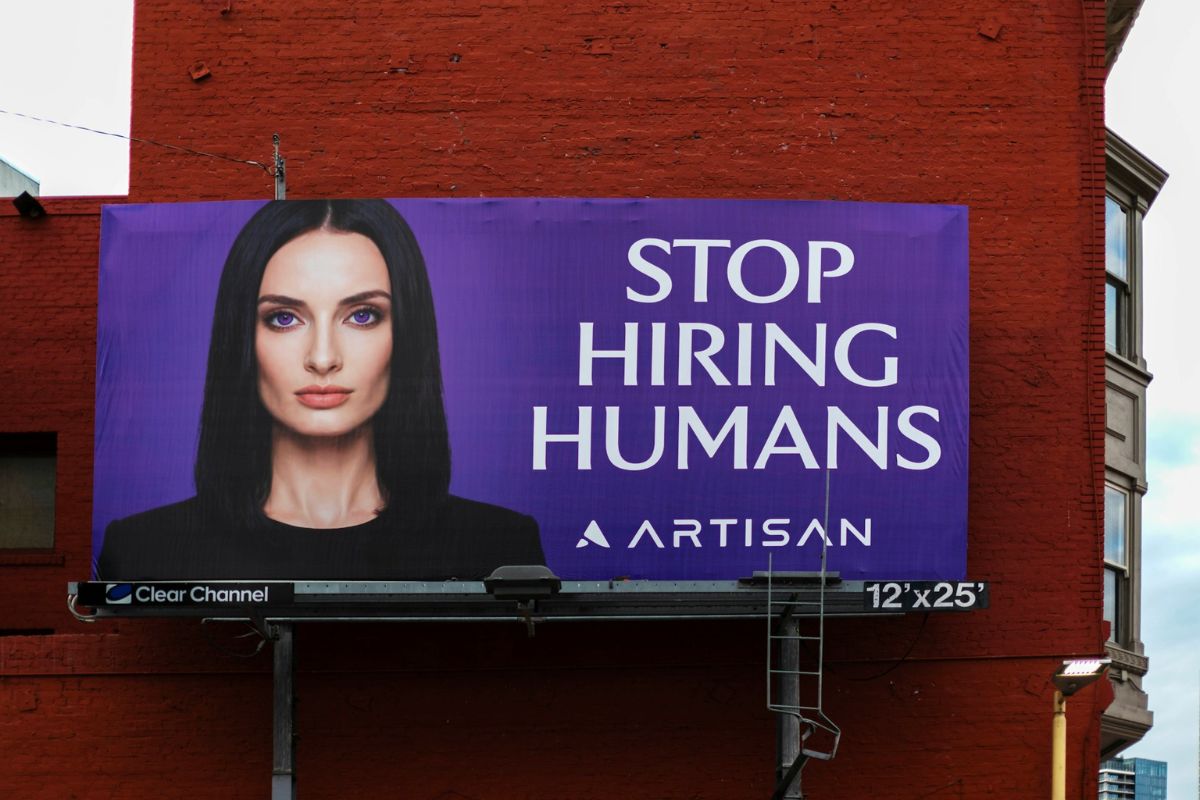
A new survey reveals that 43% of managers have let AI finalise cuts without human review #
Artificial intelligence is increasingly being used to influence who loses their job at large US companies, with a July 2026 survey finding that 59% of managers use AI in layoff decisions. More strikingly, 43% of those managers said they had allowed an AI system to finalise a layoff decision without human review.
The figures come from a survey conducted by ResumeTemplates of 1,000 managers at US companies with more than 500 employees. The findings offer a glimpse into how quickly AI has moved from assisting workplace decisions to potentially determining the fate of employees, even as questions remain about oversight, bias and who is ultimately accountable when the technology gets it wrong.
AI Layoff Decisions Are Moving Beyond Human Oversight #
The survey found that 24% of managers use AI for layoff decisions often or all the time. Another 20% said they use AI for tasks that were previously carried out by colleagues or contractors.
Yet the most troubling finding may be what happens after the recommendation is produced.
Some managers are allowing the system to make the final call.
Julia Toothacre, chief career strategist, questioned how such decisions can be defended when organisations do not know exactly how their systems reach conclusions.
'When the managers using AI were never trained on it and the company cannot confirm the tool was tested for bias, there is no way to know what it weighs or whether the decision is defensible,' she said.
The survey found that 58% of managers could not confirm whether the AI tool they used had been tested for bias before being deployed. Meanwhile, 38% said they had received no ethical training on the technology.
That creates an uncomfortable gap between adoption and accountability. A company can use an algorithm to rank workers, assess performance or recommend redundancies, but responsibility does not disappear simply because a machine produced the recommendation.
Recent layoffs have repeatedly been linked to AI investment or efficiency. Oracle disclosed that its workforce had fallen by roughly 21,000 employees over 12 months, representing a 13% reduction, and said in a regulatory filing that the adoption and deployment of AI technologies had resulted, and could continue to result, in workforce reductions.
The company is now reportedly preparing another round of cuts in August while spending heavily on AI infrastructure. Some teams could face double-digit percentage reductions, according to reports citing an internal document. Oracle has declined to comment on the reported plans.
AI Job Cuts Are Spreading Across Corporate America #
Oracle is hardly alone. Amazon eliminated 16,000 corporate positions in January, while Salesforce has reduced staffing as it expands the use of its Agentforce AI technology. Block cut about 4,000 jobs in February, nearly half its workforce, with chief executive Jack Dorsey explicitly citing AI-enabled productivity and smaller teams as part of the company's evolving model.
Meta also cut around 8,000 employees in May while moving thousands of workers into new AI-focused positions. Intuit announced plans to eliminate roughly 3,000 jobs, around 17% of its workforce, as it redirected resources towards AI. GitLab cut about 350 positions while investing in infrastructure intended to support AI workloads.
But the relationship between AI and layoffs is not always straightforward.
Etsy, for example, eliminated approximately 220 jobs in August, primarily affecting its Product and Engineering teams. Chief executive Kruti Patel Goyal explicitly said the decision was not driven by AI. Zillow also cut more than 500 employees in August, but said AI was not the reason for the reductions.
That distinction matters because companies can be cutting staff for several reasons at once, including restructuring, weaker demand, cost pressures and changes in strategy. Multiple media reports this week stated that more than 180,000 jobs have reportedly been lost to AI since May 2023, including 112,000 in 2026, while also warning that companies may sometimes cite AI when financial or strategic pressures are driving reductions.
The labour market is facing another pressure too. The survey cited research suggesting that monthly job creation required to keep unemployment stable could reach zero by 2027, with negative net job growth forecast for 2028.
For workers, that makes the question of who controls AI-assisted employment decisions increasingly important. If an algorithm recommends that an employee should go, and a manager simply approves the recommendation, the distinction between a human decision and a machine decision starts to become difficult to see. With 43% of surveyed managers already saying they have allowed AI to make a layoff decision without human review, that boundary may be disappearing faster than companies' governance systems can keep up.
© Copyright IBTimes 2025. All rights reserved.