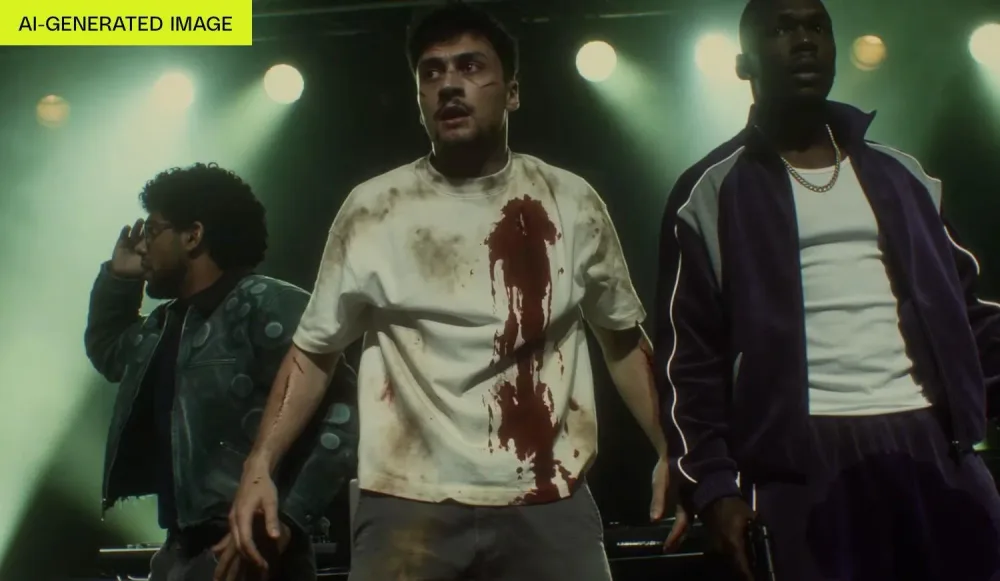
The problem is that current generative video models don't actually understand "timing" or "irony." They understand pixels and motion vectors. When you see an AI movie that actually feels engaging, it's almost always because a human editor spent hours trimming frames to create a rhythmic beat or wrote a script that understands the slow burn of a joke before the punchline. The AI provides the "skin," but the human provides the "skeleton."
If you're trying to build an AI workflow for storytelling, you have to treat the LLM and the video generator as raw material providers, not directors. Here is a practical approach to integrating these tools without losing the human soul of the project:
The Human-Centric AI Workflow #
-
The Narrative Anchor: Write your script using a tool like Claude Code or a high-reasoning LLM, but manually rewrite every dialogue beat. AI tends to write "movie-speak" (clichés) rather than how people actually talk in a pub.
-
The Visual Storyboard: Generate your keyframes first. Instead of letting the AI decide the camera movement, use specific prompt engineering to define the focal length and angle.
-
The Edit (The Critical Step): This is where the movie is actually made. Use a traditional NLE (Non-Linear Editor) to force the pacing. AI video is often too "floaty"; cutting it aggressively against a beat is the only way to make it feel intentional.
Comparison of AI-led vs. Human-led production: Visual Consistency: AI-led is erratic; Human-led uses seeds and consistent character references to maintain a look.Pacing: AI-led feels like a dream sequence (slow, drifting); Human-led feels like a movie (sharp cuts, purposeful timing).Emotional Resonance: AI-led is generic "epicness"; Human-led focuses on small, weird human details that create empathy.
We are reaching a point where the technical barrier to "making a movie" is zero, but the barrier to making a
goodmovie is actually higher because the noise is so loud. The tools are incredible for rapid prototyping and deployment of visual ideas, but the soul of cinema remains the human ability to know exactly when to cut to the next shot.
Next NanoClaw just wiped 1,400 CVEs from their container images →