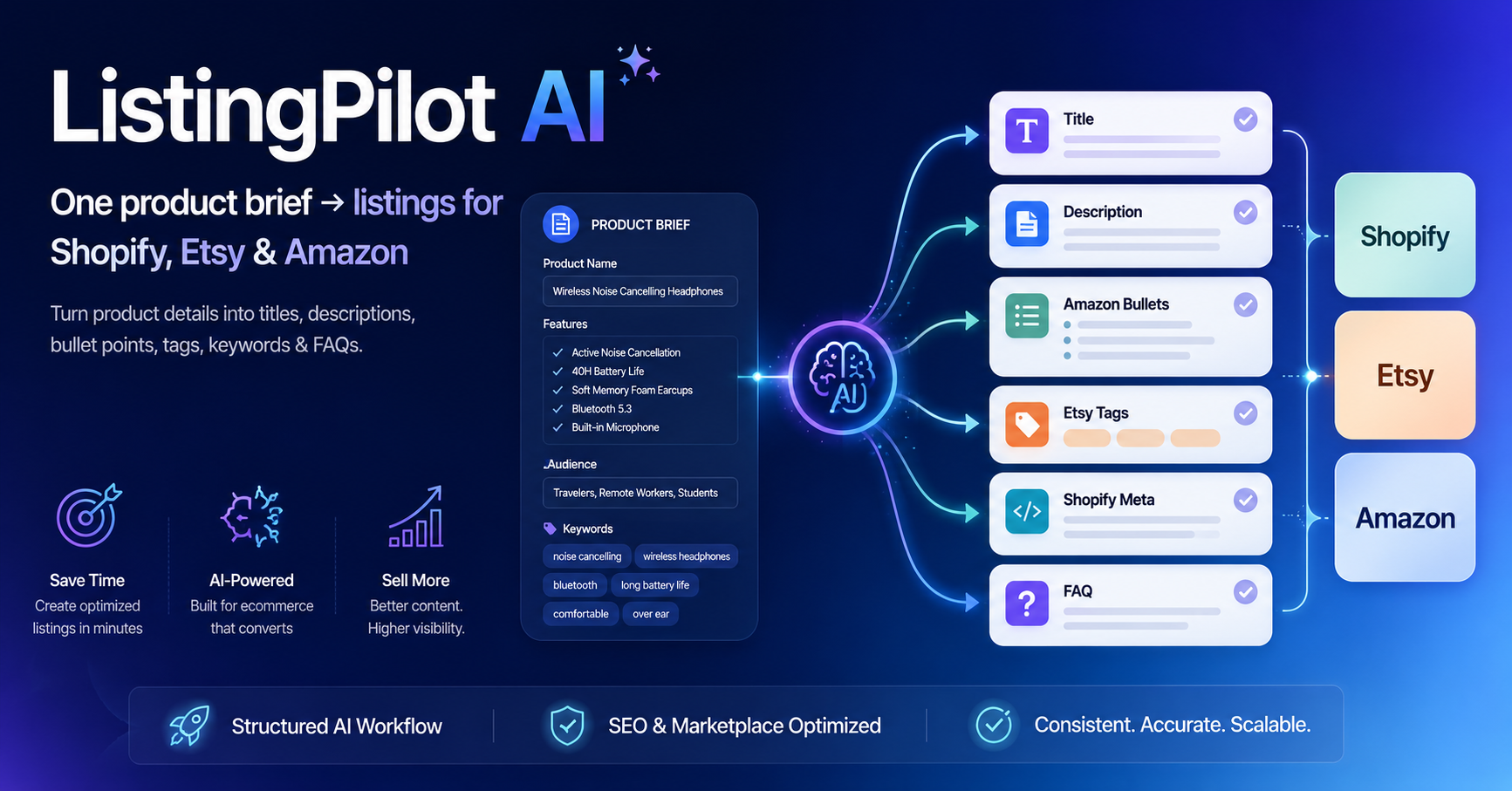
The core problem is "platform friction." An Amazon listing needs a different structure than a Shopify page or an Etsy description. Instead of manually tweaking the same set of features ten times, this tool takes one set of product specs and pivots the output based on the target marketplace.
For those looking for a practical tutorial on how to implement this kind of AI workflow, the logic follows a basic transformation pipeline:
-
Input Layer: Collect raw product attributes (material, dimensions, key benefits).
-
Context Layer: Define the target platform (e.g., "eBay - Professional" or "Instagram - Hype").
-
Generation Layer: Use a structured prompt to map attributes to platform-specific templates.
If you're trying to build this from scratch, your prompt engineering should focus on constraints. Instead of asking the AI to "write a description," tell it: "Convert these 5 bullet points into a 150-character Shopify meta-description using high-intent keywords." This is a massive win for anyone managing multi-channel e-commerce. It transforms a three-hour writing session into a five-minute review process. If you're struggling with content bottlenecks, moving toward an LLM agent that handles these variations is the most efficient path forward.
Next BrainFeed: Turning Doomscrolling into Learning →