Every comparison to prior technology hides the real difference. #
Posted July 17, 2026 [ Reviewed by Kaja Perina
](https://www.psychologytoday.com/us/docs/editorial-process)
Key points
- Writing externalized memory. Print externalized distribution. AI externalizes the reasoning itself.
- A technology that externalizes what you know is not the same as one that externalizes how you think.
- The analogies persist because they let institutions deploy AI without asking what students bring to it.
I was mid-sentence during a webinar on protecting developmental space, discussing the difference between adult and child cognitive off, when a comment appeared in the chat. "AI is just a thinking partner," someone wrote. "It's a tool you bounce ideas off of."
Nearly 10 thumbs up reactions added to the comment. It’s a phrase I’ve seen or heard in person dozens of times this past year, and in that moment, I knew I was watching the most dangerous analogy in education spread once again in real time.
I didn't really push back on the comment. I said something live about context mattering, and about expertise shaping the interaction, then moved on. I regretted it after because that framing of AI as a thinking partner, AI as a calculator for words, AI as just another tool, is now pervasive across conference speaking, PD sessions, and many of the conversations I have. Even Sam Altman has used the calculator comparison repeatedly. The logic is always the same: Calculators didn't destroy math. They freed us up for calculus and physics. AI will do the same for language and reasoning.
Are they right? Is AI just a calculator for words?
Calculator Vs AI #
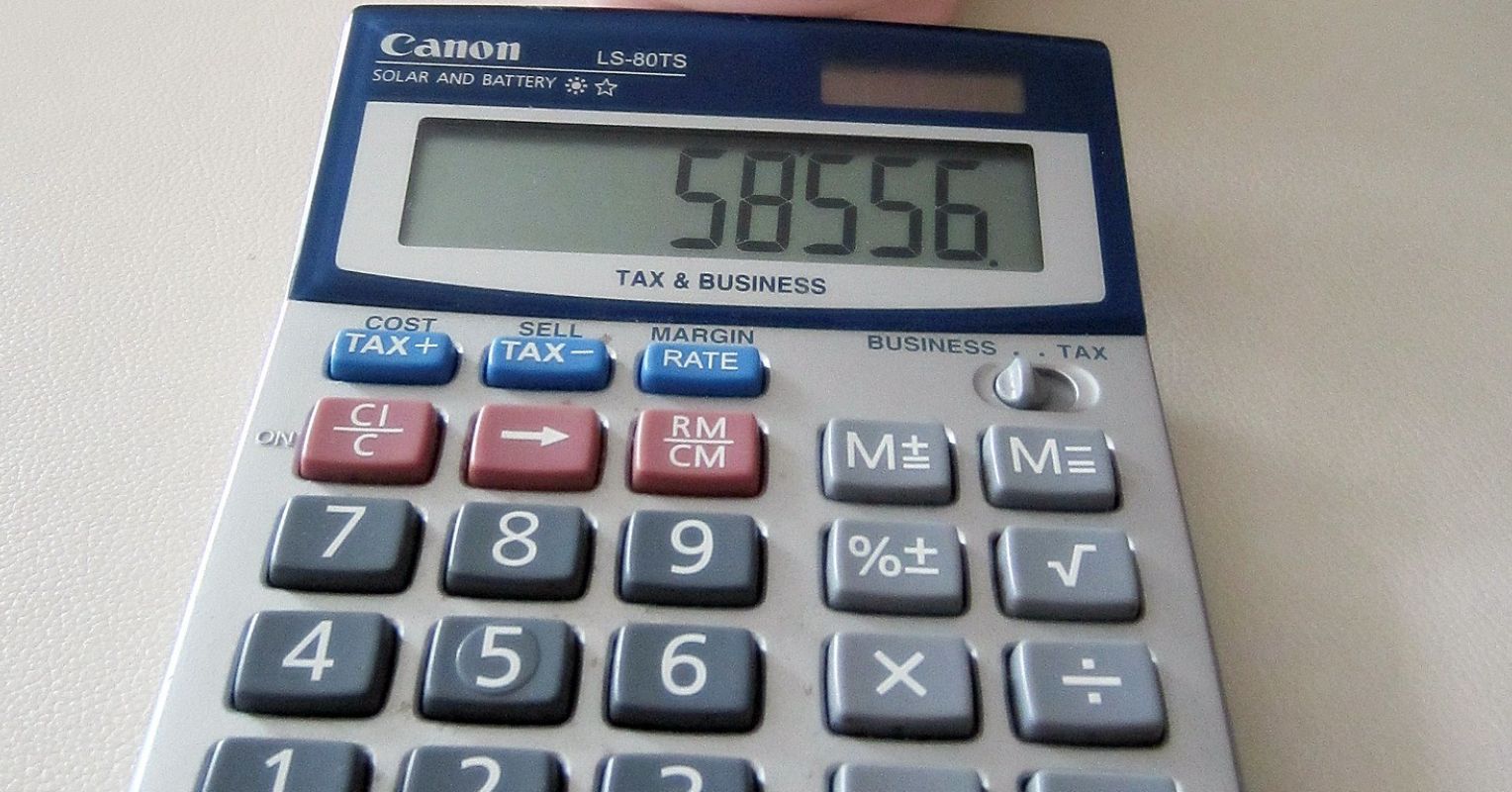
Think about the mechanics of a calculator. You give it defined inputs. 4x5. You push enter and it produces a verifiable output: 20. You can check that answer instantly because you understand the operation. You chose the operation because you already possessed the mathematical reasoning to know it was the right one.
In this common situation, the human is the architect. The calculator processes the formula. You still need to know that multiplying length by width gives you the area of a room. The calculator just handles the actual math. This is what makes a calculator a genuine delegation tool. You retain judgment. You direct the machine. The machine executes within parameters you set and understand. It’s impossible to use a calculator successful to solve a function you don’t understand how to write in the first place.
But AI obliterates this relationship. If you ask an AI to evaluate research sources, assess the credibility of a claim, or write an email to your boss, you are not asking it to execute an objective operation but to make a judgment. And therein lies the problem that collapses the entire calculator analogy. You cannot verify the AI's judgment without understanding the foundational cognitive work yourself. If you can't verify the output without redoing the exact mental labor you were trying to save, the tool is replacing your thinking entirely. That's the opposite of delegation. It's substitution.
The Richter Scale Function #
I spoke about this test in a recent podcast to illustrate why there is a difference. You cannot use a calculator to compute the difference between a magnitude 5 and a magnitude 7 earthquake unless you already know that the Richter scale is logarithmic. The calculator requires you to possess that conceptual knowledge before it can be useful. Without that knowledge, the calculator is useless.
AI will happily tell you the difference. It will generate a fluent, confident, accurate sounding answer. And if you lack the domain expertise, you may agree and move on. But the actual gap between those two numbers is the difference between a tremor that you barely feel and an event that levels buildings and triggers mass evacuation. A seismologist asking the same question will see AI's output differently. She checks it against existing expertise. She notices if the model oversimplifies the amount of energy released. She may look at other factors like depth and soil composition. This is auditing.
It’s all about what the user brings to the interaction. Expertise determines whether AI functions as a force multiplier or a cognitive bypass. Without it, the user has no mechanism to distinguish a correct output from a plausible one.
Plausibility Is Not Knowledge #
I was reading a recent article published in *The Conversation *and Eldin Milak is technically correct that LLMs are "word calculators". Yet, I'm seeing that danger lives on the other side of what a machine technically does because LLMs sound so fluent and confident, they bypass our internal credibility filters. They give us the feeling of knowing something without requiring us to do the work of actually knowing it.
A 2025 preprint by Shen and Tamkin tested this directly when they gave software developers a new, complex coding library to learn. Half received AI assistance. Half worked through it themselves. The developers who fully delegated the coding tasks to AI produced functional code that ran and passed tests. They were done by mid afternoon and I imagine probably felt efficient. Then, the researchers gave them a conceptual quiz, and the delegators failed and when asked to debug the code the AI had written for them, they could not do it.
Artificial IntelligenceEssential Reads They had the output but not the understanding. Productivity will never be a shortcut to competence.
The “AI Tool” Problem #
The calculator debate, the "tool" debate, the "thinking partner" debate — all of it focuses on the wrong variable. It focuses on what the technology is. Isn't the more important question what the user knows?
I've watched this framing spread so rapidly and every time I want to interrupt. Most times, I don't, because the analogy feels so intuitive that challenging it sounds like you're just antagonizing. But when we tell teachers and parents that AI is "just a calculator," we are implying that the user retains control of the thinking. For an expert, that may be true. For a developing mind encountering a new idea for the first time, it is almost certainly false.
So the next time someone tells you AI is just a calculator for words, ask them one question…Can you verify the output without doing the work yourself?
References
Milak, E. (2025, September 9). Actually, AI is a 'word calculator' – but not in the sense you might think. The Conversation. https://theconversation.com/actually-ai-is-a-word-calculator-but-not-in-the-sense-you-might-think-264494
Shen, J. H., & Tamkin, A. (2026). How AI impacts skill formation [Preprint]. arXiv. https://doi.org/10.48550/arXiv.2601.20245