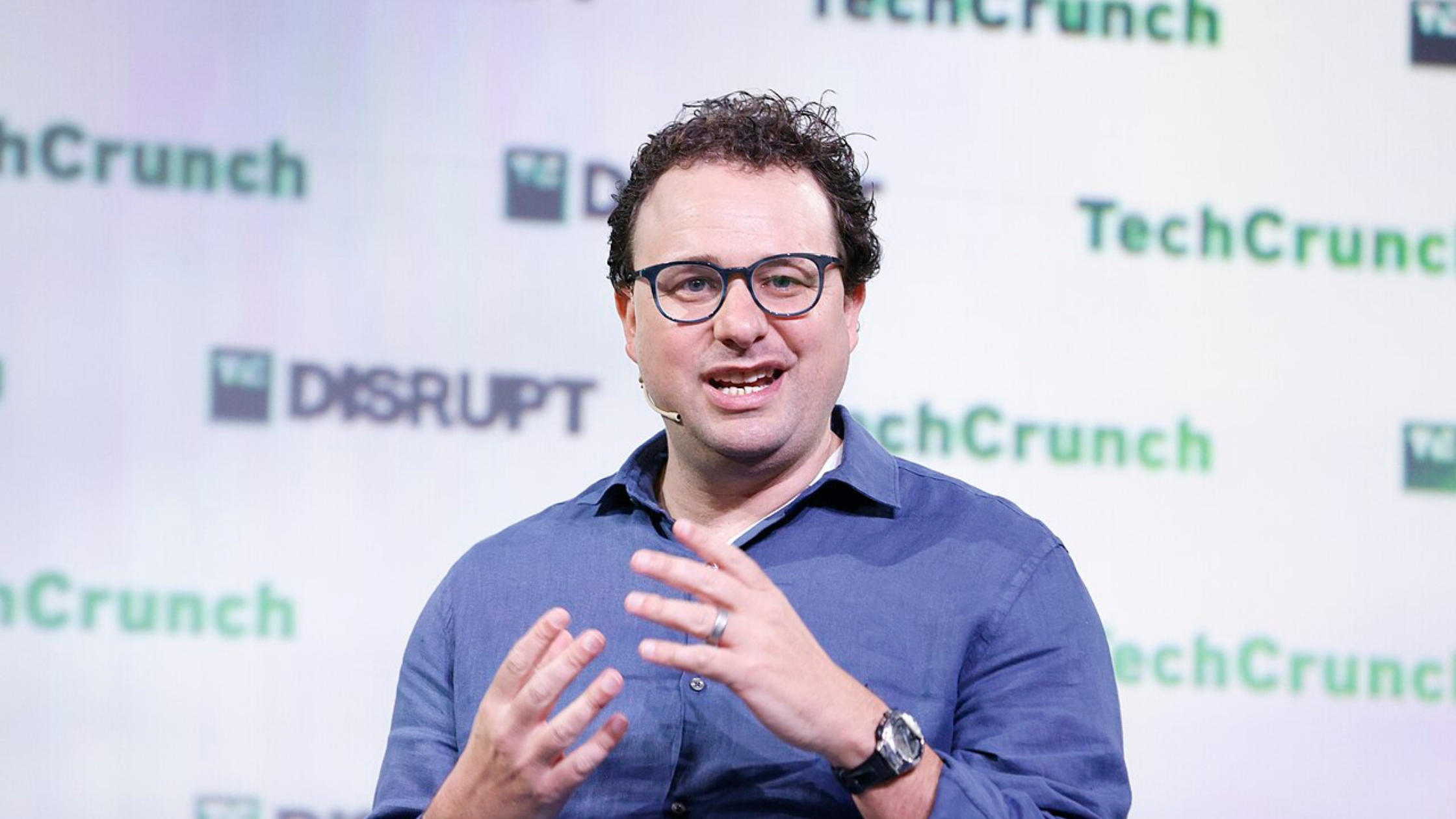
Amodei's vision for AI extends beyond chatbots, with advanced systems helping scientists make medical discoveries much faster #
For patients living with cancer, Alzheimer's and other serious diseases, time can be brutally important. A treatment discovered a decade earlier can change the course of a life. Anthropic chief executive Dario Amodei believes artificial intelligence could eventually make medical discovery move at a dramatically faster pace. In his 2024 essay 'Machines of Loving Grace,' Amodei argued that powerful AI could increase the rate of biological discovery by at least 10 times. He suggested that 50 to 100 years of biological progress could potentially be achieved within five to 10 years. It is a remarkable prediction, but it is important to understand what Amodei is actually claiming.
He is describing a future in which highly capable AI systems could perform much more of the work involved in scientific research. He is not saying today's AI will simply produce cures for cancer or Alzheimer's within a fixed number of years.
How AI Could Speed Up Medical Research #
Amodei's vision goes well beyond asking an AI system to summarise medical papers. He believes advanced systems could generate scientific hypotheses, design experiments, analyse results, and recommend what researchers should investigate next. That could change the economics and speed of biological research.
Scientists currently spend enormous amounts of time analysing data and deciding which experiments are worth pursuing. A sufficiently capable AI system could examine far more possibilities and help researchers focus their laboratory work on the most promising ones. Anthropic has already begun pursuing this direction.
The company launched an AI for Science programme focused on helping researchers use AI in areas including biology, genetics, and drug discovery. But there is a major limitation. Biology happens in the physical world.
An AI can suggest an experiment in seconds. Scientists still need to conduct it, measure the result, and establish whether the finding can be reproduced.
Cancer and Alzheimer's Could Be Major Tests #
Cancer is one of the areas where faster biological discovery could have an enormous impact.
Cancer is not a single disease. Different cancers have different biological causes and respond differently to treatment. Understanding those differences requires vast amounts of biological data and extensive experimentation. AI could help researchers identify patterns, explore possible drug targets, and generate new hypotheses.
Alzheimer's presents another difficult challenge. Scientists still face major questions about the biological processes involved in the disease. Better models and faster analysis could help researchers investigate those mechanisms more efficiently.
Amodei has also discussed potential advances against infectious diseases, genetic disorders, heart disease, and diabetes. He has even linked accelerated biological research to longer human lifespans. Those possibilities, however, remain forecasts.
Amodei's Prediction Is Not a Cure Timeline #
This distinction is crucial. Even if AI identifies a promising treatment, it does not automatically become medicine. Researchers must test whether it works. They must establish its safety. Clinical trials can take years. Manufacturing must be developed, and regulators must review the evidence before treatments can reach patients.
Amodei has acknowledged that his most ambitious predictions have not yet been achieved. In a July 2026 interview with STAT, he said AI had not reached a point where it was producing the equivalent of 10 years of scientific progress every year. He pointed to limitations involving current AI capabilities, researchers' ability to use the technology, and the infrastructure surrounding scientific research.
That admission provides important context. The idea of compressing a century of medical progress into a decade is a long-term vision, not a promise that patients will receive cures on a particular schedule.
Why the Issue Is Personal for Amodei #
Amodei's optimism about medical AI also has a personal dimension. He has spoken about losing his father to hepatitis C only a few years before effective direct-acting antiviral treatments became available. Amodei has described the experience as an example of how the timing of medical breakthroughs can affect patients.
A breakthrough can exist, but patients who become ill before it arrives may never benefit from it. Amodei has linked his experience to his belief that accelerating scientific discovery could have consequences far beyond technology.
The Real Race Is Against Time #
Anthropic's work with scientific institutions suggests that AI is already becoming part of the research process. In February 2026, the company announced partnerships with the Allen Institute and Howard Hughes Medical Institute to explore AI applications in biological research. The partnerships are part of Anthropic's wider effort to apply AI to scientific research.
The question now is not simply whether AI can help scientists. It is how much faster science can become when AI systems grow capable of handling increasingly complex parts of the research process. For cancer and Alzheimer's patients, that distinction matters.
Amodei's prediction may ultimately prove too optimistic. But if AI can shorten the path from scientific discovery to proven treatment, its impact could extend well beyond technology.
© Copyright IBTimes 2025. All rights reserved.