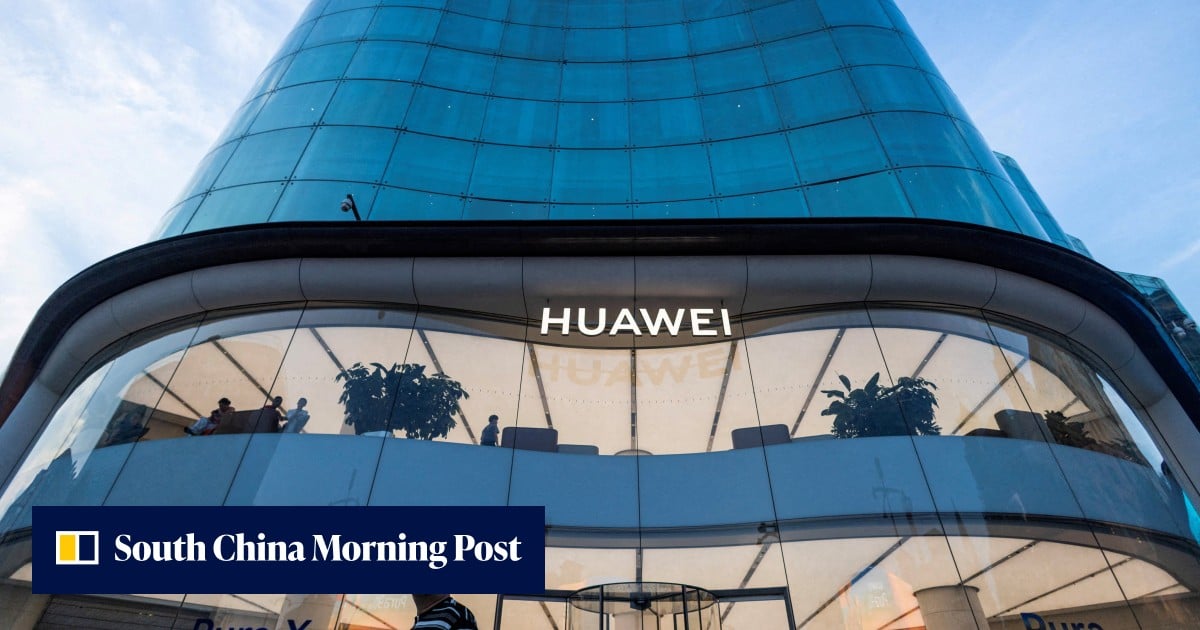
Company claims it has the industry’s first 7.2-terabit-per-second NPO module, as firms race to set next-generation AI infrastructure standards
artificial intelligenceinfrastructure, staking an early claim in the race to set standards for next-generation data centre connections.
The Shenzhen-based tech giant showcased what it called the industry’s first 7.2-terabit-per-second (Tbps) near-packaged optics (NPO) product at the China International Optoelectronic Exposition (CIOE) in Shenzhen this week.
The technology replaces traditional copper wiring with light-based signals to shuttle vast amounts of data between AI processors at higher speeds and lower power consumption than current systems.
As AI clusters grow to include thousands of interlinked processors, conventional copper connections are hitting physical limits in bandwidth, transmission distance and power efficiency. NPO aims to solve this by bringing optical components closer to network switching chips, shortening electrical connections and reducing signal loss and power consumption.
Huawei’s module combined 36 channels operating at 200 gigabits per second each, giving it an aggregate bandwidth of 7.2Tbps, according to Man Jiangwei, director of Huawei’s advanced optoelectronics laboratory.
The capacity puts the module among a new generation of high-density optical interconnect products emerging for AI systems, alongside 6.4Tbps optical engines developed for co-packaged optics by US chipmaker Broadcom.
“We have already fully entered the product development stage,” Man said in an interview with the South China Morning Post on Thursday. “Once the whole supply chain and manufacturing system is in place, I believe it won’t be long before we can move quickly into volume production.”