Member-only story
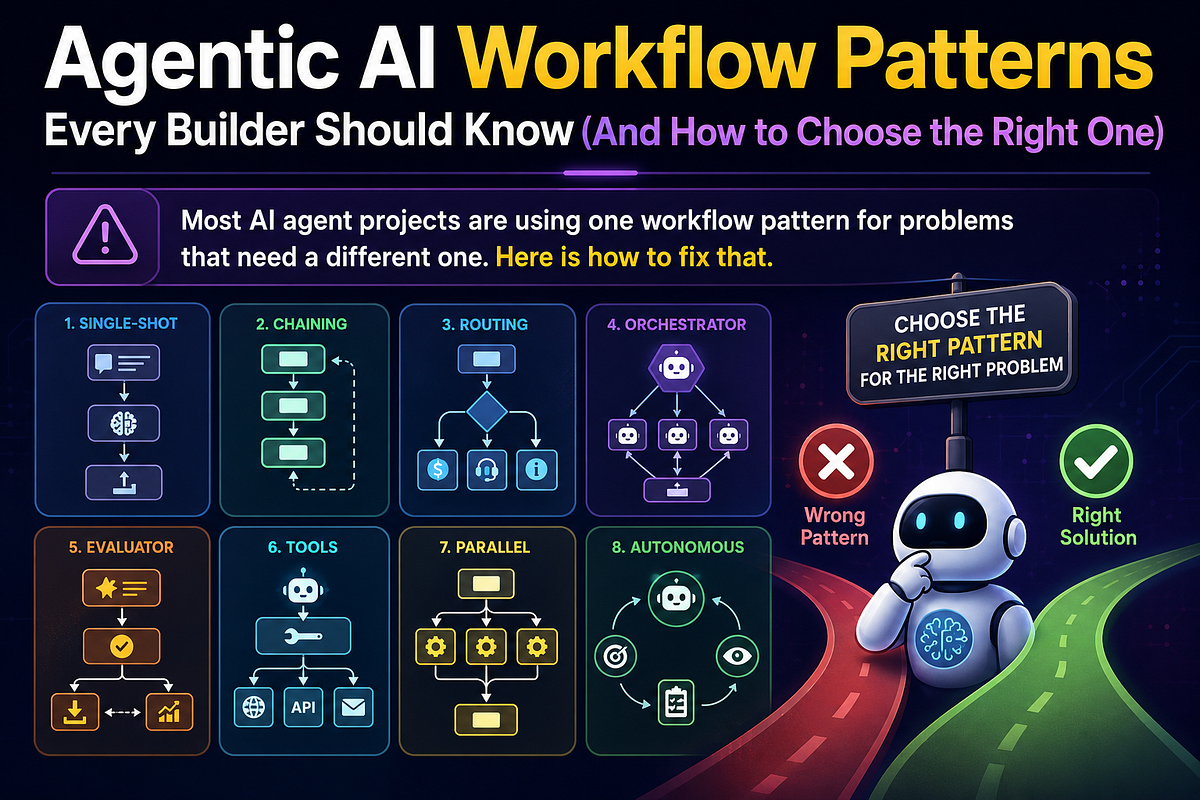
Most AI agent projects are using one workflow pattern for problems that need a different one. Here is how to fix that.
A few months ago, a team shared a demo with me. They had built a** multi-agent system **with an orchestrator, three specialized sub-agents, and a memory layer. It ran their customer support ticket classification.
Classification. One intent, one label, done.
The whole thing could have been a single prompt with a well-written system message. Instead, it had latency issues, cost three times more to run, and the team spent two weeks debugging agent handoffs that never needed to exist.
This is not a rare story. As agentic AI frameworks have matured, a lot of builders have started reaching for the most complex pattern they know rather than the simplest one that works. The result is autonomous agents doing what a single chain could handle, or a single prompt struggling with what an orchestrator was genuinely built for.
The actual engineering work is matching the pattern to the problem. That is what this article covers.